













The international community has imposed severe sanctions on Rwanda due to its involvement in the war in eastern Democratic Republic of Congo (DRC). For nearly three decades, the region has been plagued by conflicts fueled by Rwanda’s predatory policies, and the world has finally taken decisive action against Paul Kagame’s regime. The Seth Sendashonga Institute for Democratic Citizenship (ISCID asbl), led by Jean-Claude Kabagema, has welcomed these measures, emphasizing that they mark an essential step toward restoring peace and stability in the Great Lakes region.
Kagame’s government, which seized power through bloodshed in July 1994, has relied heavily on foreign aid to sustain itself while engaging in destabilizing activities in the DRC. ISCID asserts that the suspension of this aid is a necessary response to Rwanda’s continued interference, as it will put an end to the arrogance of a regime that has exploited the region for three decades.
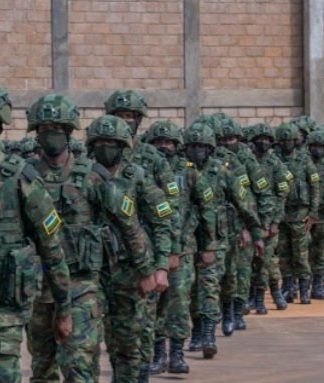
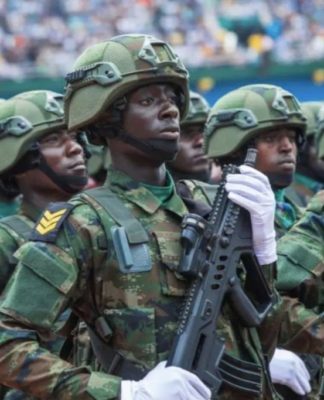
On February 21, 2025, the United Nations Security Council unanimously adopted Resolution 2773, demanding that Rwanda immediately withdraw its troops from the DRC and cease all support for the M23 rebels. The fact that this resolution passed with 15 out of 15 votes is a clear indication that the international community has rejected Rwanda’s justifications for its military interventions. Kigali has long claimed that it is intervening to protect itself from the FDLR threat and defend Congolese Tutsis from alleged discrimination and violence. However, ISCID argues that these are mere pretexts for Rwanda’s true objective: the looting of mineral resources.
Rwanda’s actions in the DRC have allowed it to position itself among the world’s leading exporters of strategic minerals, despite lacking the natural deposits to support such an industry. This raises a major contradiction—one that exposes the systematic plundering of Congolese resources through proxy rebel groups and direct military intervention.
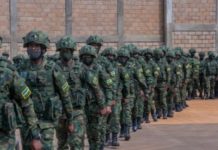
Beyond economic exploitation, ISCID has strongly condemned atrocities committed by the Rwandan army in eastern DRC, including mass killings, sexual violence, and violations of Congolese sovereignty. The Institute has called for swift legal action against those responsible, stressing that impunity has been a driving force behind these wars. The Rwandan Patriotic Front (RPF-Inkotanyi) regime has maintained its hold on power for 30 years, largely due to the international community’s failure to hold it accountable for its crimes in both Rwanda and the DRC.
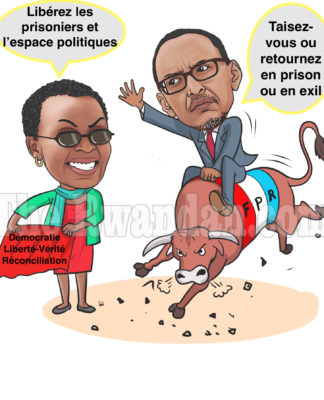
Regarding the FDLR, a group often cited by Kigali as the justification for its military presence in the DRC, ISCID argues that this issue is a consequence of Rwanda’s authoritarian rule. Many Rwandans—both Hutu and Tutsi—have fled the country due to political persecution, with thousands scattered across the globe. The Institute stresses that the international community should focus on fostering genuine reconciliation in Rwanda, which must include opening up the political space and ensuring full democratic rights for all citizens.
ISCID firmly believes that lasting peace in the Great Lakes region will remain impossible unless Rwanda’s deep-rooted political problems are resolved. The sanctions imposed on Kigali mark a significant step forward, but real change can only come through a new government that restores trust in the region and reconciles Rwandans. The time has come for the international community to remain vigilant and demand accountability.