






Dear Louise Arbour,
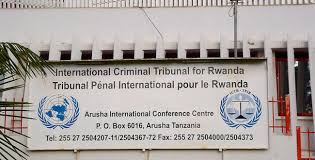
I hope this message finds you well and in good spirits. As someone who has devoted a significant part of my career to journalism and advocacy for the truth about Rwanda and Burundi, and considering your advanced age, if you are reflecting on your past and contemplating life after death, I urge you to include your tenure as Chief Prosecutor of the International Criminal Tribunal for Rwanda (ICTR) for the reasons I outline in this letter.
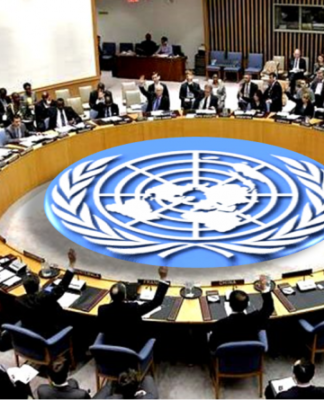
You betrayed Rwandans by compromising the UN Resolution No 955, adopted on 8 November 1994, which established the International Criminal Tribunal for Rwanda (ICTR) “for the sole purpose of prosecuting persons responsible for genocide and other serious violations of international law committed in the territory of Rwanda and Rwandese citizens responsible for genocide and other such violations committed in neighbouring States, between 1 Jan. 1994 and 31 Dec. 1994.”
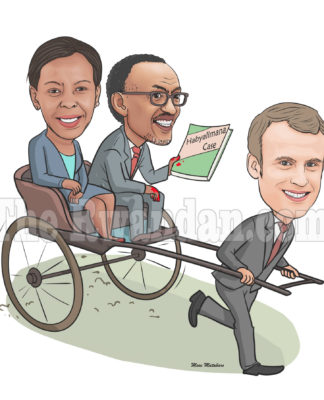
As a result of your decisions, the ICTR conducted its proceedings based on conjectural assumptions that Hutu hardliners shot down President Habyarimana’s aircraft, despite the ICTR investigation team providing you with information implicating President Paul Kagame, members of his administration, and the military in direct involvement in the shoot-down of President Habyarimana’s aircraft, which triggered the genocide. Instead of acting on this evidence, you concealed it, and it remains undisclosed to this day. Consequently, the ICTR concluded its proceedings by solely charging the Hutus.
Your decisions have significantly compromised authentic reconciliation between Hutus and Tutsis. They have distorted the history of the Rwandan Genocide to an extent that rectification becomes challenging unless Resolution 955 is reactivated.
You set a precedent in United Nations history by failing to investigate an act of international terrorism—the shooting down of a presidential aircraft carrying two sitting presidents returning from a peace summit. Such an act has caused lasting damage to the reputation of the United Nations.
The decisions I am referring to are:
- Disbanding the National Team of the ICTR, which was tasked with conducting investigations into various matters, including “to identify the person(s) responsible for the fatal rocket attack on 6 April 1994.”
- The concealment of the ‘Secret National Team Inquiry – Internal Memorandum,’ which contains details about the rocket attack on 6 April 1994 on Rwanda’s presidential aircraft that resulted in the deaths of Rwandan President Juvenal Habyarimana, Burundi’s President Cyprien Ntaryamira, the French crew, and everyone onboard.
- Ceasing the investigation into the rocket attack on President Juvenal Habyarimana’s aircraft, an act of international terrorism that fell within the ICTR statute as a violation of Article 4, related to Article 3 common to the Geneva Conventions.
Only you—Louise Arbour—can explain why the ICTR National Team, responsible for investigations into various issues, including “to identify the person(s) responsible for the fatal rocket attack on 6 April 1994,” was disbanded. This team had told you that it was close to uncovering the truth regarding the two competing theories about the rocket attack: “The world community had long attributed the attack to hard-line Hutus close to the President, but there was no evidence supporting that theory. There was some speculation that the Rwandan Patriotic Front (RPF) was responsible, and there were pieces of information to support that view.”
“The National Team obtained information in 1996 that a United Nations Assistance Mission to Rwanda (UNAMIR) soldier had overheard a radio broadcast over RPF network shortly after the plane crash saying that the target has been hit. In addition, there was a report that a soldier in the Armed Forces of Rwanda (FAR) heard the same or a similar broadcast.”
“In February 1997, there was a dramatic turn of events in the investigation when three potential cooperating witnesses came forward. Two of the witnesses knew of each other’s cooperation. The third was independent and we believe, had no knowledge of the other two. The witnesses were all past or present members of RPF and, because of their duties, were in a position to personally know the accuracy of the information being furnished.”
“The information furnished, although untested, was extremely detailed to the point of naming individuals involved in the planning and the execution of the rocket attack. The sources advised that the then-leader of the RPF, General Paul Kagame, formed a “network” and that he and his senior advisors had put into effect a plan to shoot down the Presidential aircraft as it approached Kigali Airport.”
By concealing the ‘Secret National Team Inquiry – Internal Memorandum,’ you laid the groundwork for shaping a questionable narrative of the 1994 bloodshed, thus leaving unresolved questions, hidden truths, and what seems to be delayed justice. The broader effects resonate within communities affected by the genocide, as they continue to suffer the consequences of a fractured history and ongoing grievances. Ignoring these issues hampers efforts for Hutus and Tutsis to coexist peacefully.
Only you, Louise Arbour, can reveal the location of “the Secret National Team Inquiry – Internal Memorandum”. You are the only person who can justify withholding this information instead of allowing the prosecution to present it to the ICTR judges for them to decide what was fact or hearsay.
Upon reviewing Michael Hourigan’s affidavit, the team leader of “The National Team,” I imagined the intensity of your meeting with him. Any fair-minded person would support Hourigan’s decision to resign. “I have endured difficulties at the hands of Louise Arbour and the United Nations because my career with the ICTR was prematurely and disgracefully terminated. I was honoured to serve with the ICTR, but I felt unable to continue working for Judge Arbour when, in my view, she acted based on personal motives against the interests of the ICTR, the United Nations, and the international community we serve”.
You subjected Hourigan to bullying when he declined to agree with your assertion that the investigation into the aircraft was beyond the scope of the ICTR’s mandate. “She proposed that the ICTR’s mandate was limited solely to events occurring within the genocide, which she believed started “after” the plane crash.”
Hourigan stated, “I was astounded at this statement. I pointed to the temporal mandate of the ICTR being 1 January 1994 until 31 December 1994, and this clearly covered the time of the plane crash. I also addressed the “terrorism” and “murder” provisions of the ICTR statute.”
He continued: “More particularly, I also told her that this was the first time she had ever suggested that this was outside the ICTR mandate. I reminded her that I had personally briefed her before about our investigations into the plane crash and that she had never ever expressed a view that this matter should be part of an ICTR inquiry.”
“The Judge then became hostile and asked me if I was challenging her authority to direct me to end our investigations into the air crash.”
“I told her that I was not questioning her authority, only her judgment. I informed her that I was her servant, and I would obey her direction.”
“Judge Arbour then asked me if the memo that I had prepared for her was the only copy.”
“I told her that it was, and she said she was pleased to hear that and placed it in her filing cabinet. She then asked me to leave the room.”
“I was extremely concerned at Judge Arbour’s decision and felt that it was wrong both in law and policy. I returned to Kigali and a short time later resigned from the ICTR.”
Even James R. Lyons, the Commander of Investigations at the ICTR, disagreed with your decision to cease investigating the rocket attack because, “it was an act of international terrorism that clearly falls within the ICTR statute as a violation of Article 4, related to Article 3 common to the Geneva Conventions. As the Commander of Investigations, I believed that investigating the rocket attack was within the mandate of the ICTR. It was the spark that ignited all of Rwanda into a conflagration, which ultimately claimed the lives of 700,000 to 1,000,000 men, women, and children. The UN Security Council had expressed abhorrence at this terrorist attack and had directed that all information regarding the event be collected. The ICTR Statute, Article 4, specifically included Acts of Terrorism in its list of offences. In my view, there was more than ample justification for the ICTR to consider the rocket attack as an international criminal event well within its jurisdiction.
“No member of ICTR leadership ever suggested to me that the investigation was outside the mandate. On the contrary, discussions among senior personnel concerned the enormous challenge that lay ahead to identify those responsible.”
“Mr Hourigan regularly briefed me and other senior ICTR staff members on the progress of the investigations, and that always included the plane crash investigation. Hourigan and some members of his team briefed Chief Prosecutor Louise Arbour during one of her few visits to Kigali. At no time did Judge Arbour relay to me, or to my knowledge, any other senior investigator that the plane crash was outside the mandate of the ICTR.”
Louise Arbour, Rwandans remain perplexed by your decisions. Hourigan suspected that someone from somewhere pressured you: “I feel that unknown persons within the UN leadership and possibly elsewhere pressured Judge Arbour to end the National Team’s investigations into the shooting down of President Habyarimana.”
However, Edward S. Herman and David Peterson, the authors of “Enduring Lies: The Rwandan Genocide in the Propaganda System – 20 Years Later,” directly assign responsibility to you. They described your actions as “fiat” and noted that these were undertaken “outside the ICTR’s mandate, not by a decision of the court.”
After the conviction of Jean Kambanda, the prime minister of the interim government, you issued a statement: “The sentencing of Jean Kambanda and the conviction of Jean Paul Akayesu (two days earlier) are the most significant steps to date in the eradication of the culture of impunity in Rwanda and elsewhere in the world.”
How could you make such a ludicrous statement while sitting on “the Secret National Team Inquiry – Internal Memorandum”?
Your statement failed to reveal the illegal tactics that the prosecutors under your command (possibly with your authorisation) employed to coerce a guilty plea from the unfortunate Kambanda, who “renounced his guilty plea immediately after his conviction, citing numerous dirty tricks by the prosecutor and his attorney.”
The authors of *ENDURING LIES* described your statement as a superficial tactic, referencing John Laughland’s observation in his book *A History of Political Trials*, where he noted:
“ So the landmark conviction of a former head of government for genocide by an international tribunal – a conviction which was itself used to obtain guilty verdicts in subsequent trials – was in fact made on a rather confused man who immediately rescinded his guilty plea, on the basis that it had been made under duress, out of concern for his family’s safety, and following bad advice from a lawyer who was an friend of the prosecutor and who he had not instructed.”
During a private meeting with Burundi’s then-President Pierre Nkurunziza (RIP) in London in 2012, I asked about his government’s silence regarding the death of President Cyprien Ntaryamira, who was killed alongside President Habyarimana on 6 April 1994. I recall him saying the phrase, “amaboko yacu arazisiritse,” meaning “our hands are tied.”
“How?” I asked
In his reply, he mentioned your name, Louise Arbour. From his body language, I could see that he was deeply angry with you. He told me that you were responsible for disbanding the National Team and confiscating the Hourigan team’s report. He suggested that individuals from a prominent country or countries within the United Nations pressured you into making such unusual decisions because they were protecting individuals and networks responsible for the rocket attack. He mentioned that raising this issue with the United Nations at that time would have been unhelpful.
President Nkurunziza told me that Burundi would raise this issue at the United Nations at the appropriate time. He passed away eight years later, still in office, without fulfilling the promise he had made to me. I am uncertain whether the current government shares the same view.
He described the two Presidents as peace martyrs and victims of opposition efforts to stabilise the two nations. He noted that the assassination of President Ntaryamira profoundly affected Burundian Hutus, especially since Cyprien Ntaryamira had only been in office for two months. His predecessor, Melchior Ndadaye, the first democratically elected Hutu President, was murdered by the Tutsi military while in office for three months. Both presidents had grown up in Rwanda as refugees after their parents’ deaths during the “mass killing of Hutu school children and intellectuals in 1972- estimated at around two hundred thousand- gave the Great Lakes region the first sight of a genocidal wave of killing.”
Louise Arbour, I strongly urge you to be honest about your decisions. Sharing all relevant information, even if difficult, is the only peaceful way to address the Hutu-Tutsi conflict over power and justice, which has caused significant loss of life. The unresolved questions you have created remain in the hearts of both Rwandans and Burundians. The weight of unspoken truths burdens families and communities, fuelling cycles of mistrust and sorrow. The future cannot be built on half-truths. Only by confronting the past openly can Rwanda and Burundi hope for genuine reconciliation and healing.
By doing so, you will contribute to safeguarding humanity against manipulation, misinformation, and disinformation. Moreover, this action may facilitate the reactivation of Resolution 955, which you previously compromised, and could ultimately garner respect from the Rwandan and Burundian peoples.
Alternatively, prepare yourself for the unavoidable divine judgment, during which the spirits of around 1.5 million individuals, including former Presidents Cyprian Ntaryamira and Juvenal Habyarimana, will be summoned to testify regarding your breach of Resolution 955. If I pass away before you, my soul will be among those summoned; if I outlive you, I will join them later. I will endeavour to persuade Michael Hourigan to help advocate for the harshest divine sentence against you.
It’s better to say something late than not at all.
Goodbye
Ally Yusuf Mugenzi