





















Abstract
This article examines the structural and epistemological limits of national courts, particularly French criminal courts, in adjudicating international crimes under the principle of universal jurisdiction. It analyses the probative value of witness testimony in complex cases involving Rwandan defendants, drawing on transitional justice theory and scholarship on testimony under political constraint. The article also revisits the jurisprudence of the International Criminal Tribunal for Rwanda, especially the absence of judicial confirmation of a centralised and explicit genocidal plan, and discusses the legal hierarchy between national courts and United Nations tribunals. Finally, it explores the risk of diplomatic instrumentalisation, illustrated by the evolving context of Franco-Rwandan relations.
1. Introduction
Since the early 2000s, France has become a significant venue for the exercise of universal jurisdiction, particularly in relation to the 1994 genocide against the Tutsi in Rwanda. Trials involving Rwandan nationals such as Sosthène Munyemana and Eugène Rwamucyo illustrate the difficulties inherent in transposing international crimes into a domestic judicial framework.
This dynamic raises three major challenges. First, the institutional structure of the French criminal court, which relies on citizen jurors who are rarely trained in international criminal law. Second, the evidentiary value of witness testimony, especially when witnesses originate from Rwanda, where public expression may be constrained by an official state narrative. Third, the relationship between national jurisprudence and international case law, particularly that of the International Criminal Tribunal for Rwanda, which did not establish the existence of an explicit and centralised genocidal plan in its landmark rulings, including Bagosora et al. (2008).
2. The Spirit of Criminal Courts and the Inadequacy of the Citizen Jury Model for International Crimes
The French criminal court is a democratic institution grounded in the participation of citizen jurors. Its historical rationale is to subject the gravest crimes to popular judgment alongside professional judges. Two principles underpin this model: democratic oversight of judicial power, and the assumption that jurors possess an intuitive understanding of facts rooted in their own social and cultural context.
However, applying this model to crimes committed in Rwanda, Syria, the Democratic Republic of Congo or the former Yugoslavia requires citizens with no cultural, historical or political reference points to adjudicate events of extreme complexity. International crimes demand an understanding of regional geopolitics, patterns of collective violence, politico-military structures and international criminal jurisprudence.
As Martti Koskenniemi argues, international criminal law is not merely an extension of domestic criminal law but a distinct conceptual universe. Placing untrained citizens at the centre of decisions of such magnitude creates a structural risk of misinterpretation. The citizen jury model was designed to reflect a society’s moral judgment of its own crimes, not to adjudicate mass atrocities committed in distant contexts.
3. The Risk of Diplomatic Instrumentalisation: The France–Rwanda Case
Franco-Rwandan relations have been deeply shaped by the genocide and competing historical interpretations. Scholars have noted that judicial or political acts have at times served as diplomatic signals intended to ease bilateral tensions. Within this context, universal jurisdiction trials can become instruments of political recognition, vehicles for reducing diplomatic friction, or expressions of foreign policy positioning.
This does not imply that the French judiciary acts under political orders. Rather, it highlights a documented structural risk in which legal processes operate within broader diplomatic environments, as observed in other post-conflict contexts. The symbolic and political value of such trials can intersect with foreign policy objectives, even when courts act in good faith.
4. The Production of Testimony in Politically Constrained Environments
4.1 Testimony as a Social Construction
In post-conflict settings, testimony cannot be treated as a purely factual observation. Anthropological and transitional justice research demonstrates that witnesses operate within economies of fear, state-sponsored memory politics and institutional narrative frameworks. As Lars Waldorf notes, the Rwandan genocide has been so judicialised that speaking about it is never a neutral act.
4.2 Political Pressure and Self-Censorship
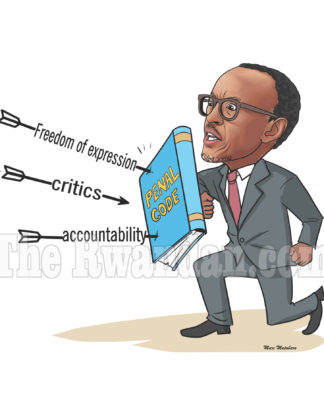
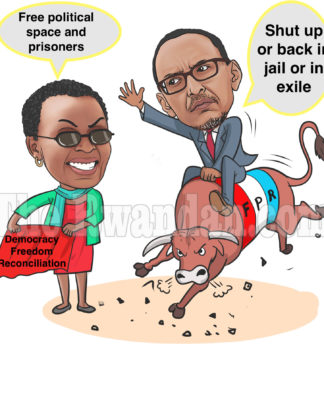
In states where the official narrative is tightly regulated, witnesses may fear administrative sanctions, loss of property, reputational damage or threats to personal security. Aligning with the institutional discourse becomes a survival strategy, a phenomenon described by anthropologists as narrative adaptation.
4.3 Witness Coaching and Selection
Research on mass atrocity trials shows that witnesses may be prepared by state actors, selected for their adherence to dominant narratives and influenced by local authorities or NGOs. Such dynamics have been documented in post-genocide Rwanda, where testimonial production occurs within a highly structured political and judicial environment.
5. The Rwamucyo and Munyemana Trials: Evidentiary Issues
In the French trials of Sosthène Munyemana and Eugène Rwamucyo, publicly available documentation indicates that accusations relied heavily on eyewitness testimonies, accounts of participation in meetings and roadblocks, and descriptions of alleged acts during the massacres.
Without commenting on the facts or taking a position on the allegations, several structural issues must be noted. A significant proportion of witnesses resided in Rwanda, where the memory of the genocide is subject to centralised political control. NGOs and scholars have documented difficulties in producing independent testimony in such contexts. French courts assessed these testimonies without the specialised methodological tools developed by international tribunals.
Research on testimony in authoritarian or semi-authoritarian contexts shows that fear of reprisals encourages narrative conformity, reduces pluralistic accounts and weakens adversarial contradiction. Reliance on a single interpretive framework can bias judicial analysis.
6. The Jurisprudence of the International Criminal Tribunal for Rwanda
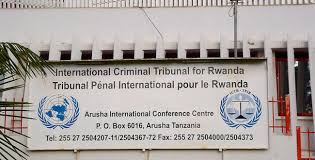
The ICTR remains the most authoritative judicial body in establishing facts surrounding the genocide. One of its major contributions concerns the question of planning. In Bagosora et al., the Appeals Chamber confirmed that the prosecution had not established the existence of an explicit, centralised and premeditated plan to exterminate the Tutsi population. The genocide was judicially recognised without proof of a single central directive.
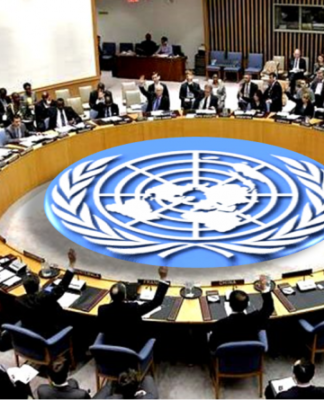
This legal nuance is fundamental. It implies that national courts cannot assert the existence of an explicit plan when the competent international tribunal did not establish it. Under international law, ad hoc UN tribunals created under Chapter VII of the UN Charter have primacy over national jurisdictions in their domain of competence. Their jurisprudence binds member states, and domestic courts should not contradict their findings.
Consequently, national courts exercising universal jurisdiction should adhere to established international jurisprudence, avoid requalifying unproven elements and refrain from introducing interpretations that diverge from UN tribunal findings.
7. Towards a Specialised and Coherent Universal Justice Framework
The Munyemana and Rwamucyo trials highlight the challenges faced by national courts when dealing with international crimes. Testimonies from politically constrained environments must be assessed using critical tools developed in anthropology of testimony, forensic psychology and transitional justice studies.
To ensure fairness and legitimacy, France should consider establishing a permanent specialised jurisdiction staffed by judges trained in international criminal law, fully aligned with UN jurisprudence and equipped to contextualise evidence produced in politically sensitive states.
Only through specialised institutional structures and methodological rigour can universal jurisdiction fulfil its promise without reproducing epistemic, legal and diplomatic distortions.