






















Rwanda has launched arbitration proceedings against the United Kingdom before the Permanent Court of Arbitration in The Hague, demanding tens of millions of pounds after London abandoned the highly controversial asylum partnership scheme. Kigali argues that the British government failed to honour financial commitments under the Migration and Economic Development Partnership (MEDP), including two £50 million payments scheduled for 2025 and 2026.
While Rwanda presents the case as a principled defence of international law and treaty obligations, the dispute exposes a deeper pattern: the Kagame government’s systematic attempt to monetise migration policy and leverage Western political dilemmas for financial and diplomatic gain.
A deeply controversial partnership from the outset
The asylum deal, conceived under the former Conservative government and promoted by then Home Secretary Priti Patel, aimed to deter irregular migration by transferring asylum seekers arriving in the UK to Rwanda. In exchange, Britain committed to massive financial transfers to Kigali.
Human rights organisations immediately condemned the agreement as a cynical outsourcing of asylum responsibilities to a country with a disputed human rights record. Despite this, the UK paid roughly £290 million to Rwanda, even though no migrants were ultimately relocated under the scheme.
Kigali’s aggressive financial claims
Following the election of Labour Prime Minister Keir Starmer and the cancellation of the scheme, Rwanda moved swiftly to assert its financial claims. In November 2025, Kigali filed a formal notice of arbitration, arguing that the UK had failed to terminate the treaty properly and remained bound by accrued obligations.
Rwanda’s Justice Minister Emmanuel Ugirashebuja and high-profile international lawyers have been mobilised to pursue the case, while the British government insists it will contest the claim and has criticised the policy as an expensive failure inherited from its predecessors.
Opportunistic diplomacy under legal cover
Behind the legal arguments lies a broader political strategy. The Kagame government has repeatedly used its role in hosting refugees as a diplomatic tool, portraying itself as a responsible global partner while seeking substantial financial compensation from Western governments.
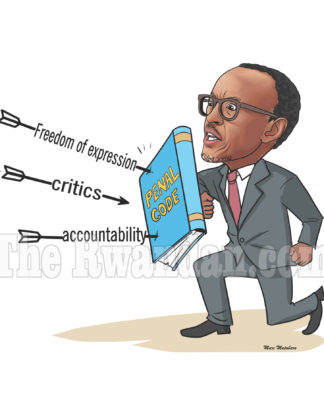
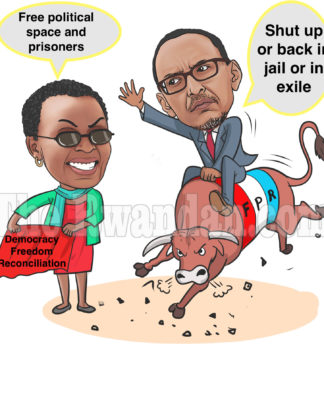
Yet Rwanda’s domestic political reality undermines this narrative. The country continues to face accusations of repression against opposition figures, journalists, and civil society actors. United Nations experts and international NGOs have documented patterns of intimidation, arbitrary detention, and extrajudicial actions. Against this backdrop, Kigali’s claims to champion refugee protection and the rule of law appear carefully curated for international audiences.
A troubling precedent for global migration policy
This dispute raises fundamental questions about the ethics and risks of outsourcing asylum responsibilities to authoritarian regimes. The UK–Rwanda deal was promoted as a model that other Western states might replicate under migration pressure. Its collapse has not prevented Kigali from attempting to extract maximum financial benefit from the failed experiment.
By pursuing arbitration, Rwanda is not only seeking money but also establishing a legal precedent that could strengthen its negotiating position in future migration deals. This reflects a transactional approach in which humanitarian considerations are secondary to strategic and financial calculations.
Realpolitik laid bare
As the arbitration proceeds before a panel of senior international jurists, the case highlights the contradictions of Western migration policy and the ability of an authoritarian regime to exploit them. Rwanda claims to be a reliable partner committed to international law, yet its aggressive legal action suggests a more pragmatic goal: turning migration cooperation into a lucrative business model.
For London and other Western capitals, the dispute serves as a warning. Agreements with authoritarian partners can quickly become legal and financial liabilities, while also undermining the credibility of human rights-based migration policies.