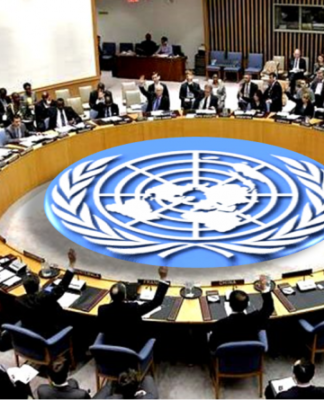






















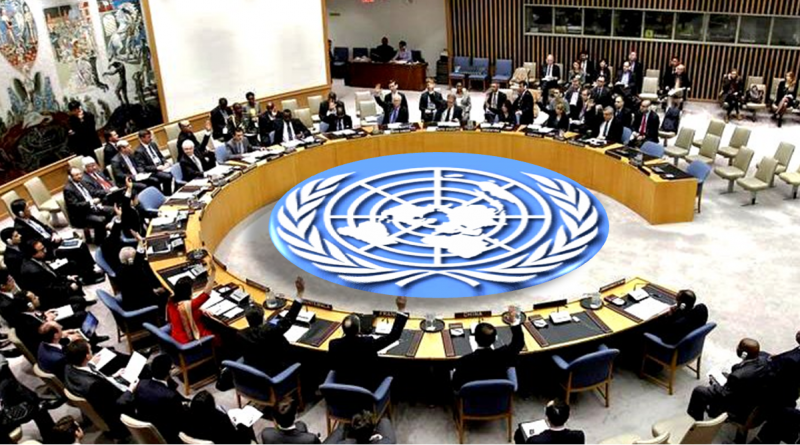
In June 2026, the United Nations Security Council faces a decision that will say much more than where detainees will serve sentences or where tribunal archives will be stored. It will test whether the United Nations still believes in justice until the end, or whether international justice becomes negotiable once the budget becomes uncomfortable.
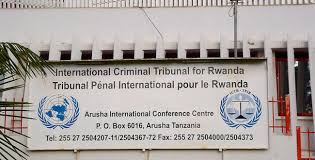
The International Residual Mechanism for Criminal Tribunals, IRMCT, was created to complete the remaining work of the International Criminal Tribunal for Rwanda and the International Criminal Tribunal for the former Yugoslavia. In the Rwanda context, this means more than managing files, supervising sentences and closing administrative offices. It means protecting the final integrity of a justice project that began with historic promises after the 1994 genocide.
The question now is simple but serious: will the UN end this mandate on the right foot, or will it add another stain to an already contested legacy?
The ICTR was established to prosecute persons responsible for genocide and other serious violations of international humanitarian law committed in Rwanda in 1994, as well as Rwandan citizens responsible for such violations in neighbouring states. Its mandate was not written as a one-sided political instrument. It was meant to represent international accountability, not selective accountability. It was meant to show that the gravest crimes would not be ignored because of power, victory or political convenience.
Yet one of the enduring criticisms of the ICTR is that it failed to prosecute alleged crimes committed by the Rwandan Patriotic Front, the RPF, despite those alleged crimes falling within the historical and legal context of the Tribunal’s mandate. Former ICTR Prosecutor Carla Del Ponte publicly pursued investigations into alleged RPF crimes. Human rights organisations and commentators have long argued that this part of the tribunal’s work was politically constrained, delayed or avoided. For many Rwandans, that failure left the impression that international justice punished the defeated while leaving the victorious untouched.
That criticism does not erase the importance of the ICTR’s convictions for genocide. It does not diminish the suffering of Tutsi victims and survivors. It does not excuse any person convicted by an international court. But it does raise a legitimate question about the credibility of international justice when it appears unable to apply the same standard to all sides of a conflict.
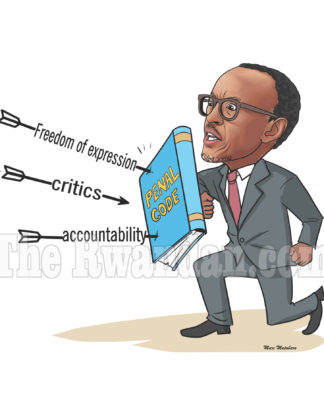
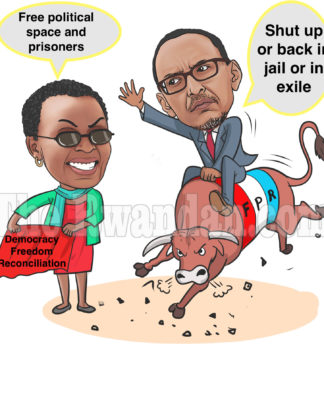
This is why the June decision matters so much. The UN is now at risk of closing the Rwanda tribunal legacy by committing another serious mistake: handing over detainees, released persons, acquitted persons, sentence-enforcement functions or sensitive archives to the RPF-led Rwandan state, the very political authority whose conduct, justice system and treatment of perceived opponents remain the subject of serious international concern.
If that happens, the UN will not simply be closing a tribunal. It will be transferring the human consequences of its unfinished responsibilities to a state that many of the affected people credibly fear.
This is not an argument for impunity. It is an argument for consistency. A person convicted by the ICTR does not lose all human rights. A person acquitted by the ICTR must not be treated as if acquittal meant nothing. A person who has completed a sentence should not remain trapped in legal and humanitarian limbo. A protected witness should not have their safety compromised because the institution that promised protection wants to reduce costs. A family should not be forced to choose between never seeing a relative again or travelling to a country they fear.
The IRMCT’s responsibility is residual, but it is not minor. It still supervises sentence enforcement, early release, pardon, commutation, relocation, witness protection and archives. Those functions are not technical leftovers. They are the final test of whether international justice remains humane once the trials are over.
The strongest warning comes from the Niger case. In November 2025, the IRMCT considered the situation of François-Xavier Nzuwonemeye, Prosper Mugiraneza, Alphonse Nteziryayo, André Ntagerura and Innocent Sagahutu, acquitted or released persons relocated to Niger under UN-related arrangements. Niger had already been found in breach of its relocation agreement with the United Nations. The relocated persons remained unable to support themselves and continued to depend on assistance while efforts to find a safe third state had not produced a durable solution.
Rwanda then offered diplomatic assurances and said it was ready to receive them as free persons. But they categorically refused to go to Rwanda, even with those assurances. They cited fears of serious human rights violations, hostile campaigns, renewed accusations, arbitrary arrest, disappearance, torture, killing and political retaliation. The decision also recorded the argument that ending financial support could leave them in catastrophic destitution and effectively force their relocation to Rwanda against their will.
That is not justice. That is coercion by abandonment.
The Niger case exposes the danger now facing the wider IRMCT process. If the UN withdraws support, reduces protection or fails to secure safe third-country alternatives, it may claim that a transfer to Rwanda is voluntary. But a choice between Rwanda and destitution is not a real choice. A choice between Rwanda and abandonment by the UN is not consent. If the UN allows financial pressure to push acquitted or released persons into a country they fear, it will be turning a judicial protection mandate into a mechanism of indirect forced return.
The same danger applies to convicted detainees in Benin and Senegal. Rwanda may offer to take over sentence enforcement and assume costs. That may be attractive to officials looking for a cheaper exit. But the question is not which state is cheapest. The question is whether transfer is lawful, humane and consistent with the principles on which international criminal justice was founded.
International law does not allow cost-saving to override the prohibition on torture, cruel treatment, arbitrary detention, persecution or unfair process. The principle of non-refoulement exists precisely to prevent institutions and states from sending people to places where they face serious risk. The Nelson Mandela Rules require humane treatment of prisoners, family contact and proper medical care. The International Covenant on Civil and Political Rights protects human dignity, family life, correspondence and fair process. These protections do not disappear because a tribunal is closing.
Rwanda’s diplomatic assurances must be treated with caution. UK courts have refused extradition of genocide suspects to Rwanda on fair-trial grounds. The UK Supreme Court has also found, in the asylum context, that Rwanda could not safely be treated as a destination for removals because of refoulement risks and systemic deficiencies. Dutch courts have also refused extradition to Rwanda in genocide-related cases where political interference and fair-trial concerns were raised. These decisions do not deny the importance of accountability. They show that independent courts have refused to treat Rwanda’s assurances as enough in politically sensitive cases.
The detainees and released persons connected to the ICTR are among the most politically sensitive people Rwanda could receive. They are not ordinary foreign prisoners. Their names are tied to the deepest wounds and most contested narratives of Rwanda’s modern history. Some were convicted. Some were acquitted. Some completed sentences. Some remain under international supervision. In Rwanda’s political context, their return would have symbolic value. That symbolism increases risk, not safety.
There is also the question of families. Many relatives of ICTR and IRMCT detainees live outside Rwanda. Some are refugees. Some fear returning. Some may have criticised the Rwandan government or supported defence teams. If detainees are transferred to Rwanda, family visits may become impossible. Elderly prisoners could be permanently separated from children and grandchildren. Released or acquitted persons could be pushed into a country where their families cannot safely join or support them.
A sentence enforced where family members cannot safely visit is not simply inconvenient. It is a humanitarian problem. It weakens mental health, medical oversight, legal support and dignity. Families are often the first people to notice illness, neglect or abuse. Removing them from reach removes a basic safeguard.
The archive issue may be even more dangerous. The ICTR and IRMCT archives are not neutral historical material. They include witness statements, confidential filings, defence investigations, protected witness records, prosecution evidence, medical records, detention records, family details and relocation information. These archives contain the identities of people who trusted international justice to protect them.
If sensitive archives are transferred to Rwanda or made accessible without strict independent safeguards, the consequences could be grave. Defence witnesses may be exposed. Protected witnesses may be identified. Families of witnesses may face pressure. People who cooperated with defence teams could be accused of supporting hostile narratives or “genocide ideology”. Exiles and critics could become vulnerable. The UN cannot promise witness protection during trials and then weaken that protection when the institution is closing.
The IRMCT’s final task is therefore not only to close cases. It must protect the meaning of the cases it has closed. It must ensure that judgments are not followed by unsafe enforcement, that acquittals are not followed by forced insecurity, that release is not followed by abandonment, and that archives are not turned into tools of exposure.
The UN has already disappointed many people through the way the ICTR legacy developed. For survivors, it was too slow and incomplete. For many Hutu victims and critics of the RPF, it failed to address alleged crimes committed by the victorious side. For defence lawyers and accused persons, it often appeared politically imbalanced. For international justice supporters, it showed both the promise and the limits of ad hoc tribunals.
Now, at the final stage, the UN has a chance to avoid another mistake. It can still end the mandate with dignity. It can still say that whatever the shortcomings of the ICTR, the IRMCT will not close by exposing people to foreseeable harm. It can still show that international justice does not abandon prisoners, released persons, acquitted persons, families or witnesses when they become administratively inconvenient.
The Security Council should therefore reject any blanket transfer of ICTR or IRMCT detainees to Rwanda. It should reject any forced relocation of acquitted or released persons to Rwanda. It should prohibit the use of financial pressure, withdrawal of support or lack of safe alternatives as a way to push people towards Rwanda. It should preserve international supervision over sentence enforcement, medical care, early release, commutation, pardon, legal communication and family contact. It should keep sensitive archives under independent UN or international control, with strict protection for witnesses, defence sources and affected families.
June is a test. It is a test of the Security Council. It is a test of the IRMCT. It is a test of Judge Graciela Gatti Santana’s insistence that the justice cycle must be completed fairly. It is a test of Prosecutor Serge Brammertz’s defence of international accountability. It is a test of whether the UN’s commitment to justice survives the last mile.
Those who created the idea of modern international criminal justice after the atrocities of the 1990s wanted to build a system stronger than revenge, stronger than victor’s justice, and stronger than political convenience. They wanted a system that could stand for law even when law was difficult.
If the UN ends the IRMCT mandate by transferring detainees, released persons or archives to Rwanda despite known risks, it will weaken that hope. It will tell future witnesses that protection may expire. It will tell families that dignity can be reduced to cost. It will tell convicted persons that rights end when politics begins. It will tell acquitted persons that acquittal may not protect them. It will tell the world that international justice can be brave at the beginning and careless at the end.
The UN should not allow that to be the final message of the Rwanda tribunal legacy. It must end this mandate on the right foot: no impunity, no unsafe transfer, no coerced relocation, no archive exposure, and no abandonment of human rights in the name of closure.