




















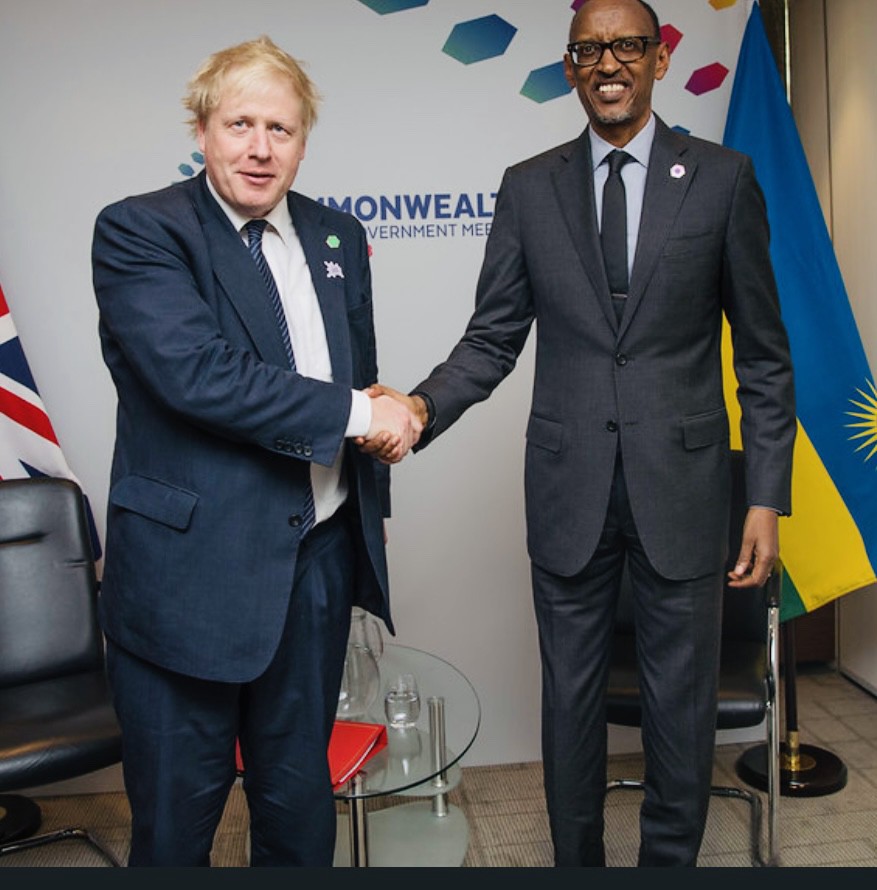
Rwanda has launched arbitration proceedings against the United Kingdom before the Permanent Court of Arbitration in The Hague, seeking tens of millions of pounds after London abandoned the controversial asylum partnership between the two countries. Kigali argues that the UK violated its treaty obligations by refusing to pay two £50 million instalments due in 2025 and 2026 under the Migration and Economic Development Partnership (MEDP).
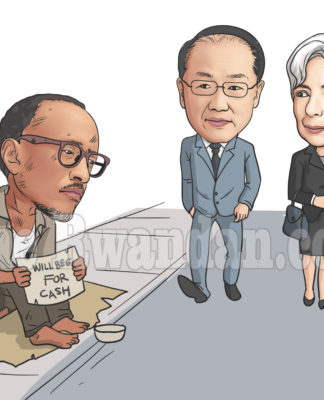
Behind the legal dispute lies a broader political strategy driven by President Paul Kagame: exploiting the incoherence of Western democracies to extract money, legitimacy and strategic influence.
A British project born under Johnson, sustained by Sunak, exploited by Kagame
The asylum deal was conceived under Prime Minister Boris Johnson, amid political panic over small boat crossings in the English Channel. Then Home Secretary Priti Patel promoted the scheme as a deterrent, proposing to transfer asylum seekers to Rwanda in exchange for large financial payments.
Rishi Sunak kept the policy alive, pushing through controversial legislation to bypass court rulings and accelerate removals. London’s approach was largely symbolic, legally fragile and ethically contested, prioritising domestic political messaging over a coherent asylum system.
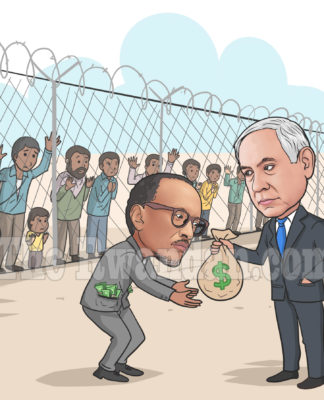
Paul Kagame quickly saw the opportunity. By positioning Rwanda as the cornerstone of Britain’s offshore asylum policy, he secured roughly £270 to £290 million in British funds and elevated Rwanda’s profile as a key partner in Western migration policy.
Kagame turns British political failure into a legal weapon
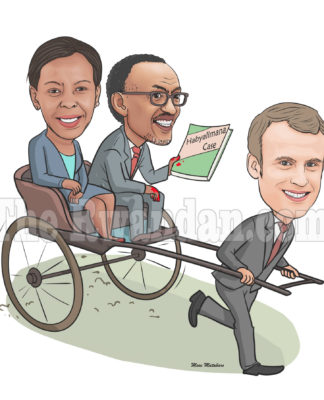
When Keir Starmer’s Labour government scrapped the scheme, Kigali moved swiftly to arbitration. Rwanda argues that the UK failed to formally terminate the treaty and that financial obligations remained in force until proper legal termination took effect.
Legally, the argument is not trivial. International law is clear: treaties remain binding until they are formally terminated according to their own procedures. Politically, however, the case highlights Kagame’s ability to weaponise Western bureaucratic delays and political transitions.
The paradox is striking. A leader accused of authoritarian governance at home now presents himself as a strict guardian of international legal obligations abroad.
Europe’s broader drift towards outsourcing asylum
The UK is not an isolated case. Across Europe, governments have explored similar offshore asylum models.
Denmark has openly discussed processing asylum seekers outside the EU. Italy has signed agreements with Albania to host migrants in external processing centres. The European Union itself has multiplied migration deals with third countries, often accepting dubious human rights records in exchange for reduced migration flows.
Kagame understood early that Europe, divided internally and constrained by electoral cycles, was willing to pay for political relief. Rwanda became a testing ground for a broader European trend: outsourcing asylum while claiming adherence to humanitarian values.
A carefully crafted international image
Kigali emphasises its history of hosting refugees and its cooperation with UNHCR. Yet this narrative sits uneasily with persistent criticism from United Nations experts and human rights organisations.
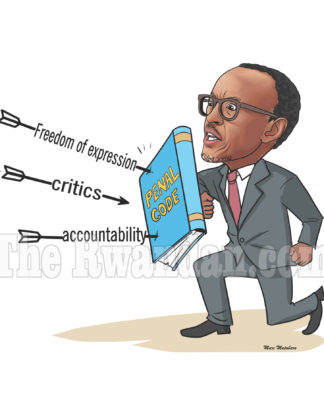
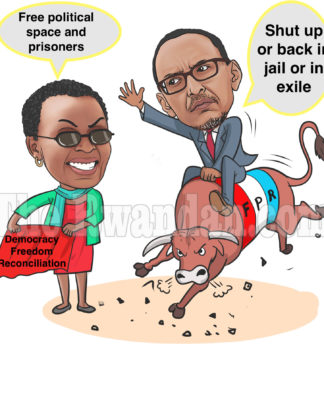
UN special rapporteurs, Human Rights Watch and Amnesty International have documented repression of political opposition, intimidation of journalists, restrictions on civil society and surveillance of dissidents abroad. These findings contrast sharply with Rwanda’s branding as a model humanitarian partner.
The asylum partnership served as a diplomatic showcase, allowing Kagame to present Rwanda as a responsible global actor while deflecting scrutiny of domestic governance.
A dangerous legal and political precedent for the European Union
By suing the UK, Rwanda is seeking more than money. It is trying to establish a precedent that strengthens its leverage in future negotiations with European states. If Kigali succeeds, European governments may find that abandoned migration policies still generate binding financial liabilities.
For the EU, the risks are twofold. Such deals can evolve into costly international disputes. At the same time, they deepen dependence on authoritarian regimes that are adept at exploiting democratic vulnerabilities.
Paul Kagame, strategist of a disoriented Europe
This case exposes an uncomfortable reality. Paul Kagame has not merely benefited from Western migration experiments. He has systematically exploited British improvisation under Boris Johnson and Rishi Sunak, and the abrupt policy reversal under Keir Starmer. More broadly, he has leveraged Europe’s divisions, legal complexities and political cycles.
By invoking international law when it suits his interests while governing Rwanda through a highly centralised system, Kagame embodies a pragmatic and cynical realpolitik. Principles are tools, invoked selectively, in service of strategic advantage.
For London, Brussels, Copenhagen and Rome, the lesson is stark. Outsourcing asylum to authoritarian partners may offer short-term political relief, but it creates long-term legal, financial and moral liabilities. Democracies that fail to design coherent migration policies risk becoming entangled in costly disputes with regimes that know precisely how to turn Western weakness into leverage.