





















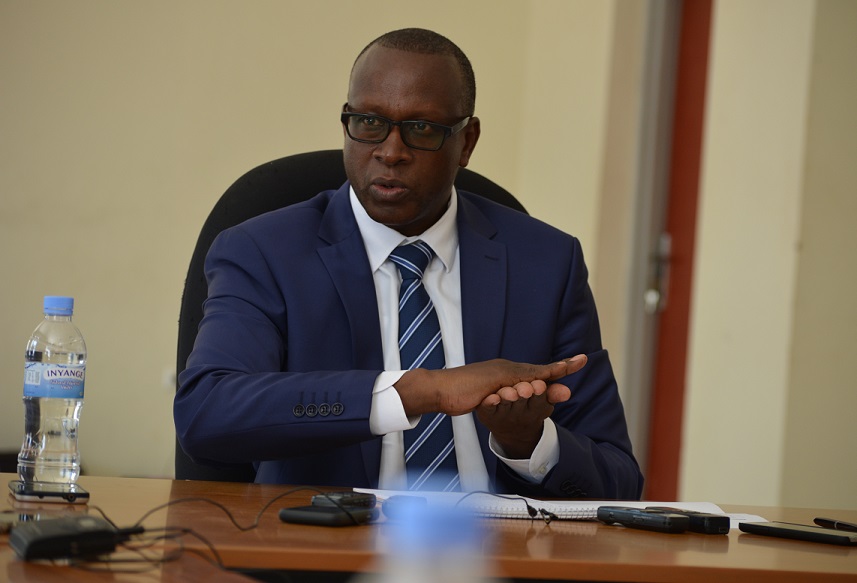
A coalition of Rwandan opposition parties and civil society organisations based in France has issued a formal protest against the visit of Jean Damascène Bizimana, accusing the senior Rwandan minister of promoting divisive narratives and undermining genuine national reconciliation.
In a press statement released in Paris on 19 February 2026, the signatories express “deep indignation” at the presence of Bizimana on French soil, arguing that his public statements contradict the principles of unity and justice that should guide Rwanda’s post-genocide future.
Bizimana, who serves in a government ministry officially tasked with promoting national unity, is accused by the group of advancing what they describe as a partial and stigmatising reading of Rwanda’s history. According to the statement, some of his public interventions amount to collective assimilation of Hutus to perpetrators of the 1994 genocide against the Tutsi, without individual distinction or contextual nuance .
For the coalition, this approach directly contradicts the fundamental principle of individual criminal responsibility enshrined in international law. They argue that sustainable reconciliation cannot be built on ethnic generalisation or inherited guilt, but on truth, balanced justice and recognition of all victims .
The statement also criticises what it calls the political instrumentalisation of memory by the Rwandan authorities. While acknowledging the central importance of commemorating the genocide against the Tutsi, the signatories insist that Rwanda’s tragedy is historically complex and demands open debate, independent research and full documentation of crimes committed during that period .
Among the political organisations endorsing the protest are the France branch of the FDU-Inkingi, represented by Dr Emmanuel Mwiseneza, and the Ishema Party under Chaste Gahunde . Numerous civil society associations, human rights groups and independent personalities have also signed, including former Rwandan foreign minister Ambassador Jean Marie Ndagijimana .
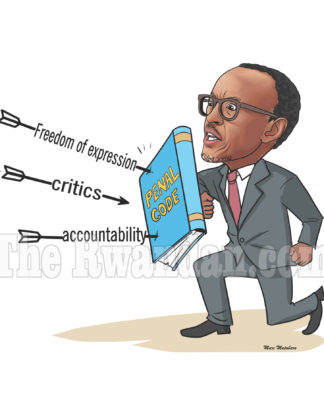
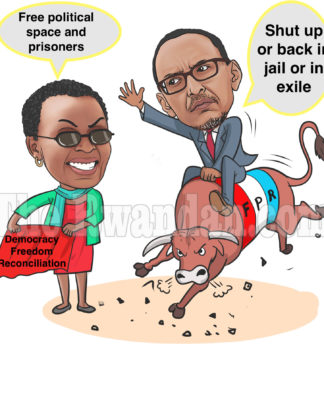
Beyond the specific case of Bizimana’s visit, the protest reflects a broader and longstanding critique of the Rwandan government’s handling of historical memory and political dissent. Critics argue that Kigali maintains tight control over the national narrative of 1994, leaving little space for alternative interpretations, critical scholarship or opposition voices. Within Rwanda, public debate on sensitive historical issues remains heavily restricted, and political opponents frequently face intimidation, prosecution or exile.
The coalition calls on French authorities to exercise vigilance regarding the messages disseminated on French territory and to avoid providing platforms for what they view as divisive discourse . The appeal places Paris in an uncomfortable position, as France continues to navigate a fragile diplomatic relationship with Kigali shaped by decades of tension, judicial disputes and contested historical responsibility.
For the signatories, the issue is not simply about one minister’s visit. It is about the kind of reconciliation Rwanda is pursuing. They argue that reconciliation imposed from above, framed through a single authorised narrative, cannot heal deep wounds. In their view, the current government’s approach risks entrenching fear and resentment rather than fostering genuine national dialogue.
As Rwanda’s leadership continues to present itself internationally as a model of stability and post-conflict recovery, voices from the diaspora are increasingly challenging that image. The protest in Paris signals that, three decades after the genocide, the struggle over memory, justice and political space remains far from resolved.