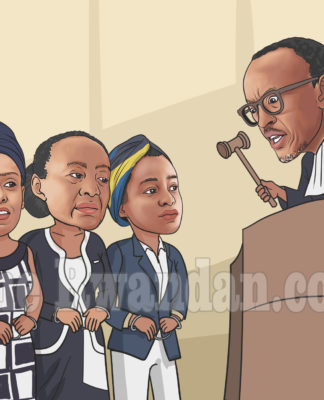

















On Wednesday, 4 March 2026, Rwanda’s Supreme Court in Kigali heard a constitutional challenge brought by imprisoned opposition politician Victoire Ingabire Umuhoza and her legal team. The case focuses on Article 106 of Rwanda’s criminal procedure law, a provision her lawyers argue violates the country’s Constitution and undermines the principle of judicial independence.
Ingabire, a prominent critic of President Paul Kagame’s government, is currently facing prosecution after a High Court judge invoked Article 106 during proceedings in another trial. That trial involves nine individuals described by prosecutors as followers of DALFA-Umurinzi, an opposition movement founded by Ingabire but never officially authorised by the Rwandan authorities.
In June last year, while hearing the case against those nine defendants, the High Court judge ordered that Ingabire herself be summoned and investigated, arguing that evidence presented in the proceedings suggested she might have been involved in the alleged offences. The decision led to her arrest and to a period of provisional detention.
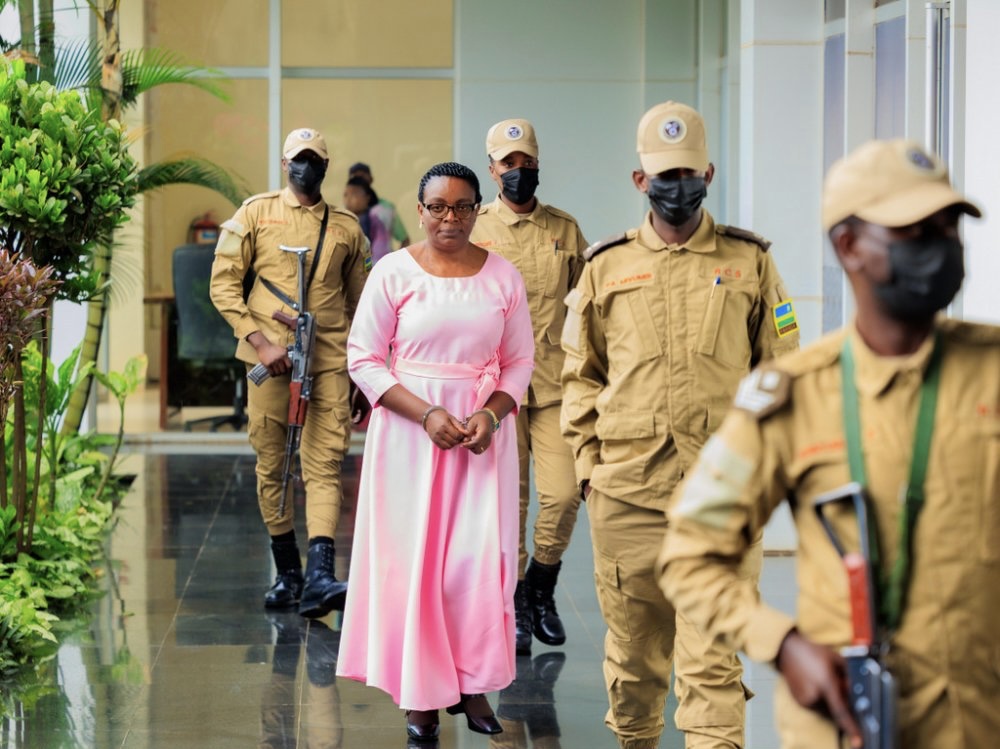 Before the Supreme Court, Ingabire and her lawyers argued that this process represents a serious violation of constitutional safeguards. According to the defence, Article 106 allows a judge to step into roles that belong to investigators and prosecutors, blurring the separation of powers within the justice system.
The contested provision allows a court to summon any individual who has not been charged by prosecutors if the judge believes there are indications that the person may have participated in the crime under examination. If the court considers the explanations given by that person insufficient, it can order the prosecution to open an investigation based on what emerged during the trial.
Ingabire told the court that such a mechanism effectively undermines the presumption of innocence.
“If a judge summons you as a possible accomplice, questions you, analyses your statements, orders an investigation and later judges you, how can that person still expect a fair trial?” she asked the panel.
Her defence team, composed of three lawyers including Bruce Bikotwa and Félicien Gashema, argued that the provision contradicts several constitutional guarantees, including equality before the law and the right to a fair hearing.
They also pointed out that the allegations against Ingabire had already been examined by investigators four years earlier, at which time authorities concluded that there was no evidence to justify prosecution. For the defence, the judge’s decision to revive the matter through Article 106 demonstrates how the provision can be used to bypass normal prosecutorial procedures.
Lawyer Bruce Bikotwa told the court that the judge’s actions violated the fundamental principle of separation of powers, which requires each institution in the justice system to operate independently.
“How can someone trust the fairness of a process in which the same judge orders an investigation, sets a fifteen-day deadline for it, and then presides over the trial?” he argued.
The Rwandan government was not formally a defendant in the case, but the court invited a state representative to present its position. Speaking on behalf of the government, lawyer Speciose Kabibi defended the legality of the disputed article.
Kabibi argued that Article 106 exists precisely to prevent situations in which potential accomplices escape justice simply because prosecutors failed to identify them during the initial investigation.
According to her, a judge who encounters evidence suggesting that another person may have participated in a crime cannot simply ignore that information.
“A judge cannot close his eyes to such evidence simply because it was not initially presented by the prosecution,” she told the court.
She further argued that ordering an investigation does not mean the judge has predetermined guilt, emphasising that prosecutors remain responsible for collecting both incriminating and exculpatory evidence.
The hearing quickly turned into a broader debate over the balance of powers within Rwanda’s judicial system. Justice Alphonse Hitiyaremye, Vice-President of the Supreme Court, asked the defence what would happen if the provision were removed and a court later discovered evidence implicating someone who had not been charged.
Ingabire’s lawyers responded that there would be no legal vacuum, noting that other laws already allow courts to request additional investigations without directly ordering prosecutors to act.
At the end of the lengthy hearing, Chief Justice Domitille Mukantaganzwa announced that the court’s decision will be delivered on 27 March 2026.
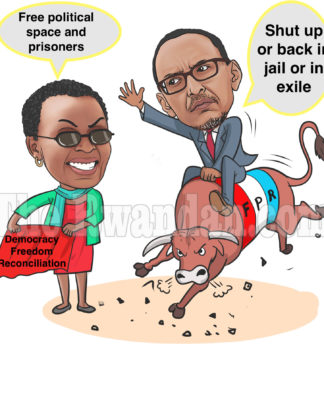
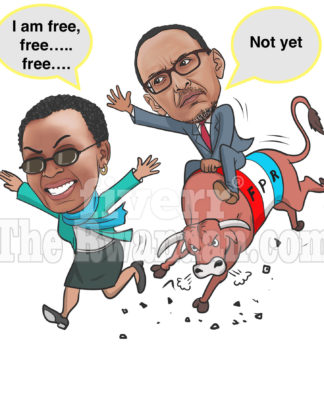
Beyond the legal arguments, the case has drawn significant political attention. Ingabire has long been one of the most prominent opposition figures challenging Rwanda’s political system. Her party, DALFA-Umurinzi, remains banned, and several of her supporters have spent years in prison on charges including plotting against the state.
Some analysts view the Supreme Court proceedings with scepticism. They argue that the trial may serve as a carefully staged exercise designed to project an image of judicial independence at a time when Rwanda is facing growing international criticism over political repression.
Ingabire’s arrest last year triggered renewed concern among international human rights organisations, European institutions and UN bodies, which have repeatedly questioned the independence of Rwanda’s judiciary and the treatment of political opponents.
According to these observers, the current proceedings could provide Kigali with a way to release Ingabire without openly admitting that her detention was politically motivated. By framing the issue as a constitutional debate over a legal provision, the government may seek to ease international pressure while preserving its domestic narrative.