












This week, the Congolese Armed Forces (FARDC) launched attacks on the Democratic Forces for the Liberation of Rwanda (FDLR) near the town of Sake and on a refugee camp close to Goma in the North Kivu province of the Democratic Republic of Congo (DRC), as reported by AFP and Africa Intelligence. These events highlight a complex geopolitical struggle, raising questions about President Félix Tshisekedi’s motivations and whether his actions are naïve or driven by opportunism.
The FDLR, a group founded by Rwandan refugees, has been implicated by UN experts as collaborating with FARDC against the M23, allegations denied by both parties. In contrast, Rwanda accuses Kinshasa of using FDLR as a proxy against Rwanda’s interests in the region.
According to Africa Intelligence, the FARDC’s offensive was specifically targeted at killing General Pacifique Ntawunguka, alias “Omega,” the military leader of the FDLR. Yet the relationship between FARDC and FDLR has been historically ambiguous, often involving cooperation against common threats such as the M23. This inconsistency is a central factor in evaluating whether Tshisekedi’s decisions are genuinely aimed at national interests or influenced by international pressure.
A local journalist in Goma reported that on Thursday, more clashes occurred involving FARDC commandos and rebels of the Alliance des Patriotes pour un Congo Libre et Souverain (APCLS) at the Lushagala refugee camp, highlighting the volatility in areas near Goma. FARDC allegedly sought FDLR members hiding within these camps.
The military spokesperson of FARDC has remained silent on these developments despite being approached by AFP and Africa Intelligence. Similarly, the DRC government has not provided any statement regarding the attacks. On the other hand, Curé Ngoma, a spokesperson for the FDLR, confirmed that the attacks began on Tuesday but doubted that they were initiated by FARDC proper. Ngoma mentioned that their attackers could be forces aligned with Rwanda, further blurring the actual alignments in this conflict.
Africa Intelligence suggests that the attack was spurred by mounting international pressure on Kinshasa to demonstrate its willingness to sever ties with the FDLR. The United States and other international partners have pushed Kinshasa to show genuine commitment in distancing itself from the FDLR, which Rwanda views as a continued threat. As a result, the FARDC reportedly launched the attack, possibly more for public relations reasons than for genuine military objectives.
General Jérôme Chico Tshitambwe, the Deputy Chief of Staff of FARDC, arrived in Goma on September 19 on a confidential mission reportedly linked to pursuing General Omega. However, due to the intertwined operations between FARDC and FDLR, Tshitambwe’s efforts appear compromised from the outset. This relationship is further complicated by ongoing informal alliances between FARDC and armed groups, including the FDLR.
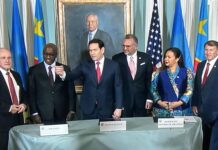
The backdrop of these hostilities is the recent, seemingly futile peace talks held in Luanda, mediated by Angolan President João Lourenço. Despite both DRC and Rwanda agreeing to a temporary ceasefire in July, tensions have continued to escalate. Kinshasa accuses Kigali of backing M23, while Kigali levels similar accusations against Kinshasa for supporting FDLR. Both accusations are substantiated by UN expert reports, but neither country admits to these claims.
Patrick Muyaya, DRC’s Information Minister, stated that during discussions in Angola, the two countries debated dismantling the FDLR and withdrawing Rwandan troops from the DRC. However, meaningful progress remains elusive. The recent clashes are emblematic of this stagnation, underscoring the region’s deeply entrenched political and ethnic conflicts.
On Thursday, AFP reported that FARDC made an attempt to attack the FDLR at the Lushagala refugee camp. However, they mistakenly targeted the APCLS, a Wazalendo militia allied with Kinshasa. This incident further complicates the already convoluted alliances in eastern Congo. FDLR spokesperson Curé Ngoma mentioned that the fighting persists intermittently and that FARDC has been scattering refugees, forcing the FDLR to engage in defensive actions.
Africa Intelligence has pointed out that Kinshasa, pressured by international stakeholders, especially the United States, undertook these attacks primarily to appease its international partners. FARDC aimed to prove its disassociation from FDLR through military engagement, yet the unclear boundaries between alliances and enemies in eastern Congo raise questions about the actual effectiveness and authenticity of these efforts.
Despite these ongoing military operations, the conflict is nowhere close to resolution. The armed struggle in eastern Congo is multi-layered and involves FARDC, FDLR, M23, and multiple smaller militias like the APCLS. President Tshisekedi’s approach—targeting groups like FDLR while continuing cooperative relations in different contexts—suggests inconsistency that could either be read as strategic opportunism or a lack of coherent policy direction.
The peace efforts mediated by Angola have not yet yielded tangible results. Analysts believe that President Lourenço may again convene with President Tshisekedi during the UN General Assembly in New York to find common ground. However, skepticism remains regarding any substantial breakthrough, particularly given DRC’s unwillingness to compromise on certain negotiation points during the previous talks in Luanda.
An urgent letter sent by Norman Ishimwe Sinamenye, Co-Coordinator of the movement All For Rwanda, calls for the immediate suspension of military operations against the FDLR and the protection of civilians caught in the crossfire. This appeal reflects the humanitarian concerns around the ongoing conflict. Sinamenye underscores that the FDLR fighters live within communities of Rwandan refugees and Congolese Hutus, groups that are already highly vulnerable. He argues that indiscriminate attacks, including the use of heavy artillery and airstrikes, only exacerbate the plight of these civilians.
According to Sinamenye, over twenty civilians, including women and children, have died due to the military operations, with many more wounded and displaced. He points out that the FARDC’s targeting of groups like Wazalendo, who have so far played a role in defending the local population from threats like M23, is misguided. This strategy not only compromises the safety of civilians but also reflects the lack of a clear objective on the part of the Congolese government in its military engagements.
The military’s silence regarding the chaos in places like Mugunga, following skirmishes involving FARDC, Wazalendo, and FDLR rebels, only fuels uncertainty and fear among displaced people. As skirmishes increase, the risk to civilian lives becomes more acute, with no formal communication to reassure or inform them.
From a broader perspective, analysts argue that Tshisekedi’s decision to target the FDLR is misguided and may have severe repercussions. His belief that capturing or killing FDLR leaders could prompt the international community to pressure President Kagame to withdraw Rwandan troops from the DRC is seen as naïve. The reality on the ground suggests that until the issue of M23 is resolved, removing RDF forces from the DRC will remain an unrealistic goal, as the M23 and RDF are seen as deeply interconnected, sharing ethnicity and objectives.
On the other hand, distinguishing between FDLR fighters and those from other Hutu militias, such as Wazalendo, in regions like Rutshuru and Masisi, is equally challenging. This shared ethnicity and language complicates any military efforts to isolate specific targets without broader ramifications for the local population.
The FDLR’s experience in warfare and their alliance with Hutu groups like Wazalendo have, so far, been a deterrent against M23 capturing Goma. Should FARDC decide to engage these Hutu militias directly, it risks weakening the defensive capabilities around Goma, potentially making it easier for M23 and RDF to take the city.
It is worth remembering that Tshisekedi’s government previously allowed Rwandan forces to eliminate senior leaders of anti-Kagame forces, including General Sylvestre Mudacumura and General Wilson Irategeka. Despite these efforts, Rwanda continued to support the resurgence of the M23, a group that had been largely defeated and exiled for over a decade.
Observers believe that Rwanda’s targeting of FDLR is merely a pretext, with the real goal being to gain control of Congolese territory and exploit its natural resources, especially valuable minerals. This motivation suggests that without a unified regional strategy that addresses these deeper economic and political interests, conflicts like the one in eastern DRC are unlikely to see a resolution. President Tshisekedi’s current military initiatives, viewed as either naïve or opportunistic, risk exacerbating an already dire situation, with the greatest burden falling on the civilian population caught amidst this complex and ongoing regional power struggle.