







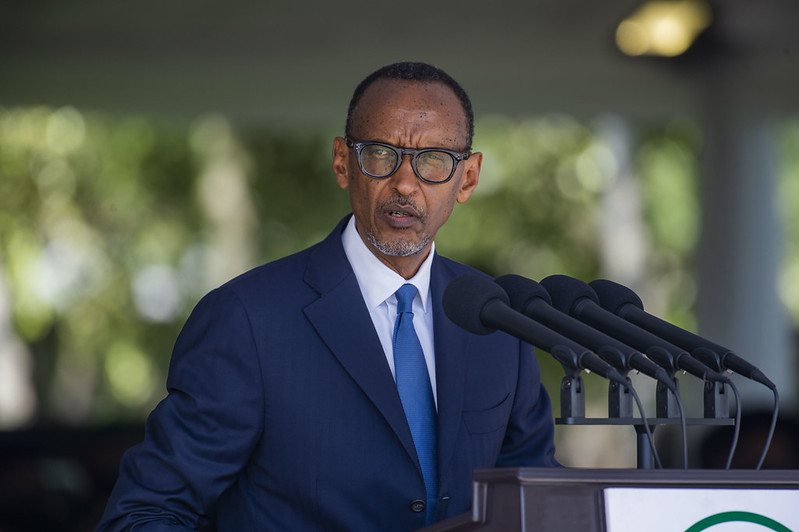
Kigali, Rwanda – Amid growing speculation over the health of Rwandan President Paul Kagame, the Rwanda Defence Force (RDF) has publicly denied the authenticity of a viral statement circulating on social media that claimed the president was in critical condition. The statement, attributed to the military, was labelled as “fake news” and dismissed as entirely false.
The disputed document, whose authors remain unknown, emerged after nearly three weeks of President Kagame’s absence from public view, fuelling rumours about his well-being. Online commentary and private discussions in Rwanda and within the diaspora have been dominated by questions surrounding his health and whereabouts.
David Himbara, a former senior economic adviser to Kagame and now a vocal critic living in exile, has been among the loudest voices claiming that the president is seriously ill and currently receiving treatment in Germany. However, these allegations have not been officially confirmed or denied by the Office of the President or any other branch of the Rwandan government.
The president’s last confirmed public appearance dates back to June 6, when he received a delegation from Hope Haven Christian School at Village Urugwiro in Kigali. Since then, no official images or footage of Kagame have been released, and government communications have remained silent on his prolonged absence.
BBC reportedly attempted to seek clarification from the presidency, but was unable to obtain a response by the time of reporting.
While the government insists that the statement about Kagame’s health is a fabrication, concern remains high among the population and observers abroad. The episode has further exposed the tightly controlled nature of public information in Rwanda, particularly concerning the head of state.
Beyond the political uncertainty, the atmosphere in Rwanda is being marked by a disturbing rise in ethnically charged rhetoric, especially online. Several sources, including human rights monitors, report growing instances of young Rwandans—particularly from the Tutsi ethnic group—publicly expressing genocidal threats against Hutus. In some extreme cases, individuals have gone as far as expressing hope for Kagame’s death, viewing it as an opportunity to “complete the job” through mass violence against Hutus.
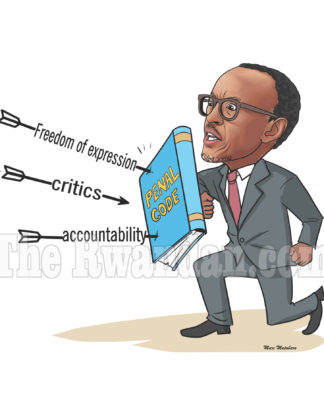
These comments, often shared openly on social media platforms, have gone unchallenged by the authorities, prompting concerns about selective enforcement of laws on hate speech and incitement. Observers note that when Hutu youth speak about the killings their communities suffered during and after the 1994 genocide, such statements are quickly condemned by the state as “divisionism” or threats to national security. In contrast, similar or worse statements from Tutsi individuals are frequently ignored or tacitly tolerated.
This double standard in the regulation of speech has raised alarms among civil society organisations and regional observers, who worry that Rwanda’s political discourse is once again slipping into dangerous terrain. The country’s post-genocide model of national unity and reconciliation, once lauded internationally, now appears increasingly fragile under the weight of unresolved historical trauma, ethnic polarisation, and political repression.
As uncertainty over Kagame’s condition lingers, the silence from the highest levels of government risks deepening mistrust and fuelling further speculation. More critically, it creates an environment in which extremist narratives can flourish unchecked—at a time when Rwanda can least afford it.

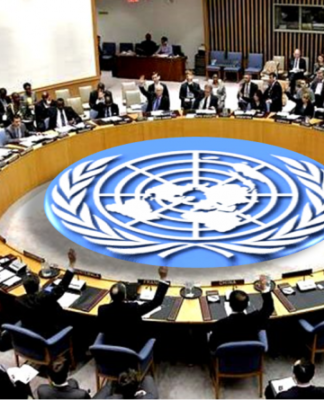






 has publicly denied the authenticity of a viral statement circulating on social media that claimed the president was in critical condition.)