
















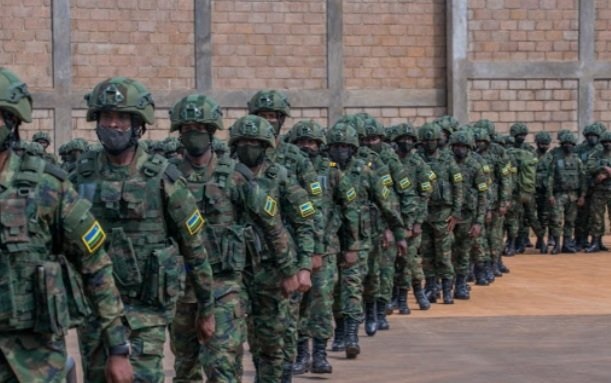
The Rwandan government has warned that it could withdraw its troops from northern Mozambique if long-term international funding for the operation is not secured. The warning comes at a time when Kigali is facing increasing international scrutiny and new sanctions linked to the conflict in eastern Democratic Republic of Congo.
Rwanda’s Minister of Foreign Affairs, Olivier J.P. Nduhungirehe, made the statement on the social media platform X while reacting to reports by Reuters and Bloomberg regarding the future of European Union funding for Rwanda’s military deployment in Mozambique.
“It’s not that Rwanda could withdraw, it’s that Rwanda WILL withdraw its troops from Mozambique if sustainable funding is not secured for its counter-terrorism operations in Cabo Delgado,” the minister wrote.
His comments followed reports indicating that financial support from the European Union through the European Peace Facility may expire in May and might not be renewed. The EU has so far contributed roughly €20 million to support Rwanda’s deployment.
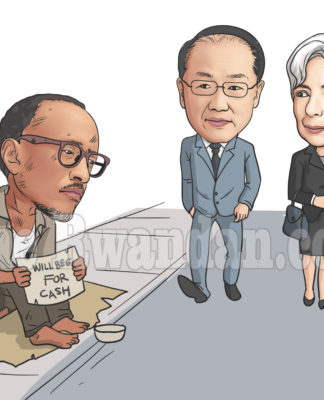
However, Kigali argues that the actual cost of the operation is far higher. Government spokesperson Yolande Makolo said the funds provided by the EU represent only a fraction of the real expenses, claiming that the total cost to the Rwandan government is at least ten times higher.
In a series of posts on X, Makolo defended Rwanda’s military presence in Mozambique, saying the deployment has helped restore stability in parts of Cabo Delgado since 2021. According to her, civilians have returned home, children have gone back to school, businesses have reopened and major foreign investments, particularly in liquefied natural gas projects, have resumed.
Rwandan forces were deployed in July 2021 at the request of the Mozambican government to help fight insurgent groups linked to the Islamic State that had carried out deadly attacks in the province. Initially around 1,000 soldiers and police officers were sent, but the number later grew to roughly 2,000 personnel, according to statements from President Paul Kagame.
Yet the intervention has not been free from controversy. Critics argue that the presence of Rwandan troops has also served to protect massive energy investments by multinational corporations operating in Cabo Delgado. Among them are the French energy giant TotalEnergies and the U.S. company ExxonMobil, whose liquefied natural gas projects in the region are estimated to be worth around $50 billion.
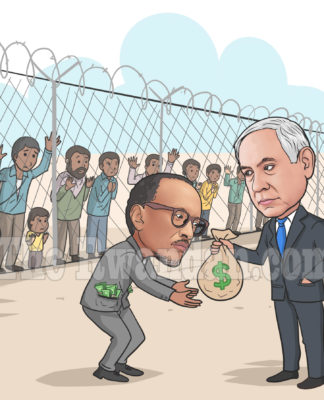
For several analysts and Rwandan opposition figures in exile, the deployment illustrates a broader strategy by Kigali to position its army as a regional security provider. By projecting military power abroad, they argue, the Rwandan government strengthens its diplomatic leverage with Western governments while securing financial and political support.
The threat to withdraw troops from Mozambique is therefore interpreted by some observers as a form of political pressure directed at international partners rather than a purely operational decision.
The announcement comes amid a particularly tense moment in Rwanda’s relations with Western countries. Earlier this month, the United States imposed sanctions on Rwanda’s Defence Forces and four senior generals accused of supporting the M23 rebel movement fighting in eastern Democratic Republic of Congo.
For years, United Nations experts as well as several Western governments have accused Kigali of providing troops, equipment and logistical support to the rebel group. The Rwandan government has consistently denied these allegations, insisting that its actions are purely defensive and aimed at protecting national security.
Speaking to diplomats in Kigali following the sanctions, President Paul Kagame defended Rwanda’s position, saying the country has the right and responsibility to ensure the security of its borders and citizens.
“At this moment in time, none of us can pretend to ignore what is happening in global politics,” Kagame said. “But one thing that has not changed is the right and the responsibility of every country to guarantee the security of its borders and its people.”
At the same time, he criticised what he described as pressure on Rwanda to ignore security concerns and expose itself to threats.
These diplomatic tensions appear to be spilling over into other areas beyond the military sphere. In a move that also drew attention this week, Rwanda’s APR Basketball Club, a team owned by the Rwandan military, unexpectedly withdrew from the upcoming season of the Basketball Africa League (BAL), a competition supported by the U.S. National Basketball Association (NBA).
The Basketball Africa League confirmed that APR would be replaced by Rwanda’s RSSB Tigers before the start of the Kalahari Conference, which is scheduled to take place in South Africa later this month.
Neither APR, the league nor the Rwandan basketball federation provided an official explanation for the withdrawal. However, several Rwandan media outlets reported that the decision may be linked to the recent U.S. sanctions targeting Rwanda’s military leadership.
For some analysts, the incident reflects a broader climate of strain between Kigali and Western partners, where political disputes are increasingly intersecting with economic, military and even cultural cooperation.
Meanwhile, financial institutions continue to monitor Rwanda’s economic outlook. According to Reuters, the credit ratings agency Fitch recently revised Rwanda’s outlook from “negative” to “stable”, citing reduced uncertainty regarding access to external financing and what it described as improved diplomatic engagement that has helped ease regional security tensions. The agency maintained Rwanda’s sovereign rating at “B+”.
Yet the contradiction between these financial assessments and the growing geopolitical tensions surrounding Rwanda’s military activities highlights the complex position the country now occupies internationally.
As Kigali continues to present itself as a key security actor on the African continent, critics argue that its expanding military footprint abroad is increasingly entangled with political disputes, economic interests and diplomatic pressure from its Western partners.