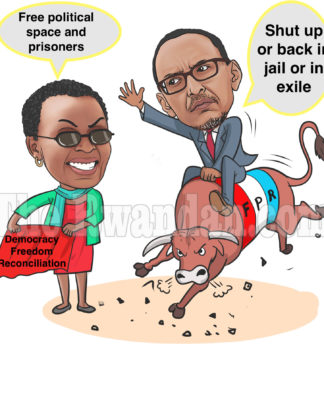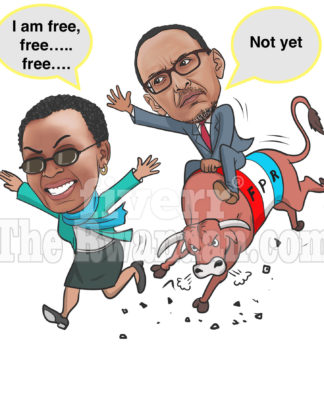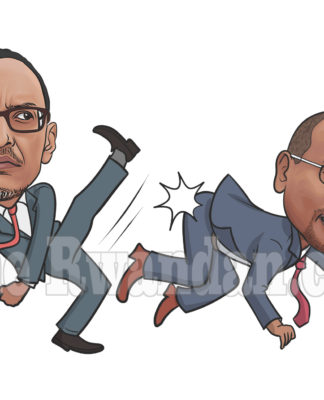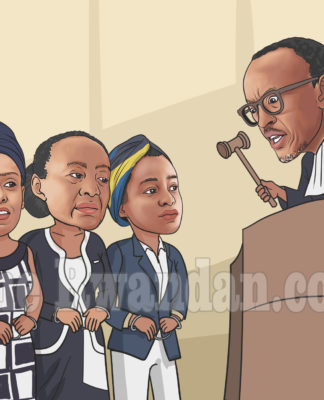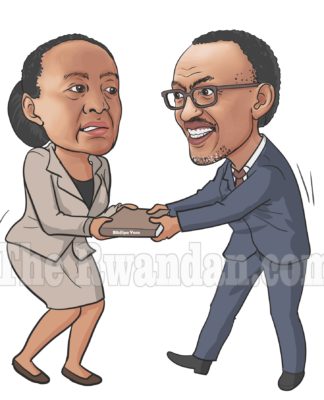

















Kigali, June 19, 2025 — In Rwanda, peaceful opposition appears to be a red line that the authorities are determined not to tolerate. On Wednesday, Victoire Ingabire Umuhoza — a leading figure in the country’s democratic opposition and president of the DALFA-Umurinzi party — was arrested at her home by police, following a full day of questioning by judicial authorities. She is currently being held at the Remera station of the Rwanda Investigation Bureau (RIB). The arrest follows an order from the Supreme Court launching an official investigation into alleged “conspiracy against the government.” The charges stem from reading circles organized by members of her party around the book Blueprint for Revolution — a manual on nonviolent resistance written by Serbian activist Srdja Popovic. While prosecutors view the initiative as evidence of subversive mobilization, independent observers see it as a clear attempt to criminalize peaceful civic engagement.
This is not the first time Victoire Ingabire has faced political repression. After returning from exile in 2010 to run in presidential elections, she was swiftly arrested and later sentenced to 15 years in prison on charges of “divisionism” and “conspiracy against the state.” Her trial was widely criticized by organizations such as Amnesty International and Human Rights Watch for falling short of international standards. Granted a presidential pardon in 2018, she went on to found DALFA-Umurinzi, a political party committed to democratic reform through peaceful means and open dialogue. Her latest arrest comes just as she was set to complete her conditional sentence this year — a milestone that would have restored her civil rights and allowed her to potentially contest the 2029 presidential elections. For many analysts, the timing of the renewed legal action is not coincidental.
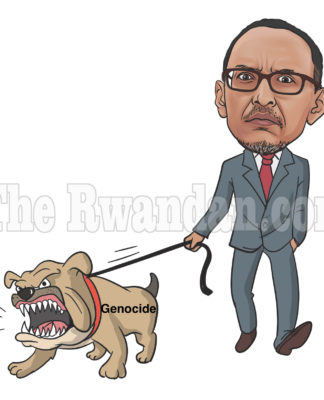
This case emerges amid growing domestic and regional instability. Persistent, though unconfirmed, rumors suggest that President Paul Kagame — in power since 2000 — may be experiencing serious health issues, raising questions about political succession and fueling tensions within the ruling elite. Internationally, Rwanda faces increasing criticism for its alleged role in the conflict in eastern Democratic Republic of Congo, particularly for its reported support of the M23 armed group. As diplomatic pressure mounts and isolation deepens, the government appears to be tightening its grip on civil society and silencing the few remaining voices of dissent.
According to the RIB, Victoire Ingabire and other party members are suspected of forming a “criminal group” with the intent to cause public unrest — an accusation her legal team firmly rejects. “This is a clear attempt to weaponize the justice system to stifle political discourse,” said a member of her legal team. Ingabire had voluntarily complied with the investigation and presented herself before the authorities. “She fully cooperated. Her arrest is not only unjustified, but legally unfounded,” added a senior DALFA-Umurinzi official.
In the days since her detention, calls for her immediate release have intensified. European lawmakers and international human rights organizations are reportedly preparing to take up her case. DALFA-Umurinzi has issued an urgent appeal to the international community, warning of the risks of prolonged detention and potential abuse. “Rwanda cannot continue to enjoy the trust of its international partners while systematically suppressing internal dissent,” commented one analyst based in Brussels.
Despite ongoing intimidation and political persecution, Victoire Ingabire remains steadfast in her commitment to nonviolence. “I have never advocated violence. My struggle is political and peaceful,” she has consistently stated. In today’s Rwanda, such a stance is apparently enough to be treated as a threat. Yet to many, she remains a symbol of democratic courage — and a beacon of hope for a more peaceful political future.