












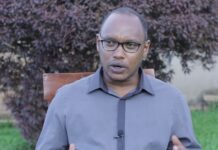


The High Council of Rwanda’s specialized chamber of the High Court has ruled that Aimable Karasira Uzaramba must begin his defense in response to charges brought against him by the prosecution. This ruling comes despite objections from Karasira and his defense team, who requested additional time to prepare their case.
Karasira, a 48-year-old former lecturer at the University of Rwanda and a known human rights activist, faces accusations including denial and justification of genocide, dissemination of false information, incitement of division, and promoting public unrest. The charges are linked to videos he posted on his YouTube channel, “Ukuri Mbona,” in which he claims to advocate for truth and critical analysis of societal issues. He denies all allegations, insisting that his content aimed to shed light on issues of public interest rather than incite criminal actions.
Karasira’s lawyers, Bruce Bikotwa and Felicien Gashema, argued that they had not been granted adequate time to prepare his defense. They highlighted logistical challenges, including restrictions imposed by Mageragere Prison, where Karasira is detained. According to the defense team, the prison limits access to technology such as computers and denies the use of prison facilities for case preparation. They further noted that some prosecution evidence, including video clips, requires careful review alongside their client, which has proven difficult due to these restrictions.
The prosecution countered these claims, stating that the videos in question do not need to be reviewed with Karasira in person as the key content has already been extracted and presented in written form. They also accused the defense of intentionally delaying the trial, emphasizing that the time granted should have been sufficient for case preparation.
The court sided with the prosecution, ruling that the trial should proceed without further delays. However, the judge ordered that the defense be given the necessary access to the video evidence they requested. The court also addressed a proposal to transfer Karasira from Mageragere Prison to Mpanga Prison, which is closer to the court. Karasira opposed the transfer, citing his long-standing adjustment to Mageragere and the supportive relationships he has built with fellow inmates. He expressed concern that a change in environment could exacerbate his struggles with depression, a condition he has lived with for over 20 years, reportedly stemming from the trauma of the 1994 genocide.
Medical reports submitted at different stages of the trial confirm Karasira’s diagnosis of severe depression, though court-appointed specialists have concluded that his condition does not impair his cognitive abilities or his capacity to stand trial.
The court ultimately upheld Karasira’s preference to remain at Mageragere Prison and agreed not to schedule consecutive daily hearings, accommodating his health needs. Despite these concessions, the trial will proceed this week and next, marking a pivotal stage in a case that has been ongoing for nearly two years.
Karasira continues to maintain his innocence, describing himself as an advocate for human rights and a critic of societal shortcomings. He insists that his statements and actions, while controversial, were not intended to deny or justify the genocide but rather to confront uncomfortable truths and encourage dialogue. The court’s decision to move forward underscores the tension between ensuring a fair trial and addressing concerns about prolonged delays in the judicial process.