







By Emmanuel Mwiseneza
Dr. Eugène Rwamucyo is being tried for genocide, among other charges, by the Court of Assizes in Paris.
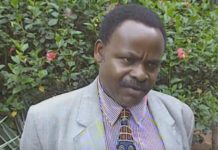
Jean Kambanda testified as a defense witness on October 11, 2024, via videoconference from his prison in Dakar, Senegal.
Jean Kambanda began by introducing himself:
“I am Jean Kambanda, I am a commercial engineer, I am the former Prime Minister of the Rwandan government from April 9 to July 19, 1994, and I am a political prisoner of the United Nations.”
Jean Kambanda attempted to continue explaining how he is being arbitrarily imprisoned when the President of the Court of Assizes stopped him and explained the reasons for his testimony and the formalities to be followed before presenting his testimony. The president explained that while he could speak about his own case, his testimony was about Dr. Eugène Rwamucyo and should help the court understand the context and provide elements to reach a fair judgment. The president asked Jean Kambanda if there were any people among the civil parties involved in the trial with whom he had a conflict of interest. Kambanda replied that he did not know them, and thus, could not speak on this matter. The court then considered the issue of whether Jean Kambanda should take an oath. The court concluded that “given that Jean Kambanda has been convicted of charges related to those for which Dr. Eugène Rwamucyo is being tried, he should not take an oath but is nevertheless invited to tell the truth.”

Jean Kambanda then got to the heart of the matter by saying outright that he could not avoid speaking about what happened in Arusha because all of that is at the root of what is happening today, where only Hutus are being pursued worldwide.
Kambanda explained the scam that took place in Arusha, starting with his own case. He explained that he was arrested in Nairobi along with other people, but while the others were taken to the Arusha prison, he was detained in a house with two prosecutors for three months without even his family knowing where he was. He explained that when his wife called him, his captors made sure that he led her to believe that he was in Arusha, but he had eventually figured out a way to let her know he was not in Arusha. He explained that he was later moved to a secret location, still with “his” prosecutors, for a few more months (he did not recall the exact length).
In essence, he explained that he was forced to admit that his government committed genocide, and he was made to sign a document to that effect, and that this was the only condition under which he was allowed to join the Arusha prison. Later, when asked by someone from civil society if he felt responsible and, if not, why he admitted responsibility, he explained that in the conditions in which he was placed, if he wanted to stay alive, he had no choice but to do so. He explained that someone else refused to comply and that his body was found in a canal in Brussels—a clear reference to the late Minister Juvénal Uwilingiyimana.
Kambanda explained the circumstances of his appointment and revealed that it was the French ambassador who forced them to announce the government they had formed but kept secret, because France needed a point of contact to allow its soldiers coming from Bangui into the country to evacuate expatriates. Once the list of ministers was published, the French ambassador received the Minister of Foreign Affairs, Jérôme Bicamumpaka, to organize the entry of French soldiers from Bangui to evacuate the expatriates.
Kambanda explained the infiltration of all political organizations by the RPF (Rwandan Patriotic Front) and how the Interahamwe were a creation of the RPF. He explained that the first meeting of the Interahamwe was held without the MRND or even President Habyarimana knowing about it. It was only when the final result was ready that it was presented to President Habyarimana, who was taken by the idea and accepted it. He explained that even the youth group of the MDR (JDR) was presented to them without them being the initiators, but they were naive and believed in the goodwill of those presenting it to them. However, they eventually understood that it was a creation of the RPF to pit the youth of the two parties against each other, thus increasing tensions in the country.
Kambanda gave several examples that I did not fully retain, but he mostly spoke about a certain Godfrey Kiyago, nicknamed Ninja. Kiyago, a military officer of the RPF with the rank of lieutenant, had infiltrated the Interahamwe and acted as a big boss who called the shots. According to Jean Kambanda, it was Kiyago who killed the PL minister Landouald Ndasingwa, his wife, and his children. It was also Kiyago who set a deadly trap for his “friend” Katumba, an influential member of the CDR, to exacerbate tensions in Kigali.
He also gave the example of the assassin of Queen Mother Rosalie Gicanda, President Kagame’s aunt. I missed the name, but Kambanda said this person turned out to be an RPF soldier who rejoined them after their victory.
Kambanda explained that he and his friends in the MDR understood the RPF’s Machiavellian calculations after the assassination of their leader Emmanuel Gapyisi, and they chose to join the faction that would later be called the “power” wing. However, the greed of some and the ambitions of others prevented the party from maintaining its unity in the face of the RPF’s manipulations and lies. He explained that Dr. Dismas Nsengiyaremye secretly negotiated with Colonel Alexis Kanyarengwe in Tanzania to be named Prime Minister in the Arusha Accords, a position that Faustin Twagiramungu later snatched from him through more schemes. He explained that he, on the other hand, was appointed by his party during the Kabusunzu congress, and it was in the same logic that he became Prime Minister after the assassination of President Habyarimana.
Kambanda also explained that Habyarimana, before leaving for his fatal meeting in Dar es Salaam, had given instructions to arrest Robert Kajuga, the president of the Interahamwe, before his return, because he feared that Kajuga might stage a coup. Kambanda expressed surprise at how a civilian could plan a coup, but said that certainly some soldiers were involved. He also explained how General Dallaire wanted to stage a coup by attempting to take Prime Minister Agathe Uwilingiyimana to the radio to make a declaration, which, according to Jean Kambanda, was a coup statement. He explained that the politicians present at the meeting made it clear that in the event of the president’s absence, the prime minister does not replace him, but rather the president of parliament, which is why the choice fell on Dr. Théodore Sindikubwabo. Kambanda also explained that American soldiers (GIs) were waiting in Bujumbura to support this coup, and that General Roméo Dallaire had asked the RPF to prepare to bring soldiers to Kigali to help contain the FAR (Rwandan Armed Forces) in their barracks! So, in a sovereign country, it was the RPF rebellion, assisted by UNAMIR, that was supposed to confine government soldiers to the barracks!
Jean Kambanda was asked if he truly held power or if he was a puppet. He replied that he held real power and that those who say Colonel Bagosora appointed him are fantasizing. He even recalled an incident where he clashed with Colonel Bagosora, who made certain demands regarding the composition of the government and the promotion of some military officers, especially generals. He said he resisted Colonel Bagosora, telling him that if he wanted to stage a coup, he should do it properly. Bagosora backed down. He added, however, that his power was hindered by dishonest, greedy people (ibisambo), traitors (ibyitso), and the intransigence of the RPF, which had resumed the war and was ready to do anything to seize power.
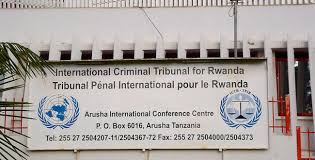
On the subject of the genocide, Kambanda recognized the genocide of the Tutsis but refused to acknowledge its planning by the Hutu regime. For him, it was the RPF that planned the genocide of the Hutus, but in order to make that possible, they first had to carry out the genocide of the Tutsis. Kambanda explained that the ICTR (International Criminal Tribunal for Rwanda) in Arusha did everything to prevent investigations targeting the RPF, which should have led to the RPF being identified as the true planners of the genocide. He specifically cited Australian investigator Michael Hourigan. Hourigan conducted his investigation and discovered that it was the RPF that shot down President Habyarimana’s plane and documented various massacre sites attributed to the RPF. When he called ICTR prosecutor Louise Arbour at the time, she ordered him to stop his investigation and return to The Hague. When he arrived at The Hague, at the headquarters of both the ICTR and ICTY, they confiscated all the disks/keys containing his investigation, but he managed to hide one file, which he published ten years later!
When Carla Del Ponte, the new prosecutor, tried to reopen the file on the RPF’s crimes, the ICTR was taken away from her, leaving her only the ICTY!
Regarding Butare:
Jean Kambanda explained (in response to questions) that the government did not choose prefects but that prefect positions were distributed among political parties. He explained that the prefect position in Butare was allocated to the PL (Liberal Party) and that of Kibungo to the PSD (Social Democratic Party). He explained that it was the PL and the PSD that agreed to exchange their prefects, with the Butare prefect going to the PSD and the Kibungo prefect going to the PL. Thus, it was not his government that dismissed the prefect of Butare, Dr. Jean Baptiste Habyarimana, but an agreement between the PL and PSD parties. The court asked him if he knew what had become of the dismissed prefect, Jean Baptiste Habyarimana, and he replied that when he learned that he was imprisoned in Gitarama, he ordered the Minister of Justice, Agnès Ntamabyaliro, to ensure his release or bring him before a court if there were charges against him. Dr. Habyarimana was eventually released but was killed while trying to return home to Butare. As for the perpetrators of this murder, Kambanda said he did not have time to conduct an investigation and therefore does not know them.
Regarding the May 13, 1994, Butare meeting:
This meeting, which Dr. Rwamucyo attended and which is the subject of the testimony, Kambanda explained that he had been invited by the intellectuals of Butare to give a state of the situation. He said he did not recall Dr. Rwamucyo speaking at this meeting, as he did not know him personally. He only knew Dr. Rwamucyo as the director of the University Center for Public Health (CUSP) in Butare, a position in which he replaced the previous director, whom Kambanda knew better. He knew Dr. Rwamucyo as someone who carried out his work by organizing the burial of the bodies littering the streets of the city. He even mentioned that it was the president of the ICRC who had asked Jean Kambanda to make a radio announcement to get public works drivers to help bury the bodies to prevent a sanitary disaster from compounding the humanitarian and security catastrophe. Therefore, it was the ICRC that took charge of this mission, first in Kigali and then elsewhere.
The prosecutor tried to trip up Jean Kambanda, who claimed not to have met Dr. Rwamucyo before the May 13, 1994, meeting, by pointing to a page from his agenda that listed the names of several doctors, including Rwamucyo. Kambanda explained that he took notes in his agenda based on information provided by his ministers or other collaborators, and that just because names were noted on May 11 did not mean he had met those people on that date.
Regarding the famous speech by Dr. Théodore Sindikubwabo, which many consider to have inflamed the situation in Butare:
Kambanda first laughed, saying that he was the one who spoke at length during this visit and that the president’s speech lasted only a few minutes. He then pointed out that the speech was not broadcast on the radio and that only those present heard it. He explained that the recording was stolen for propaganda purposes. He finally explained that part of the speech was taken out of context to make it say what it did not. He said the president had said: “I see the fields of sorghum, maize… that are not being tended. Go work, because if you don’t work, even if the RPF doesn’t kill you, you will starve!” But those who wanted the speech to say something else only took the word “work” (gukora) to claim that it meant “kill,” which is a manipulation typical of the RPF.
When asked if there had been killings in Butare before this speech, Kambanda said there had been, as he had family members in Butare whom he had called before this date to check on them, and they had confirmed that people had been killed.
He added that if anyone had to answer for what happened in Butare, it was first General Marcel Gatsinzi, the highest-ranking military officer there. He also reminded the court that Gatsinzi eventually joined the RPF to later become Chief of Staff and Minister.
Questions were asked about Cyahinda and Nyakizu. He explained that the mayor of Nyakizu, Ladislas Ntaganzwa (whom the court did not hesitate to remind him was aligned with him in the MDR party), was injured by an RPF infiltrator, and from there, the sequence of events that led to the massacre of innocent people seeking refuge in Cyahinda began. One of the lawyers for the civil parties apparently had not thoroughly reviewed his notes, as he confused Nyumba Church with Nyakizu. Since Cyahinda is in my home region, I wanted to correct him, but I couldn’t. Jean Kambanda did not miss this detail either, rightly reminding him that Nyumba is in the Gishamvu commune, where Jean Kambanda is from, whereas the parish in Nyakizu commune is Cyahinda. From there, the debate heated up, as the court sought to use the Cyahinda example to illustrate Kambanda’s responsibility in the genocide. We almost forgot that this was the trial of Eugène Rwamucyo!
Jean Kambanda took the opportunity to explain the RPF’s deadly strategy. According to Kambanda, young Tutsis went to learn how to handle weapons in Mulindi and elsewhere in RPF-controlled zones and then returned to blend in with the population, carrying weapons. These infiltrators led other Tutsis in their flight and were the ones who shot the mayor of Nyakizu, among others. Kambanda explained that the RPF had instructed all Tutsis, well before April 6, to gather in churches, schools, and communal offices when the RPF launched its final battle, where they would be protected. These places, according to Jean Kambanda, were thus traps for these Tutsis, traps set for them by the RPF.
The court president, in an emotional posture, asked Kambanda if the children, women, the elderly, and disabled who were killed were infiltrators. Kambanda replied, of course not. He added that he had asked the population (he said that recordings could be found on Radio Rwanda) not to confuse peaceful Tutsi neighbors with those attacking them (the RPF).
Questions were asked about Civil Defense and the distribution of weapons.
He admitted distributing weapons to the population to defend themselves against the RPF, as the army could not be everywhere, but not to kill Tutsis. He also stressed that civil defense did not begin with his government but with the October 1990 war in the north of the country, where the RPF’s abuses against civilians forced the government to arm the population for its own protection. He explained that he had given orders for checkpoints not to be used to kill innocent civilians but to stop RPF infiltrators. However, since these checkpoints were mostly manned by RPF infiltrators incorporated into the Interahamwe, these checkpoints were used to kill both Tutsi and Hutu civilians. Still, the pressure of the war did not allow for effective control or trials.
Among other questions, Me Karongozi, representing some civil parties, asked him if he had visited Prefect Laurent Bucyibaruta of Gikongoro and when. Kambanda said Bucyibaruta was his friend, and he regularly saw him when passing through. Me Karongozi then asked if Kambanda visited Bucyibaruta on the dates when thousands of people were killed in Kibeho, Cyanika, and other parishes whose names I didn’t catch, and asked if he had gone to congratulate him!
Kambanda replied that at that time, there was nothing to congratulate, as the situation was not one for celebrations but for dealing with emergencies. He also added that, with the means of communication available at the time, he could not instantly know what was happening in all these places.
Me Karongozi also asked him if there had been a mock attack on the night of October 4–5, 1990, in Kigali to arrest Tutsis. Kambanda replied that there was no pretense but a real battle between the FAR (Rwandan Armed Forces) and RPF accomplices (among the FAR), as the RPF’s plan was to take Kigali in five days with accomplices awaiting the arrival of columns from Kagitumba for a junction. It was thanks to the vigilance of Colonel Bagosora and his paratrooper unit that the plan was foiled, but Habyarimana prevented the information from being made public.
Me Karongozi also asked if he felt responsible for anything or not. He replied that the only responsibility he recognized was not knowing or being able to prevent or stop the genocide.
He reaffirmed that it was the RPF that planned everything.
The court president asked Jean Kambanda again to explain if the RPF was responsible for the Tutsi genocide and why.
In a solemn tone, Kambanda affirmed that the RPF wanted to exterminate the Hutus, but to do so, they first had to sacrifice the internal Tutsis. He explained that the RPF did everything to turn the Hutus against the Tutsis by planting bombs, killing Hutu leaders (Gapyisi, Gatabazi, Bucyana, etc.), but the Hutus refused to turn against the Tutsis. The RPF brutally killed Hutus in the conquered zones and pushed the others toward areas inhabited by Tutsis, hoping they would attack them, but it didn’t work or remained localized. Finally, they chose to assassinate President Habyarimana so that this time, the Hutus would turn against the Tutsis, and this time, it worked.
NB:
- I left the courtroom around 6 p.m., after nearly three hours of his testimony, while Kambanda was still being cross-examined by the civil parties and the court. I certainly missed some things.
- I did not take notes; I have reconstructed what I remembered, and there may be some errors, but if there are, they are minimal.