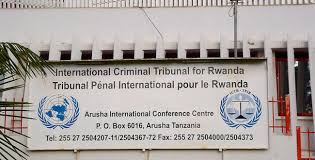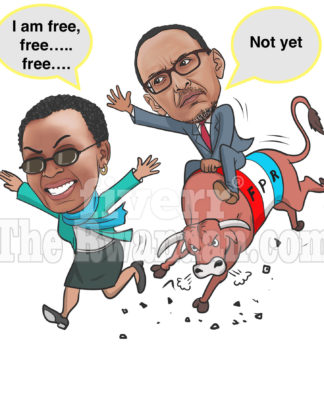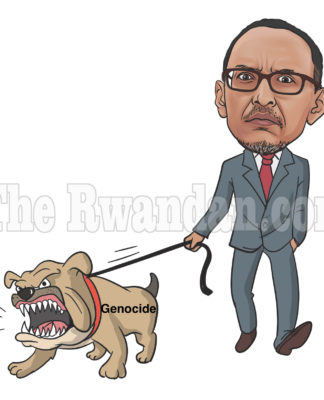






















For three decades, two expressions are often invoked when discussing responsibility in the Rwandan tragedy: the “genocidal government” and the “Akazu.” These terms, widely used in political and media circles, suggest the existence of collective criminal structures that allegedly planned and directed the 1994 genocide. Yet, in light of the trials held at the International Criminal Tribunal for Rwanda (ICTR) and more recent judicial rulings, the reality is far more complex.
The “Genocidal Government”: an Oversimplification
In official discourse, the interim government formed after the 6 April 1994 attack is often branded as the “genocidal government.” It is true that several of its members were convicted by the ICTR: Prime Minister Jean Kambanda, as well as ministers such as Jean de Dieu Kamuhanda and Pauline Nyiramasuhuko, were all found guilty of genocide and crimes against humanity.
However, other ministers tried before the ICTR were acquitted after lengthy proceedings: André Ntagerura (Transport), Casimir Bizimungu (Health), Jérôme Bicamumpaka (Foreign Affairs), Justin Mugenzi (Commerce), and Prosper Mugiraneza (Public Service). For these individuals, the tribunal found insufficient evidence to convict.
Legally speaking, one cannot label the entire executive as a “genocidal government.” The ICTR convicted individuals, not an institution. Unlike the Nuremberg Tribunal, which declared organisations such as the SS criminal in their entirety, the ICTR never described the interim government itself as a criminal body. The phrase “genocidal government” therefore belongs more to the realm of political rhetoric than of law.
The Akazu: Between Myth and Propaganda
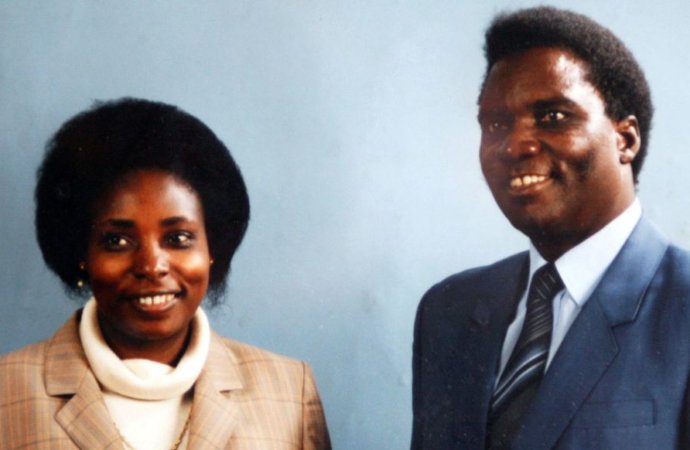
The word “Akazu,” literally “small house,” emerged in the early 1990s to describe the inner circle around President Juvénal Habyarimana, often composed of relatives and allies from Gisenyi and Ruhengeri. After 1994, it was widely popularised by the RPF and its international allies as synonymous with a shadowy clan that allegedly controlled the state and orchestrated the genocide.
Yet the ICTR never recognised the Akazu as a criminal organisation. No judgment ever established its existence as such. More recent rulings reinforce this:
- Protais Zigiranyirazo, often portrayed as a key figure of the Akazu, was definitively acquitted in 2009 by the ICTR for lack of evidence. It is also crucial to recall that he held no official position after 1989, having left his role as prefect of Ruhengeri five years before the genocide. Associating him with the interim government or decision-making in 1994 is therefore misleading.
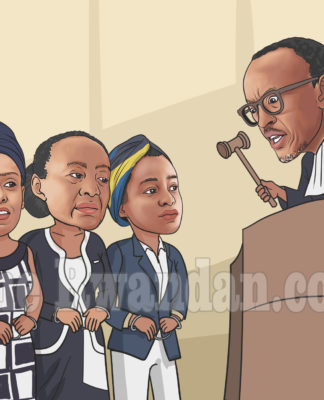
- Agathe Kanziga Habyarimana, the late president’s widow, frequently depicted as the “head” of the Akazu, was granted a non-suit in France in August 2025 after more than twenty years of investigation. She is legally innocent and has even been recognised as a victim of the 6 April 1994 attack that killed her husband.
The 6 April 1994 Attack: a Major Contradiction
One crucial fact undermines the Akazu narrative even further. The 6 April 1994 attack that brought down the presidential plane and unleashed the chaos killed two personalities described as central pillars of this alleged network:
- President Juvénal Habyarimana;
- Colonel Élie Sagatwa, head of the Military Household and brother-in-law of Protais Zigiranyirazo.
It is therefore difficult to argue that the Akazu orchestrated the attack, since its supposed leaders were among its first victims.
Between Memory and Rigour
Neither the “genocidal government” nor the “Akazu” were ever recognised by the ICTR as criminal entities. These terms may hold symbolic or political value, but they do not reflect the findings of international justice.
A rigorous journalist may note that these expressions were widely used in political and media narratives of the 1990s, but must also specify that the tribunal judged individuals, acquitting or exonerating several of them. To repeat such labels uncritically is to blur the line between political propaganda and judicial fact.
In light of acquittals and non-suits, it is no longer accurate to speak of a “genocidal government” or a “genocidal Akazu” as if these were proven criminal entities. They belong to the vocabulary of propaganda and memory, not to the realm of law.
Thirty years on, it is essential to remember that international justice judged men and women, not political myths.