
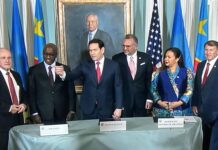













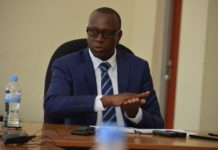
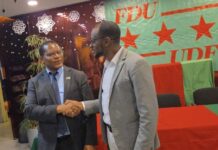



In a high-stakes digital press briefing on April 17, the U.S. State Department’s Senior Advisor for Africa, Massad Boulos, accompanied by Deputy Assistant Secretary Corina Sanders, delivered a firm message to Kigali: withdraw troops from eastern Congo and halt all military support to the M23 rebel group. The remarks came shortly after Boulos completed a diplomatic tour of the Democratic Republic of the Congo (DRC), Rwanda, Uganda, and Kenya from April 2 to 9.
“The M23 must lay down their arms, and Rwandan forces must withdraw from the DRC. This is our position. It is very clear, and we will continue to push in that direction,” Boulos declared. He also reiterated Washington’s call for a ceasefire and respect for DRC’s sovereignty, echoing statements already conveyed by Secretary of State Marco Rubio to leaders in the region. Addressing Rwanda’s concerns regarding the FDLR militia operating in eastern Congo, Boulos acknowledged their importance in the peace talks but emphasized that the solution must be diplomatic. “Everybody has to feel safe, from any threats—actual or perceived,” he stated.
Boulos pointed to recent developments as reasons for cautious optimism. Notably, M23 troops, allegedly supported by Rwanda, pulled out of the town of Walikale in North Kivu province. This withdrawal allowed the reopening of a tin mine operated by Alphamin, a U.S.-linked company, which had been forced to shut down due to the rebel advance. The mine’s reopening immediately brought down global tin prices, which had spiked by 30% after the closure. Boulos praised the move as a “gesture of goodwill” and a possible signal of further de-escalation. He also welcomed the first direct dialogue between the Congolese government and M23 in years, describing it as “a very good first step” toward lasting peace.
Beyond the political and military dimensions, the briefing also highlighted a deeper economic agenda. Boulos confirmed that the United States and the DRC are currently negotiating a minerals agreement aimed at facilitating private sector investment and reducing Chinese dominance in Congo’s mining sector. The goal, Boulos explained, is to expand American economic presence in the region while ensuring that U.S. companies uphold strict legal and ethical standards. “We’re talking about win-win agreements. These are responsible, law-abiding companies that bring value and respect the laws of host countries,” he said.
Washington’s plan includes supporting major infrastructure development in the DRC, such as the Lobito Corridor and hydroelectric projects, through agencies like the Development Finance Corporation and the U.S. Export-Import Bank. The initiative, Boulos insisted, is not meant to displace other global players but to provide high-quality alternatives. “Time will tell who Congo’s best partners are,” he said. “We’re not here to interfere with existing arrangements. We’re here to offer something better.”
However, questions linger about the security aspects of the deal. A Reuters investigation revealed that Erik Prince, the founder of the controversial private military firm formerly known as Blackwater and a Trump ally, has reached a preliminary agreement with Congolese authorities to assist in securing mining revenues and fighting smuggling in mineral-rich regions. While current plans reportedly do not involve deploying security contractors into active conflict zones, Prince’s involvement raises concerns about the return of privatized militarization in a region already destabilized by multiple armed actors. Prince declined to comment, and the U.S. State Department has not clarified his role.
Meanwhile, Rwanda has reportedly agreed to let SADC troops withdraw from the rebel-held city of Goma through its territory. The move comes after the regional SAMIDRC force began a phased exit in mid-March, following Kigali’s insistence on its departure. According to diplomatic sources, the weapons carried by these troops will be sealed for transit through Rwanda en route to Tanzania. This symbolic cooperation could signal Rwanda’s intent to de-escalate amidst growing international pressure.
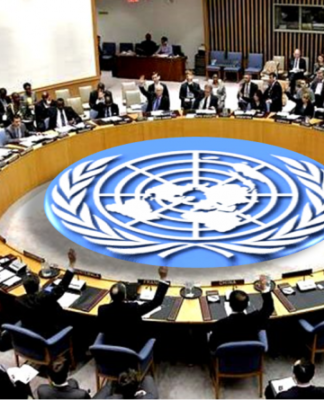
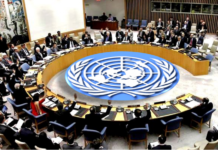
At the United Nations, the American position remains firm. Acting U.S. Representative John Kelley reiterated calls for the M23’s full withdrawal and condemned Rwanda’s continued support for the group. The UK, too, called for an immediate and unconditional ceasefire. However, critics warn that the Trump administration’s approach risks trading security guarantees for economic control. Editorials such as that in The Guardian describe the emerging U.S.-DRC deal as “a sequel to the colonial scramble,” with Congo potentially offering mining rights in exchange for protection and investment.
The situation remains fluid. The U.S. appears to be combining diplomatic pressure with economic incentives to end the conflict while positioning itself strategically in the region’s critical minerals sector. Whether this leads to a durable peace or reinforces historical patterns of dependency and foreign dominance will depend on the outcomes of current negotiations—and on how much sovereignty Kinshasa is willing to trade for stability and development.