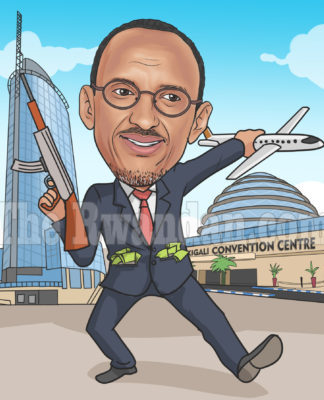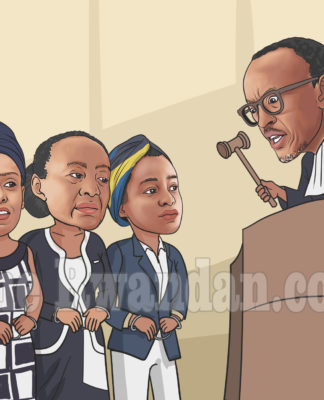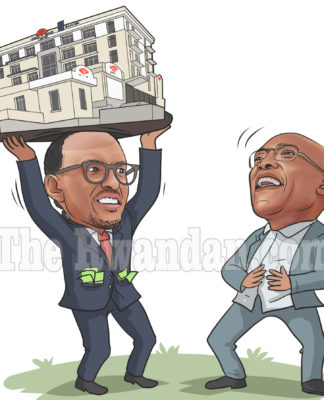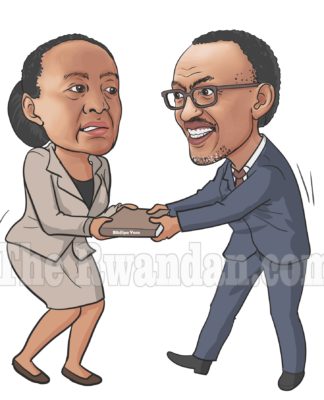












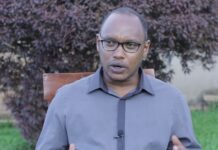


On July 16, 2024, Bernard Ntaganda, the founder and leader of the Social Party Imberakuri, issued a critical statement from Kigali regarding the recent Rwandan presidential and legislative elections. His remarks highlight significant concerns about the political landscape and election process in Rwanda under President Paul Kagame.
The elections, held on July 15, 2024, featured incumbent President Paul Kagame running against Frank Habineza and Philippe Mpayimana. The campaign period, beginning in June 2024, was marked by an atmosphere that Ntaganda described as “supernatural.” Kagame’s opponents appeared to trail far behind, unable to mount any substantial challenge, with results confirming Kagame’s overwhelming victory.
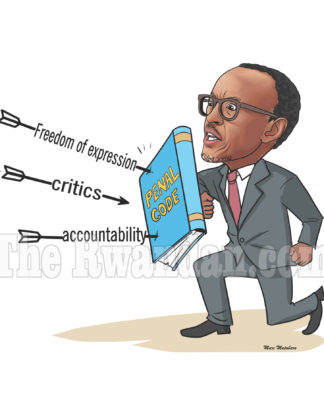
Ntaganda criticized the campaign’s lack of genuine political discourse. He asserted that Kagame’s campaign speeches were devoid of meaningful engagement and instead emphasized his determination to remain in power regardless of the people’s will. Ntaganda characterized the president’s rhetoric as a clear message: “I am President, and I remain so, whatever it costs my people.”
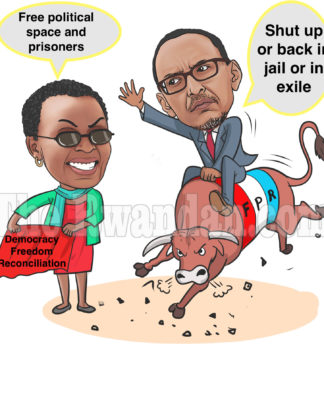
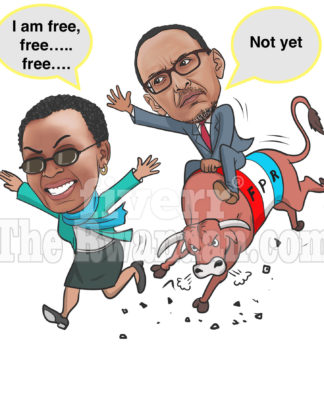
A key issue highlighted by Ntaganda was the absence of a legitimate and independent opposition capable of challenging Kagame’s rule. He accused Kagame of selecting candidates who lacked popular support and were not seriously competing for the presidency. These candidates, Ntaganda argued, were mere “opportunists” and “yes-men” rather than viable alternatives with a vision and strategy for governance.
Bernard Ntaganda himself, a significant figure in Rwandan politics since 1991 and the founder of the PS Imberakuri—the first opposition party recognized by the Rwandan government in 2009—was barred from participating in the election. He had been disqualified by the Kigali High Court in what he termed a “sham trial,” where he sought rehabilitation to run in the 2024 presidential race.
The Rwandan National Electoral Commission’s results seemed to validate Ntaganda’s criticism of the election process. The PS Imberakuri had previously warned of a predetermined outcome favoring Kagame, who, according to Ntaganda, manipulated the electoral process to maintain political apathy and control. This dynamic, Ntaganda noted, has been a feature of Rwandan politics since the rise of the Rwandan Patriotic Front (RPF).
Ntaganda’s statement underscored the lack of democratic integrity in the elections, labeling Kagame’s victory as devoid of “flavor, glory, or popular triumph.” The conditions surrounding the election, with little competition and an oppressive political atmosphere, led Ntaganda to describe Kagame’s win as lacking the legitimacy that should accompany a truly victorious leader.