







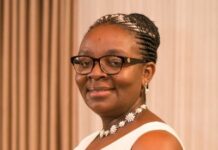

By Victoire Ingabire, President of the DALFA-UMURINZI Party
The recent presidential election victory of Paul Kagame in Rwanda highlights the country’s ongoing challenges with democracy, according to political opponent Victoire Ingabire.
Since the end of the civil war and the genocide against the Tutsi in 1994, Rwanda has been dominated by the ruling party, the Rwandan Patriotic Front (RPF). Its leader, Paul Kagame, has consistently won over 90% of the votes in the last three presidential elections. This week, he reportedly broke his own record, with preliminary results showing a 99.15% victory. However, this victory came at the expense of excluding several prominent opponents, including myself, from the electoral race. The recently concluded elections are no different from previous ones, highlighting the lack of democracy in the country.
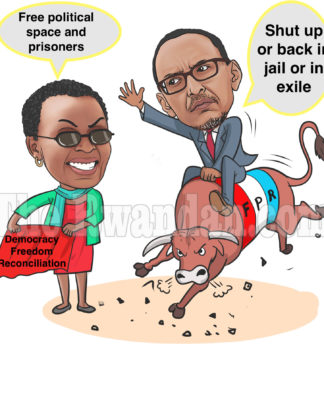
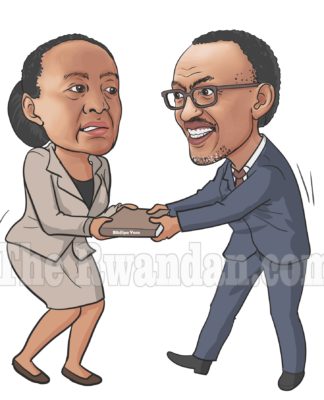
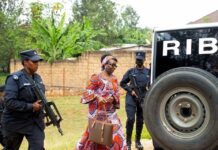
In 2010, I voluntarily returned to Rwanda from exile in the Netherlands with the intention of registering my political party and running in the presidential elections scheduled for later that year. However, I was immediately arrested after openly criticizing the government’s reconciliation policy regarding the 1994 genocide. I was subsequently sentenced in a trial widely condemned as politically motivated and grossly unfair.
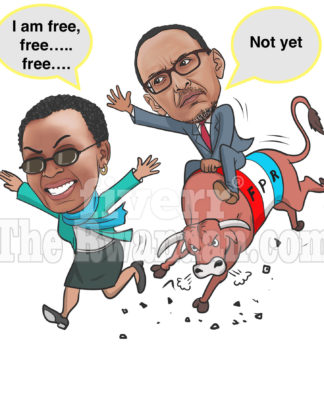
In 2018, President Kagame released me from prison under conditions, including a travel ban requiring the Justice Minister’s permission. Despite multiple requests, I have yet to receive authorization.
Five years after my release, I petitioned the High Court of Rwanda for rehabilitation to allow me to run in the latest presidential elections and visit my family in the Netherlands. The court denied my request. Over the past 14 years, I have been barred not only from political representation but also from reuniting with my loved ones. I have missed my children’s weddings, the births of my grandchildren, and visits to my seriously ill husband.
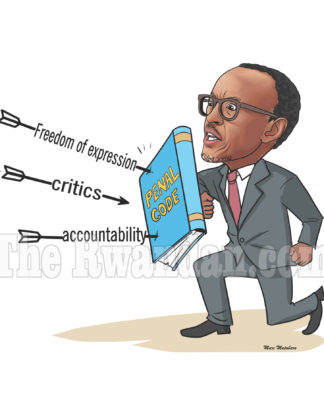
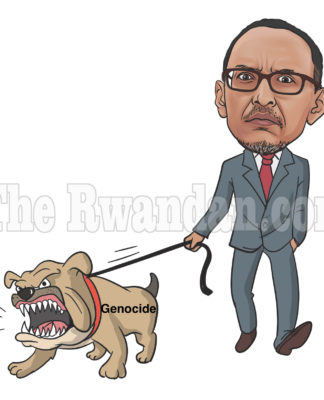
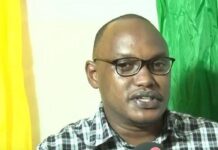
Amnesty International described the 2017 elections in Rwanda as taking place in a “climate of fear and repression.” In 2024, other credible challengers to the ruling party, such as Bernard Ntaganda, faced similarly unjust legal challenges. Like me, he was arrested at the start of the 2010 presidential candidate registration period and served four years in prison. He also sought rehabilitation to participate in the 2024 elections, but the court rejected his appeal. This pattern is part of the repression of dissent characterizing Paul Kagame’s 24-year rule.
However, the legal barring of candidates is not the only way the system suppresses divergent views. Last year, the Constitution was amended to allow simultaneous presidential and parliamentary elections. Yet, Rwandan public and independent media overwhelmingly covered the presidential campaign, sidelining parliamentary candidates. This biased media landscape stifled parliamentary hopefuls from effectively communicating their political platforms, stifling public discourse on Rwanda’s future. This phenomenon only exacerbates the lack of diversity resulting from excluding presidential candidates like me.
Had I been allowed to run, I would have advocated for governance reform in Rwanda, enabling genuine democratization through inclusive dialogue between political actors and civil society. I would also have emphasized the importance of strengthening our reconciliation policy by acknowledging all victims of Rwanda’s troubled history.
Instead, voters received no concrete plans to address real issues such as growing social inequalities, rising public debt, deteriorating relations with neighboring countries—particularly the Democratic Republic of Congo and Burundi—and the plight of Rwandan refugees living in neighboring states or scattered worldwide. These challenges risk increasing insecurity in Rwanda in the near future.
The RPF takes credit for Rwanda’s economic recovery, with GDP growing by an average of 7.2% annually between 2012 and 2022. However, it is less forthcoming about World Bank reports indicating nearly half the population lives on less than €1.52 (£1.65) per day.
During the campaign, Paul Kagame defended Rwandan democracy, asserting its uniqueness. He called on Rwandan youth to defend it against government critics on social media. Twice during the campaign, he even disparagingly mentioned my name, despite my exclusion from participation.
When asked about his priorities for the next five years, Paul Kagame stated his intention to continue rebuilding Rwanda. However, my country will only truly prosper with a functioning democracy that allows dissenting voices, debate, and alternative perspectives.
Consistently winning presidential elections with nearly 100% of the vote is not a sign of popularity but of a lack of competition. My question remains: if Paul Kagame is so popular, why can’t credible opponents run against him in elections?
Once again, this electoral result demonstrates that Rwanda still has a long way to go on the path to democracy.