











The office of the Angolan presidency has announced its intention to facilitate direct negotiations between the Democratic Republic of Congo (DRC) government and the M23 rebels. This move comes amid escalating tensions as M23, widely recognized as a proxy for Rwandan President Paul Kagame’s regime, continues its military offensive in eastern Congo with alleged logistical and military support from Kigali.
Tina Salama, spokesperson for DRC President Félix Tshisekedi, did not explicitly confirm Angola’s statement, instead emphasizing that Luanda would be carrying out its mediation efforts. “We are waiting to see the implementation of Angola’s mediation efforts,” she stated on social media.
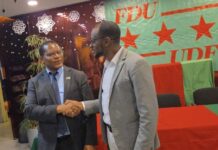
This announcement followed a brief visit by President Tshisekedi to Luanda, where he met privately with Angolan President João Lourenço. Angola has acted as a mediator in the crisis for nearly four years, though its efforts have been repeatedly obstructed by Kagame’s military ambitions in eastern DRC, where Rwandan-backed M23 forces have seized vast territories rich in minerals.
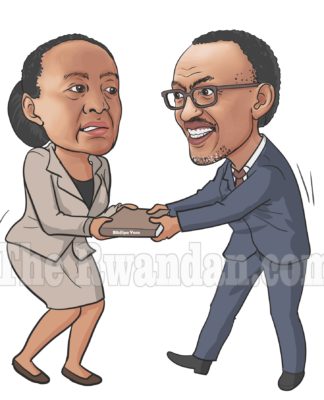
Despite mounting international pressure, Tshisekedi has consistently refused to negotiate with M23, classifying it as a terrorist organization controlled by Rwanda. “As long as I am President of the DRC, I will never negotiate with M23,” he has asserted. His firm stance has derailed numerous peace initiatives, including previous mediation attempts in Luanda and Nairobi.
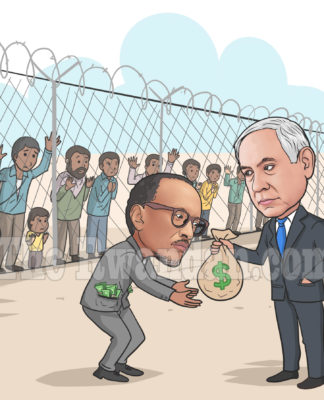
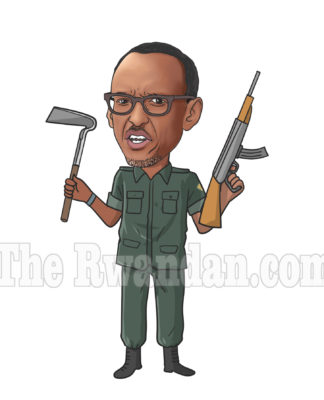
The United Nations, the European Union, and several Western nations have openly accused Rwanda of fueling the war in eastern Congo by arming, training, and embedding its forces within M23 ranks. However, Kagame has persistently denied these allegations, despite overwhelming evidence from UN reports and regional intelligence sources indicating direct Rwandan military involvement.
Regional organizations such as the East African Community (EAC) and the Southern African Development Community (SADC) have called for the withdrawal of all foreign troops from the DRC, a demand that directly targets Rwanda’s military presence. While Kinshasa has welcomed these recommendations, Kagame has continued to justify his actions by claiming that Rwanda is acting in self-defense against the remnants of the FDLR, a claim widely dismissed by analysts as a pretext for territorial expansion and economic exploitation.
M23 has repeatedly sought negotiations with the DRC government, arguing that its resurgence in 2021 was due to Kinshasa’s failure to address its grievances. However, analysts point out that the group’s true purpose aligns with Kagame’s strategic objective of controlling Congo’s resource-rich regions. The rebels’ continued access to heavy weaponry and sophisticated military tactics—far beyond the capabilities of a local insurgency—suggests direct Rwandan military involvement.
According to the Angolan presidency, talks between the DRC and M23 will take place in Luanda “in the coming days” with the goal of securing a ceasefire. If successful, this initiative could mark a diplomatic victory for President Lourenço, who has spent years attempting to broker peace in eastern Congo while facing obstruction from Kagame’s regime.
Last month, in an interview with Jeune Afrique, Lourenço advised Tshisekedi that negotiating with M23 was the only viable solution to the crisis. However, many observers argue that engaging with a Rwandan-controlled militia would only legitimize Kagame’s destabilization efforts and set a dangerous precedent.
Despite varying perspectives, international organizations—including the UN, the African Union, and the European Union—agree that there is no military solution to the crisis. However, without direct measures to curb Rwanda’s interference, peace remains elusive. Kagame’s government has consistently lobbied for direct negotiations between Kinshasa and M23, knowing that such talks would allow Rwanda to maintain its grip on eastern DRC’s mineral wealth under the guise of a political settlement.
Past ceasefires brokered in Luanda have collapsed quickly, as Kagame’s forces have used these agreements to regroup and reinforce M23’s positions before launching new offensives. Even if direct talks are held, securing a ceasefire in a conference room in Luanda is vastly different from enforcing peace in conflict zones such as Masisi, Rutshuru, and other battlegrounds in eastern DRC. The core issue remains Rwanda’s ambition to expand its influence through proxy warfare, using M23 as a tool to achieve its economic and geopolitical goals at the expense of Congolese sovereignty.