





















By René Claudel Mugenzi
The conviction of Franco-Cameroonian author Charles Onana and his publisher Damien Seriyex by the Paris Correctional Court on 9 December 2024 marks a concerning development for those defending freedom of expression, historical inquiry, and critical debate. Onana was found guilty of “complicity in publicly contesting the existence of a crime against humanity,” specifically the genocide of the Tutsi in Rwanda. This verdict is based on passages from his 2019 book, Rwanda: The Truth About Operation Turquoise – When the Archives Speak, in which he critically examines the narratives surrounding the planning and execution of the Tutsi genocide.
Although Onana explicitly acknowledged in his book that the genocide against the Tutsi occurred, the court deemed his critical analysis and use of quotation marks around the term “genocide” as tantamount to denialism. To me, this judgement does not reflect justice but rather a desire to silence Onana. This sentiment was clearly expressed by Daphrose Gauthier, a supporter of the Rwandan Patriotic Front (RPF) and one of the complainants in the case, who stated that the aim of the trial was to silence him. This verdict highlights a broader strategy aimed at stifling dissent and deterring others from engaging in critical investigations that challenge the dominant narrative on the Tutsi genocide.
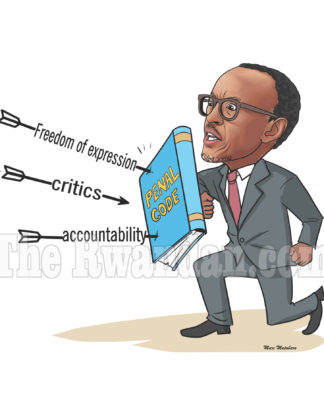
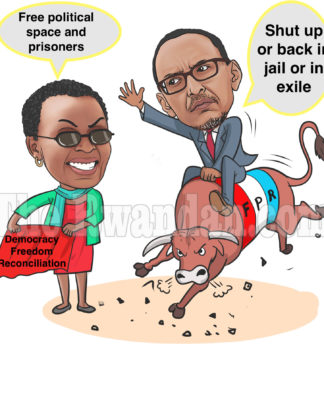
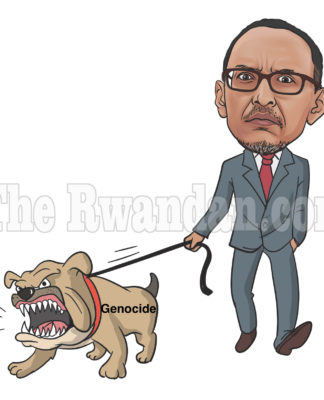
The RPF’s sensitivity to and intolerance of criticism have been well-documented for over three decades. Since taking power in Rwanda, the RPF has sought to tightly control the narrative surrounding the Tutsi genocide. While it is crucial to acknowledge and preserve the memory of the genocide, the RPF has also weaponised accusations of denialism to discredit critics and suppress dissent.
A Human Rights Watch report, Join Us or Die, published on 10 October 2023, details how the RPF coerces individuals and organisations into conforming to its narrative through methods ranging from intimidation to outright violence. The report highlights how dissent is criminalised, both within Rwanda and beyond its borders. Journalists, academics, and political opponents who deviate from the official RPF narrative are often accused of denialism or other severe crimes, even when their work is based on credible research or international documents.
The Onana case perfectly illustrates this pattern. Had Onana been a Rwandan Hutu, I would not be surprised if he had been accused of participating in the genocide itself. As a non-Rwandan critic, the most effective way to silence him was to interpret his writings as denialism, using the French legal system to achieve this end. This misuse of serious accusations to suppress dissent is a hallmark of the RPF’s approach to managing its critics, particularly those exploring sensitive topics such as alleged RPF crimes in Rwanda and the Democratic Republic of Congo.
The involvement of the French judiciary, though likely unintentional, has inadvertently reinforced this strategy. By interpreting Onana’s writings in this way, the court has set a troubling precedent. It demonstrates how legal frameworks intended to protect the memory of genocide victims can be manipulated to enforce specific narratives, thereby limiting the space for critical discourse.
Meanwhile, the United States continues to frustrate the RPF by refusing to adopt its preferred narrative. The US consistently refers to the events of 1994 as the genocide in Rwanda, acknowledging that the Tutsi were the primary victims while also recognising that both Hutu and Tutsi suffered. This refusal to exclusively frame the events as the Tutsi genocide underscores the historical complexities and resists the oversimplification often demanded by political narratives. Given Rwanda’s history of accusing critics of denialism, one wonders how long it will be before the RPF takes the US to court for “denying” the Tutsi genocide. If such a stance were taken by an isolated individual or a small organisation, accusations of denialism would rain down like a storm.
This case also raises important questions about inconsistencies in European legal approaches to denialism. In France, contesting or minimising recognised genocides is a criminal offence, as evidenced by Onana’s conviction. Yet in Belgium, the laws are more balanced, targeting only denialism that incites hatred or violence while protecting legitimate academic and journalistic research. This divergence highlights the need for harmonisation at the European level. What is a crime in one country should not be protected speech in another when dealing with such sensitive matters. Without consistent standards, these laws risk becoming tools of political repression rather than safeguards for historical memory.
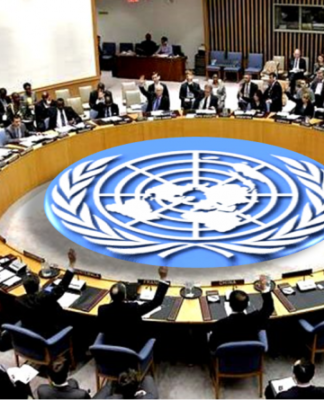
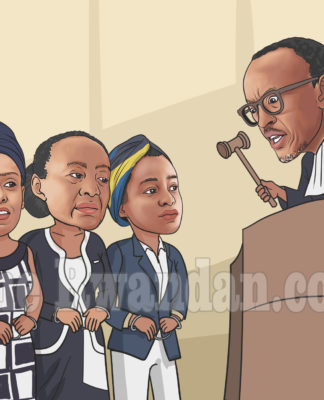
The suppression of dissent through legal means is not new for the RPF. The UN Working Group on Arbitrary Detention has repeatedly condemned Rwanda for its misuse of legal and extrajudicial measures to silence its critics. Recently, this group called for the immediate release of activists detained simply for reading a book about peaceful revolution. This reflects the broader context in which the RPF uses accusations of denialism, treason, or conspiracy to stifle opposition and eliminate critical voices, both domestically and internationally.
While the stated aim of Onana’s conviction is to protect the dignity of genocide victims, I believe it comes at a significant cost. It risks chilling freedom of expression, discouraging academic investigations, and limiting the pursuit of a deeper understanding of history. Onana’s legal team has already announced their intention to appeal, and I hope this process overturns the verdict and reaffirms the importance of protecting free speech.
This conviction serves as a warning to all those who seek to challenge dominant narratives or explore uncomfortable truths about the Tutsi genocide and its aftermath. The fight against denialism must remain vigilant, but it should not become a weapon to suppress legitimate inquiries or critical analyses, inadvertently aided by judicial systems like France’s. The implications of this suppression extend far beyond the Onana case, threatening the principles of free expression and open debate, which are essential for historical understanding and justice.