




















The trial of Charles Onana, a Cameroonian writer and French citizen, marked a turning point in how European courts handle cases of genocide denial related to Rwanda. His conviction by the Paris Correctional Court for “complicity in publicly contesting the existence of a crime against humanity” raises fundamental questions about freedom of expression, judicial impartiality, and political influence in legal matters.
The case stems from the publication of Onana’s 2019 book, “Rwanda, the Truth About Operation Turquoise: When the Archives Speak”. According to the French judiciary, some passages of the book minimized the gravity of the 1994 genocide against the Tutsi in Rwanda. The court also convicted Damien Sirieix, the publisher of the book, for his role in disseminating the controversial content. Onana was fined €8,400, while Sirieix received a €5,000 fine. Additionally, they were ordered to pay €11,000 in damages to the civil associations involved in the case.
The court mandated that these fines be paid within 120 days. If the deadline is not met, both defendants face a prison sentence of the same duration. This measure has been interpreted by Onana’s supporters as coercive, aimed at increasing pressure on him and his publisher.
Marcel Cyiza, a vocal supporter of Charles Onana, harshly criticized the ruling, stating, “No one should be surprised. Anyone who does not align with the narrative favored by the Rwandan government is automatically labeled a genocide denier.” Cyiza condemned what he sees as the manipulation of the French judicial system to serve Kigali’s interests, calling the verdict a demonstration of “selective and biased justice.”
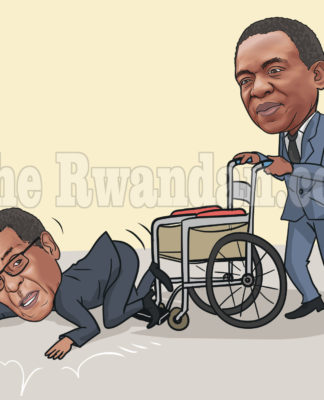
Olivier J.P. Nduhungirehe, Rwanda’s Minister of Foreign Affairs, publicly celebrated the decision by posting a photo of Charles Onana alongside Congolese President Étienne Tshisekedi. This symbolic image was seen as a reminder of the persistent tensions between Rwanda and the Democratic Republic of Congo, further exacerbated by the support of some Congolese figures for Onana throughout the trial.
Richard Gisagara, lawyer for the civil associations, praised the verdict as a historic step forward in combating genocide denial. He stated, “This conviction is a victory for the victims of the genocide and the survivors. It demonstrates that the judiciary will no longer tolerate hateful or revisionist discourse.” According to Gisagara, the trial sends a clear message to those who use their writing to minimize or deny the horrors of the past: such actions will have consequences.
Peter Verlinden, a former Belgian journalist, publicly defended Charles Onana, asserting: “There is no denialism in Charles Onana’s work. I will always defend the freedom to conduct scientific and journalistic research, especially on the massive crimes committed by the RPF Inkotanyi and Paul Kagame since October 1990 in Rwanda, the DRC, and elsewhere.” For Verlinden, the accusations against Onana reflect an attempt to silence critical researchers and suppress independent investigations.
Belgian-Rwandan activist Denise Zaneza also reacted, condemning the ruling on X: “History will show that the truth cannot be buried forever!” She emphasized that the verdict is not only an attack on Charles Onana but also on the right of researchers and journalists to question established narratives. According to Zaneza, the organizations involved in the case are linked to the Rwandan regime, and the decision represents a deliberate attempt to stifle legitimate criticism of it. She called for greater solidarity to defend freedom of expression and denounced the manipulation of French judicial institutions.
Similarly, British-Rwandan activist René Claudel Mugenzi published a detailed article criticizing the verdict as a tool to silence voices critical of the Rwandan Patriotic Front (RPF). He pointed out that accusations of denialism have been regularly used by the Kigali regime to suppress dissent, even beyond its borders. According to Mugenzi, the ruling sets a dangerous precedent for academic and journalistic freedom, risking turning legal frameworks into instruments of political repression.
Canadian journalist Judi Rever also criticized the decision, arguing that it undermines journalists’ right to critically examine history. She highlighted how organizations such as Ibuka France, accused of being proxies for Paul Kagame’s regime, use the pretext of protecting victims’ memory to justify censorship and defend political interests.
Finally, Canadian-Congolese writer Patrick Mbeko described the decision as “politically motivated,” accusing the French judiciary of being influenced by lobbies close to the Rwandan regime. According to him, the ruling illustrates a troubling dynamic where accusations of denialism are used as a tool to limit debate and silence legitimate criticism.
A support group for Charles Onana released a statement insisting that he will appeal the conviction. In a social media message, Onana himself reaffirmed his commitment to defending the truth and fighting what he considers an unjust ruling. He declared, “Our lawyers have filed the appeal today. The judgment is dead… The truth will finally prevail.”
This case highlights the tensions between historical memory, freedom of expression, and geopolitical interests. Critics denounce the politicization of justice in favor of a dominant narrative, while supporters of the conviction emphasize the need to combat all forms of denialism. As the appeal moves forward, this case will continue to divide opinions and fuel debates about the role of judicial institutions in preserving historical memory.