
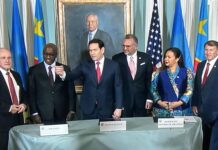











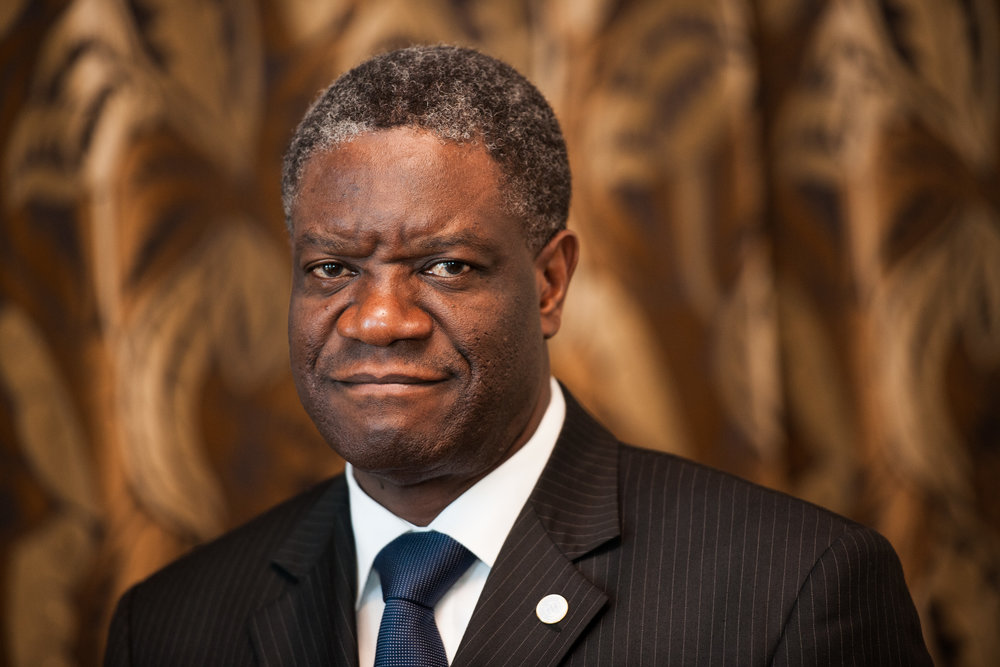
Washington, April 25, 2025- Nobel Peace Prize laureate Denis Mukwege has welcomed the announcement of a declaration of principles signed between the governments of the Democratic Republic of Congo (DRC) and Rwanda, but has warned against hasty optimism, citing persistent concerns about transparency, accountability, and past failures.
Speaking after the April 23 signing facilitated by Qatar and Washington, Mukwege acknowledged that the Congolese population, particularly in the east of the country, continues to endure an unprecedented humanitarian crisis. The resurgence of the M23 rebellion, backed directly and indirectly by the Kigali regime since November 2021, has led to widespread suffering and displacement.
Mukwege emphasized that while various voices have hailed the agreement as a first step toward peace, the history of broken ceasefires — including those signed under the Luanda and Nairobi processes — demands caution. “A half-dozen ceasefires have been systematically violated,” he reminded, highlighting the “bad faith” shown by aggressor forces who have repeatedly defied international law and UN resolutions.
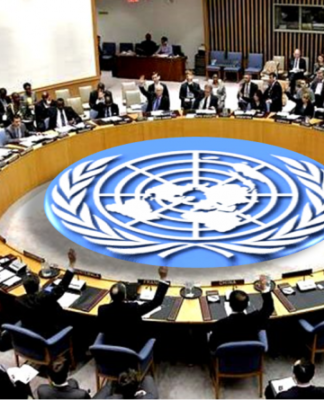
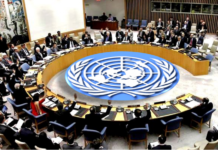
The Congolese surgeon-activist pointed to United Nations Security Council Resolution 2773, adopted in February 2025, which demands an immediate and unconditional ceasefire, the withdrawal of Rwandan Defense Forces from Congolese territory, and the dismantling of parallel administrations set up by occupying forces. Mukwege insisted that these obligations under international law must be the foundation of any sustainable peace process.
He also expressed serious concerns over the opacity of the peace talks facilitated by Qatar and the United States. “Transparency is essential to rebuild trust and move toward a credible roadmap,” he said, warning that backdoor negotiations often reflect foreign economic interests rather than the will of the Congolese people.
Mukwege underlined the need for a coordinated, multilateral approach, calling on the African Union’s newly appointed mediator, Togolese President Faure Gnassingbé, to galvanize and harmonize efforts. The multiplication of scattered initiatives without coherent leadership, he noted, risks prolonging instability.
Addressing justice and accountability, Mukwege rejected any strategy that would prioritize short-term political settlements at the expense of accountability. He stressed that previous peace agreements, apart from the 2013 Addis Ababa Framework, largely failed because they sacrificed justice by integrating warlords into state institutions and ignoring the rights of victims.
“No state is above international law,” Mukwege said, calling for national, regional, and international mechanisms to hold perpetrators accountable and break the cycle of violence and impunity. He reaffirmed support for the UN Human Rights Council’s February 7, 2025 decision to establish an independent investigative mission into grave human rights violations committed in eastern Congo.
Mukwege also welcomed recent actions by the United States and the European Union, which have imposed sanctions on Rwanda and suspended international aid, signaling a growing international awareness of the seriousness of the conflict and Kigali’s destabilizing role in the region.
However, he warned that efforts should not stop at symbolic gestures: “Only strong sanctions and sustained international pressure can force authoritarian regimes to choose peace.”
Finally, Mukwege acknowledged the internal dimension of the Congolese crisis but stressed that ending foreign aggression must be the priority before a truly Congolese intra-dialogue can be successful. He called for a holistic national strategy for transitional justice, inspired by initiatives like the Social Pact for Peace promoted by Congolese religious leaders.
“Ending the international dimension of the conflict is the only way to allow the Congolese people to find their own solutions,” Mukwege concluded.