













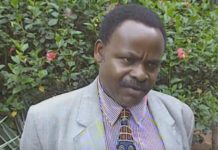

In Rwanda, a sweeping crackdown has shaken the Rwanda Mines, Petroleum and Gas Board (RMB), as several senior officials and powerful mining businessmen have been arrested, raising serious questions about the management of the country’s mining sector and its alleged links to illicit minerals from the Democratic Republic of Congo (DRC). According to multiple sources close to the matter, the Rwanda Investigation Bureau (RIB) detained several division heads within the RMB, including John Kanyangira, Head of Mineral Traceability, Richard Niyongabo, Head of Mining Cadaster and Digital Information, and Augustin Rwamushana Karemera, Head of Mineral Market and Strategy. RMB’s Chief Executive Officer, Francis Kamanzi—already sanctioned by the European Union—has reportedly been questioned by investigators, although he has not been detained.
RIB has officially confirmed the arrests via its X account, announcing that three senior RMB officials—Rwomushana Augustin, Kanyangira John, and Niyongabo Richard—have been jailed, alongside four private contractors suspected of complicity in the alleged crimes. All seven individuals are currently held at the RIB stations of Rwezamenyo and Nyarugenge. According to RIB, they are being investigated for charges including corruption, abuse of office for personal gain, illicit enrichment, and money laundering. RIB warned all public officials and citizens against engaging in corruption or abusing their legal authority for personal benefit, stressing that corruption crimes do not have a statute of limitations under Rwandan law and that any new evidence could trigger prosecution at any time.
Among the arrested businessmen are Philippe Ndagijimana, owner of GAMICO, operating the Bashama tin site, Jonas Habinshuti, accused of illegally holding and selling multiple mining licenses, and Callixte Kwizera. A mineral trader is also implicated. Sources suggest that the charges involve the illegal smuggling of minerals, manipulation of traceability documents, and unauthorized commercialization practices.
The timing and scope of these arrests are raising eyebrows among analysts who closely monitor Rwanda’s internal politics and regional activities. Some argue that the crackdown stems from blatant negligence within the RMB, where officials allegedly failed to properly mask the Congolese origin of minerals entering Rwanda, leading to international exposure and diplomatic embarrassment. Rwanda’s repeated denials of involvement in mineral looting from eastern DRC have faced growing skepticism, especially after multiple UN expert reports linked Rwandan exports to illicitly exploited Congolese resources.
Other observers offer a more political reading of the situation. Some mining sector insiders believe these officials are being used as scapegoats by the Rwandan government in a calculated move to appease international partners. Under mounting pressure, Kigali appears eager to showcase a clean and responsible mining industry, even though many high-level players, including firms linked to the ruling party, the Rwandan Patriotic Front (FPR), continue to dominate the sector.
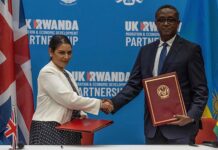
This purge coincides with recent diplomatic maneuvers intended to improve Rwanda’s image abroad. Visits by influential figures such as Massad Boulos, Senior Advisor to Donald Trump for African Affairs, in April 2025, and UK Minister for Africa Lord Collins, in September 2024, to Rwandan mining sites, were part of Kigali’s broader strategy to portray its mining sector as transparent and legitimate. Congressman Ronny Jackson also toured a mining site in March 2025, reinforcing the narrative Rwanda is keen to project.
However, behind these orchestrated visits, skepticism remains high. A seasoned diplomat specializing in Central African affairs suggests that President Kagame and his government needed high-profile arrests to shift blame for mineral trafficking away from state institutions, presenting a narrative of isolated misconduct by individuals rather than systemic policy. This strategy conveniently aligns with Rwanda’s ongoing negotiations with the United States over critical mineral supply chains, at a time when Washington is seeking to reduce dependence on China.
A Rwandan journalist familiar with the mining sector points out that the government may have killed two birds with one stone: responding to U.S. and European demands for greater accountability while simultaneously cleaning up—or appearing to clean up—parts of a lucrative industry deeply tied to the ruling elite. Many mining companies operating in Rwanda are closely linked to the FPR or powerful political figures surrounding President Kagame, blurring the lines between state, party, and private enterprise.
Prime Minister Édouard Ngirente recently told Parliament that Rwanda’s mineral export revenues had soared from $373 million in 2017 to $1.7 billion in 2024, attributing the surge to professionalization and rising investments. Yet this remarkable growth also coincides with the resurgence of the M23 rebel group, backed by Rwanda, which now controls extensive mining areas in eastern DRC. UN experts have consistently reported that minerals extracted from these territories find their way into Rwanda through clandestine networks.
While the recent arrests may serve Rwanda’s diplomatic interests in the short term, they do little to erase the deeper structural allegations. As Kigali seeks to position itself as a trustworthy supplier of critical minerals, the international community remains wary, questioning whether the moves are genuine reforms or merely tactical sacrifices to protect a much larger and deeply entrenched system.