










Kisangani, April 2025 — The official announcement, on March 30, 2025, in Aveba (Ituri), of the creation of a new politico-military movement called the National Coalition for the Liberation of Congo (CNLC), with its military wing National Forces for the Liberation of Congo (FNLC), confirms a troubling trend: the reorganization of armed political networks hostile to Kinshasa, with logistical and territorial support from neighboring Uganda.
Colonel Innocent Kaina, also known by his alias India Queen, a former senior commander in the M23 rebellion and a key figure in Thomas Lubanga’s FPLC during the Ituri wars of the early 2000s, signed the communiqué as Chief of Staff of the FNLC. The movement’s spokesperson, Major Kasereka André, also co-signed the statement. The declaration denounces the Congolese government’s leadership, which it characterizes as “corrupt, nepotistic, and ethnically divisive,” and calls for an armed struggle to “rescue the Congo from collapse.”
This announcement comes amid an increased Ugandan military presence in eastern Congo, particularly in Ituri, where the Uganda People’s Defence Force (UPDF) is officially conducting joint operations with the FARDC against the ADF. However, several former warlords and rebel leaders from Ituri’s violent past — notably Thomas Lubanga, who reportedly recently launched a new armed group called the Convention for the Popular Revolution (CRP) — are now based in Uganda. The timing of these reorganizations has raised eyebrows.
The case of Innocent Kaina is especially telling. Arrested in 2006 and released in 2009 as part of the CNDP-government peace deal, Kaina rejoined the Congolese army before deserting to become one of the M23’s senior commanders during the 2012 rebellion. He led the group’s offensive on Goma before fleeing to Uganda after the M23’s military defeat in late 2013. In 2024, he reemerged in an interview with a pro-M23 Rwandan outlet, where he expressed sharp criticism of General Sultan Makenga, the M23’s current military leader — signaling an ideological and personal split.
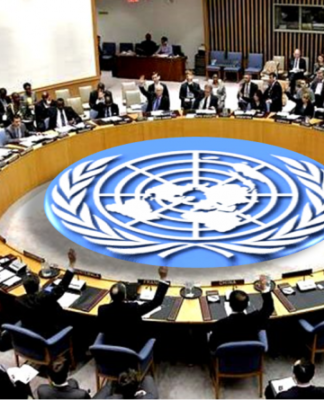
This split takes on greater significance in the context of Rwanda’s well-documented support for the M23. Multiple reports by the United Nations Security Council have confirmed Rwanda’s military, logistical, and political backing of the group. These findings have led to international condemnations and sanctions against Kigali, as well as accusations of direct military occupation of parts of Congolese territory.
In this context, the emergence of the CNLC/FNLC in Ituri — led by individuals historically at odds with Makenga — may reflect a broader strategy to multiply armed factions in order to deflect and dilute pressure from Rwanda, while shifting attention toward Uganda. This theory gains traction following General Muhoozi Kainerugaba’s high-profile visit to Kigali on March 22, 2025. Muhoozi, commander of Uganda’s land forces and son of President Museveni, is known for controversial statements on the Congo’s natural wealth and regional realignments, often posted on social media.
This evolving situation raises pressing questions about a double standard in international diplomacy: while Kigali faces criticism, sanctions, and pressure over its role in the M23 crisis, Kampala has so far escaped serious scrutiny, despite harboring former Congolese warlords who are actively rebuilding insurgent groups.
Kinshasa’s silence adds to the ambiguity. The Congolese government remains officially aligned with Uganda through joint military operations in Ituri, yet has made no public comments about the formation of a new rebel movement in Ugandan-backed zones. The CNLC’s choice to announce its formation from Aveba, a highly strategic location, combined with its explicitly hostile stance toward the central government, signals a potential shift toward multi-front conflict in the eastern provinces.