












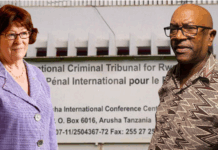

Thirty-one years after the attack on the plane of Rwandan President Juvénal Habyarimana, a group of Rwandan political and civil society organizations based in France is calling for the reopening of an independent international investigation. In a press release issued in Paris on April 5, 2025, the signatories denounce what they describe as continued impunity surrounding the event that triggered the genocide of the Tutsis and the massacres of so-called moderate Hutus.
On the evening of April 6, 1994, the plane carrying the presidents of Rwanda and Burundi—Juvénal Habyarimana and Cyprien Ntaryamira—was shot down as it approached Kigali, killing all on board, including several senior officials and three French crew members. Despite its historical significance, no one has been officially held accountable for the attack.
The signatories express astonishment that no judicial authority has pursued the case, particularly since the French judiciary initially opened an investigation led by anti-terrorism judge Jean-Louis Bruguière. That inquiry resulted in the indictment of nine members of the Rwandan Patriotic Front (RPF), the rebel movement then led by Paul Kagame. However, the case was later closed without prosecution by judges Marc Trévidic and Nathalie Poux, under circumstances the signatories find highly questionable.
They argue that France ultimately prioritized diplomatic interests over justice. The Rwandan government’s reaction at the time was particularly strong, including the severing of diplomatic ties with Paris, the replacement of French with English as the language of instruction, and the destruction of the French cultural center in Kigali. The arrest of Major Rose Kabuye—one of the indicted figures—in Germany led to mass protests orchestrated by the Rwandan authorities.
The statement also criticizes a report by Professor Vincent Duclert, describing it as biased and incomplete. According to the signatories, its purpose was not to establish truth but to normalize relations with Kigali by abandoning serious accusations against RPF officials.
The communiqué goes further, accusing current Rwandan leaders, many of whom emerged from the RPF, of enjoying complete impunity despite their alleged involvement in war crimes, crimes against humanity, and even acts of genocide since the October 1, 1990 invasion. The signatories cite the 2010 Mapping Report by the United Nations High Commissioner for Human Rights, which documents serious atrocities attributed to Rwandan forces, particularly in the Democratic Republic of the Congo, where they have been repeatedly linked to the M23 rebellion.
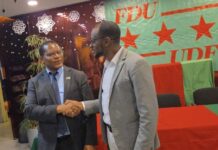
Among the signatories are the Regional Committee of FDU-Inkingi, the Rwandan Government in Exile, the Ishema Party, the Rwandan Community of Lyon, Jambo ASBL France, and RIPRODHOR. Several independent figures, including former Foreign Minister Jean-Marie Ndagijimana and former MDR president Célestin Kabanda, have also endorsed the appeal. They argue that truth is essential to genuine reconciliation among Rwandans and urge the French judiciary to reopen the case.
The signatories conclude by reaffirming their commitment to uncovering the truth and strengthening the historic friendship between the French and Rwandan peoples, in the name of justice and historical memory.