
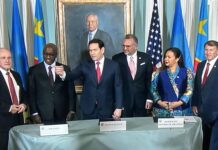











The 2nd Joint Summit of Heads of State and Government of the East African Community (EAC) and the Southern African Development Community (SADC), held virtually on 24th March 2025, marked a significant step in the search for peace in the conflict-ridden eastern Democratic Republic of the Congo (DRC). The summit resulted in the appointment of a high-level and gender-inclusive panel of five facilitators tasked with accelerating the political process toward resolving the crisis.
Co-chaired by President William Ruto of Kenya and President Emmerson Mnangagwa of Zimbabwe, the summit brought together leaders from across the continent, reflecting a unified stance to address a deteriorating regional security situation. The newly appointed panel comprises respected former heads of state from across Africa:
• Olusegun Obasanjo (Nigeria)
• Uhuru Kenyatta (Kenya)
• Kgalema Motlanthe (South Africa)
• Sahle-Work Zewde (Ethiopia)
• Catherine Samba-Panza (Central African Republic)
This diverse group, selected with attention to regional balance, language inclusivity and gender representation, is expected to build upon previous peace efforts and help implement the newly adopted roadmap for stability in eastern DRC.
President Ruto stated that the summit “resolved to expedite the peace process,” pointing to the adoption of a ministerial report outlining a ceasefire, cessation of hostilities, and the creation of a dedicated secretariat to oversee the summit’s decisions.
President Paul Kagame of Rwanda, who also participated in the summit, emphasized the need to address security concerns through a broader regional lens. “When we talk about sovereignty and territorial integrity, it should mean every country. Every country deserves respect,” he said, calling for an end to injustice and political exclusion not only within states but across borders. Kagame reiterated Rwanda’s concerns about its own security and the need for a framework that addresses all parties’ grievances, including those of the DRC.
The report adopted by the summit builds on earlier meetings, including the 1st Joint EAC-SADC Summit in Dar es Salaam in February, and the Ministerial Meeting in Harare on 17th March 2025. It contains short-, medium-, and long-term measures aimed at sustainable peace, and the summit directed immediate implementation of its recommendations.
The panel of facilitators is expected to begin work within a week. The summit tasked the co-chairs to organize a joint briefing session with the panel, in coordination with the EAC, SADC and African Union.
Despite the positive atmosphere and diplomatic language, underlying tensions between DRC and Rwanda remain a key challenge to any mediation effort. Accusations of foreign support to armed groups and competing regional interests have long undermined peace deals.
Nevertheless, the appointment of a strengthened facilitation team is seen as a renewed commitment by African leaders to find a political solution to one of the continent’s most complex and enduring conflicts.