












Paris, September 19, 2025 – The family of Protais Zigiranyirazo, a former Rwandan official and brother-in-law of late President Juvénal Habyarimana, has strongly criticised the decision by the Mayor of Orléans to block his burial in the city at the last minute, citing alleged risks to public order.
In a statement released through their lawyer Philippe Meilhac, the family described the refusal as “brutal” and “incomprehensible,” stressing that it violated their fundamental rights. The decision was upheld by the French Conseil d’État, the country’s highest administrative court, without granting the family a hearing – a move that, according to them, deepened their sense of injustice.
Defamation claims on the horizon
Beyond the burial controversy, the family signalled it will pursue legal action against individuals and organisations they accuse of defaming Zigiranyirazo by portraying him as one of the masterminds or perpetrators of the 1994 genocide.
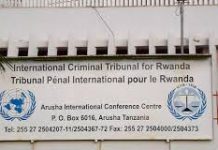
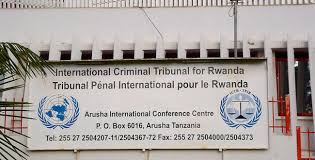
The family emphasised that Zigiranyirazo was fully and definitively acquitted in 2009 by the Appeals Chamber of the International Criminal Tribunal for Rwanda (ICTR). The judges unanimously ruled that the prosecution had “seriously erred in its assessment of the evidence,” after a trial spanning four years, 92 witnesses, and 227 exhibits.
“This acquittal is final and binding,” Meilhac stated, stressing the principle of res judicata – the legal doctrine that a final judgment must be respected. He warned that any attempts to revive accusations could trigger defamation lawsuits in order to protect the honour and memory of the deceased.
Still, Zigiranyirazo remains a controversial figure in Rwandan history. As prefect of Ruhengeri in the 1970s, he was accused by some witnesses and scholars of involvement in the repression that accompanied the 1973 coup d’état which brought Juvénal Habyarimana to power. Several politicians from the First Republic of Grégoire Kayibanda were arrested and transferred to Ruhengeri prison, where many later died under unclear circumstances. These episodes continue to fuel divergent narratives within Rwandan society.
Political and communal fault lines
The dispute has reignited deep-seated divisions within the Rwandan diaspora and among observers of Rwandan politics. While some see Zigiranyirazo’s acquittal as a vindication of due process, others continue to view him as part of the inner circle of the Habyarimana regime, widely blamed for its role in the events leading to the genocide.
These conflicting narratives often overlap with political, ethnic, and regional tensions that remain highly sensitive more than 30 years after the 1994 tragedy. For many Rwandans, the case embodies broader struggles over history, memory, and accountability.
Next legal steps
According to Meilhac, the family will file an appeal before the European Court of Human Rights, challenging the Orléans mayor’s decision, while also preparing civil and criminal defamation actions against those who, in their view, unlawfully tarnish Zigiranyirazo’s name.
“His heirs will remain vigilant,” the statement concluded, “and will not hesitate to act against anyone who disregards the authority of this final judicial decision.”