






















For nearly three decades, tens of thousands of Rwandan refugees—mostly ethnic Hutus—have remained stranded in the Democratic Republic of Congo (DRC), invisible and abandoned in one of Africa’s longest-running humanitarian tragedies. Originally fleeing the aftermath of the 1994 genocide and the rise to power of the Rwandan Patriotic Front (RPF), these refugees continue to live in precarious conditions in eastern DRC. Despite being among the most affected by the region’s recurring violence, they have consistently been excluded from major peace negotiations—including those held in Nairobi, Luanda, Doha, and Washington.
In a compelling op-ed published on Mediapart on June 15, 2025, Dr. Emmanuel Mwiseneza Nzabakirana Jr., a political analyst and member of the opposition movement FDU-Inkingi, raises urgent concerns about the plight of these forgotten people. He argues that the systematic marginalization of Rwandan refugees not only defies international law but also undermines efforts toward lasting peace in the Great Lakes region.
Historical Roots of Displacement
The crisis dates back to 1994, when an estimated two million Rwandans—mostly Hutu civilians, but also ex-FAR (former Rwandan Armed Forces) and Interahamwe militias—fled across the border into what was then Zaire. Many sought refuge in vast camps scattered throughout North and South Kivu. However, these camps soon became targets during the First Congo War (1996–1997), launched by the Rwandan and Ugandan armies under the pretext of pursuing genocidal elements.
Entire camps were attacked, dismantled, and destroyed, pushing survivors deep into the forests or into informal settlements where they have lived stateless, undocumented, and unassisted ever since. The blurring of lines between armed actors and civilians created a lasting stigma. Local Congolese communities and even international actors came to associate all Rwandan Hutu refugees with insecurity and violence.
A Security-Centered Peace Process
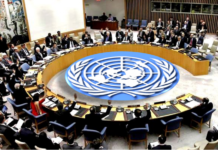
Since 2022, several peace initiatives have emerged to contain the expanding crisis in eastern DRC, particularly the resurgence of the M23 rebel group, widely reported to be supported by Rwanda. The Nairobi Process, for instance, focused primarily on disarming armed groups operating in North Kivu, while the Luanda roadmap aimed to reduce bilateral tensions between Kinshasa and Kigali. However, as Dr. Nzabakirana notes, these negotiations treated military actors as the only stakeholders, leaving civilians—especially Rwandan refugees—entirely outside the discussion.
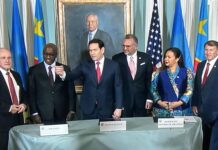
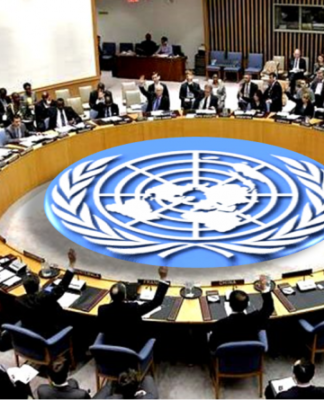
The Doha and Washington dialogues, led by Qatar and the United States respectively, also emphasized security cooperation and regional diplomacy without integrating the humanitarian dimension. No provisions were made for refugee protection, legal status, or safe repatriation—principles enshrined in international refugee law.
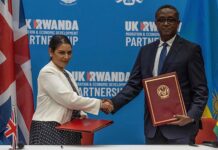
This exclusion is even more striking when contrasted with Rwanda’s persistent demand that the DRC engage with the M23 on the issue of Congolese Tutsi refugees currently in Rwanda. While Rwanda advocates on behalf of these populations, it adamantly refuses to acknowledge or negotiate with representatives of Rwandan Hutu refugees or even the FDLR (Democratic Forces for the Liberation of Rwanda), whom it often cites as justification for cross-border incursions.
Humanitarian Violations and Forced Repatriations
Today, most of the Rwandan refugees in DRC live without legal recognition, social services, or international protection. Many are settled in remote rural areas or in informal camps beyond the reach of humanitarian aid. In recent years, reports of arbitrary arrests, forced returns, and harassment have increased significantly.
What is especially alarming, according to Dr. Nzabakirana, is the role of the United Nations High Commissioner for Refugees (UNHCR). Rather than assisting these vulnerable populations, the UN agency is accused of collaborating with the Rwandan government and the M23 to facilitate forced repatriations—an act in direct violation of the principle of non-refoulement. This legal norm prohibits the return of refugees to a country where they face persecution, a risk many of these individuals claim remains very real in Rwanda.
“The hypocrisy is glaring,” writes Dr. Nzabakirana. “The same UNHCR that provides no meaningful aid to these people in their daily hardship appears only to organize their deportation—something it would never consider for any other group of refugees.”
No Durable Solutions in Sight
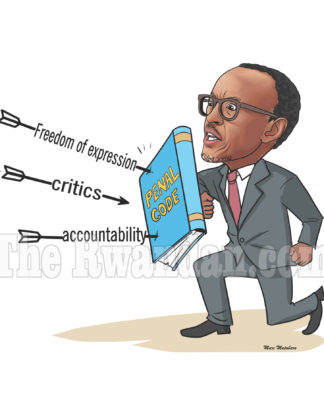
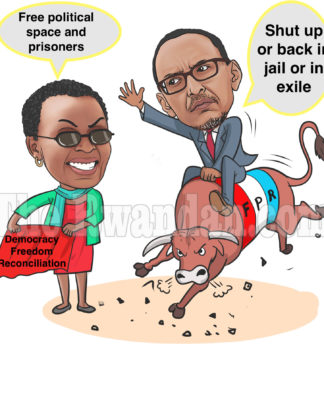
Efforts to integrate or relocate these refugees within the DRC have also failed. Neither Kinshasa nor Kigali has shown willingness to pursue lasting, humane solutions. For Rwanda, acknowledging the existence of these refugees implies confronting questions about its political system, justice, and accountability—topics it would rather avoid. For Congo, these refugees are seen as a political liability.
Meanwhile, the international community remains passive, reluctant to challenge a Rwandan government long viewed as a strategic partner in regional security and resource extraction. Many Western powers who supported the RPF during and after the genocide appear unwilling to press for democratic reforms or open political space in Rwanda, fearing both diplomatic fallout and the potential exposure of their own roles in past atrocities.
Dr. Nzabakirana goes further, suggesting that these powers have little incentive to promote political change in Rwanda, which could disrupt their access to rare minerals sourced through networks connected to Kigali. He also references the UN Mapping Report of 2010, which documented possible war crimes and acts of genocide committed by the Rwandan Patriotic Army during its military campaigns in DRC from 1996 to 1998. These allegations, still largely unaddressed, continue to cast a shadow over the legitimacy of Rwanda’s regional military presence.
Experts Echo the Alarms
The article on Mediapart draws on several authoritative sources. Political scientist Filip Reyntjens warns that “the problem of Rwandan refugees in DRC cannot be resolved without addressing the deep political causes that prevent their voluntary return.” The International Crisis Group similarly emphasizes that these populations are wrongly treated as “a residue of the past,” even though their marginalization continues to fuel conflict dynamics.
Jean-Pierre Cassarino, a scholar of migration policy, notes that forced returns and policies of non-integration reflect “a securitarian logic that sacrifices human rights in the name of short-term stability.”
UNHCR’s own reports acknowledge that “voluntary returns of Rwandan refugees remain limited due to persistent distrust in Rwandan authorities and ongoing regional insecurity.”
Toward a More Inclusive Peace
The exclusion of Rwandan Hutu refugees from regional peace processes is not just a humanitarian failure—it is a strategic mistake. As long as this population remains in limbo, the conflict in eastern DRC will persist, fueled by unresolved grievances, demographic pressure, and political manipulation.
Dr. Nzabakirana concludes that future peace frameworks must address the human realities of the region: protection, dignity, and democratic reform. This includes confronting the root causes of Rwandan exile, ending the cycles of forced return, and establishing a credible framework for voluntary repatriation or local integration.
“These refugees are not footnotes to history,” he insists. “They are central to the tragedy of the Great Lakes and must be treated as such if there is to be any hope of genuine peace.”















, invisible and abandoned in one of Africa’s longest-running humanitarian tragedies.)