



















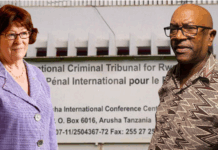






Christopher Black, a prominent Canadian criminal lawyer and outspoken critic of international criminal justice institutions, passed away on June 5, 2025, at the age of 75. Known for his passionate advocacy and political convictions, Black spent the latter part of his legal career defending controversial figures before international tribunals, including the International Criminal Tribunal for Rwanda (ICTR) and the International Criminal Tribunal for the former Yugoslavia (ICTY).
His death was announced by fellow lawyer John Philpot, who paid tribute to a colleague he described as eloquent in court and unwavering in his defense of the presumption of innocence. “Chris defended Augustin Ndindiliyimana, who was ultimately acquitted. He insisted from the beginning that his client was innocent—and he prevailed,” Philpot wrote.
Born on January 16, 1950, Christopher Black studied at McMaster University and earned his law degree from Osgoode Hall Law School in Toronto. He was called to the Bar of Ontario and began his legal career in criminal defense, often representing marginalized and low-income individuals.
In 1996, he helped establish the Council of Unemployed Workers in Toronto, reflecting his early commitment to social justice. A member of the Communist Party of Canada, Black’s political beliefs heavily influenced his legal work and writings. He was a prolific essayist, known for sharp critiques of international law, which he viewed as a tool of U.S. imperialism.
Black’s involvement in international law deepened during NATO’s intervention in the Balkans in the late 1990s. He opposed the bombing of Yugoslavia and attempted, unsuccessfully, to file charges against NATO officials for war crimes in 1999. This advocacy brought him to the attention of international actors, and in 2000, after the arrest of Rwandan General Augustin Ndindiliyimana in Belgium, Black was asked to lead his defense.
Although he initially declined, Black eventually took the case. He became a vocal critic of the ICTR, accusing it of serving political interests—particularly those of the United States and the ruling Rwandan Patriotic Front (RPF). In his defense strategy, Black not only argued the innocence of his client but also attacked what he saw as the tribunal’s inherent bias.
Ndindiliyimana, who had served as Chief of Staff of the Rwandan Gendarmerie during the 1994 genocide, was acquitted after a lengthy legal battle. Black considered the case one of the most significant of his career, using it as a platform to challenge what he believed was the politicization of international criminal justice.
Beyond Rwanda, Black was involved in the international defense of Slobodan Milošević, the former Yugoslav president tried at the ICTY. He served on the International Committee to Defend Slobodan Milošević alongside notable figures such as French lawyer Jacques Vergès. Like in his other cases, Black argued that the ICTY was designed more to justify NATO actions than to provide impartial justice.
Christopher Black’s legacy is one of fierce independence, legal rigor, and political defiance. While his views were often controversial and divisive, even among legal circles, he remained consistent in his criticism of international power dynamics and the use of law as a political weapon.
He leaves behind a body of legal work, published articles, and a community of international colleagues and activists who admired his tenacity and intellectual courage. As the world of international justice continues to evolve, Black’s contributions—and his critiques—will remain a reference point in debates on law, power, and accountability.


























 and the International Criminal Tribunal for the former Yugoslavia (ICTY).)