











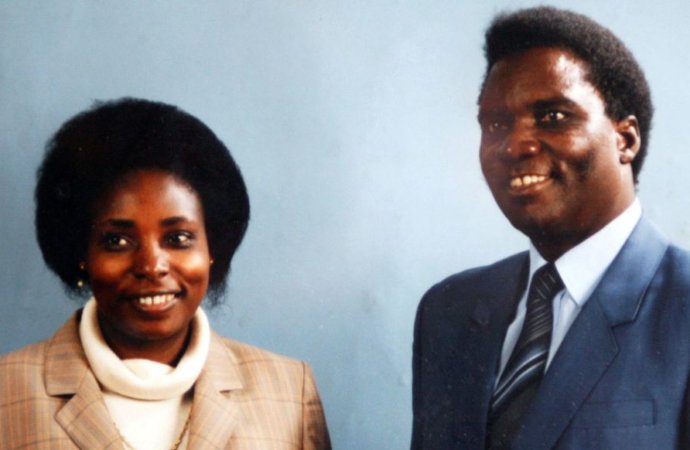
On May 16, 2025, the French judiciary officially closed its long-standing investigation into Agathe Kanziga Habyarimana, the widow of former Rwandan President Juvénal Habyarimana, over her alleged involvement in the 1994 genocide in Rwanda. The decision, delivered by investigative judges at the Paris court’s crimes against humanity unit, concluded that there was insufficient evidence to prosecute.
According to AFP, the judges stated that Agathe Kanziga, now 82, appeared “less as a perpetrator than as a victim of the terrorist attack” that killed her husband, when his presidential jet was shot down on April 6, 1994, as it approached Kigali airport. Just three days later, on April 9, Kanziga and her children were evacuated to France at the personal request of then-President François Mitterrand.
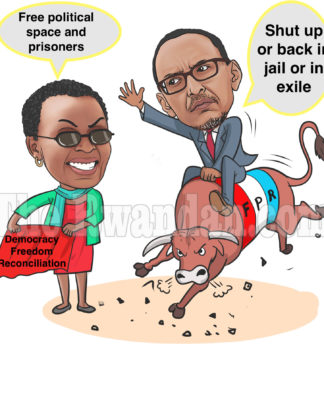
Since 2007, Kanziga had been the subject of a legal complaint for alleged complicity in genocide, filed by civil party groups coordinated under the Collectif des parties civiles pour le Rwanda (CPCR). However, numerous critics, particularly within the Rwandan diaspora and human rights circles, have accused this group of acting as a political tool for the Rwandan government—using genocide accusations as a weapon to silence or delegitimize its exiled political opponents. These allegations suggest that Kigali seeks to exploit international justice mechanisms to pursue an agenda of political repression.
The French judges dismissed all charges against Kanziga, noting the absence of hate speech, incitement to violence, or any material connection to the genocidal propaganda broadcast by the infamous Radio-Télévision Libre des Mille Collines (RTLM). They found no financial links, no support, and no direct or indirect participation.
Witness testimony that accused Kanziga was described by the court as “contradictory, inconsistent, or outright false.” In a final round of hearings conducted in December 2024, the investigative magistrates found no new or convincing evidence. They concluded that “no further investigative steps would be useful or proportionate,” especially given the excessive duration of the case.
Léon Habyarimana, one of the sons of the former president, responded on social media platform X, declaring that “the time has come to shed light on the true architects of the tragedy that struck the Great Lakes region and to stop blaming the victims.” He added: “Too many lies, too much silence.”
On the defense side, Kanziga’s lawyer, Philippe Meilhac, welcomed the ruling, stating it “dismantles the accusatory narrative” constructed over nearly two decades. He denounced what he called “judicial harassment,” reminding that his client, who has lived in France since 1998, remains undocumented, having been denied asylum and refused extradition to Rwanda, due to concerns about fair trial guarantees.
Conversely, Patrick Baudouin, lawyer for the International Federation for Human Rights (FIDH), expressed deep disappointment over the ruling, claiming there were “grave and consistent elements” that warranted further prosecution.
If confirmed in the coming weeks, this decision would mark the definitive closure of a politically sensitive legal case, emblematic of the broader tensions between France and Rwanda over memory, justice, and responsibility for the events of 1994.
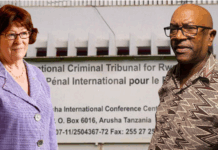
The ruling follows other high-profile acquittals, including that of Protais Zigiranyirazo—Agathe Kanziga’s brother and former Préfet of Ruhengeri—who was cleared by the International Criminal Tribunal for Rwanda (ICTR) in 2009 after initially being convicted.
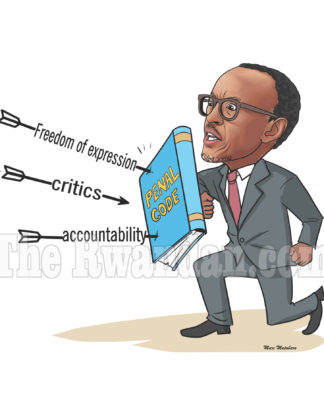
This latest outcome once again raises fundamental questions about the role of international justice in politically charged contexts, especially where accusations of genocide are manipulated as instruments of state policy to suppress dissent. Critics argue that such judicial actions—when driven by political motives rather than clear evidence—ultimately undermine both justice and the memory of the victims they claim to honor.