














The partnership between Paris Saint-Germain (PSG) and Visit Rwanda is facing increasing criticism as international condemnation of Rwanda’s role in the Democratic Republic of Congo (DRC) conflict grows. French MP Aurélien Taché has formally questioned the Minister of Sports, Youth, and Community Life, raising concerns about France’s indirect association with a regime accused of backing M23’s crimes in the DRC.
Since 2012, the M23 rebel group, supported by Paul Kagame’s Rwandan government, has destabilized North Kivu, causing massacres, mass displacement, and a humanitarian crisis. The group, which now controls Goma and Bukavu, has been accused of war crimes in its campaign to seize resource-rich territories. In response, several Western nations have taken diplomatic and economic measures against Rwanda.
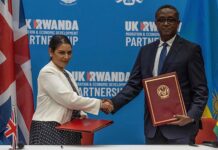
Despite these accusations, Rwanda has launched an extensive public relations and marketing campaign to mask its military involvement. A key part of this strategy is the use of sports sponsorships as a propaganda tool, particularly through deals with European football clubs such as PSG, Arsenal, and Bayern Munich. These partnerships give Rwanda global visibility and allow Paul Kagame to shape public perception by linking his regime to football rather than conflict and repression.
In France, this strategy is particularly evident in the PSG x Visit Rwanda partnership, which turns the Parisian club into a promotional tool for a regime accused of fueling war in the DRC. Aurélien Taché has strongly criticized this sponsorship and has demanded that the French government clarify the position of the French Football Federation (FFF) on Visit Rwanda, insisting that France sever all ties with Kigali as long as it continues to support M23.
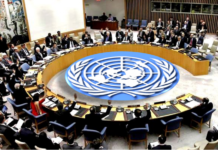
While Germany has already suspended its development cooperation with Rwanda, summoning the Rwandan ambassador to Berlin, France has remained passive. This hesitation has sparked tensions within Europe. Belgian Foreign Minister Maxime Prévot recently stated that France’s reluctance was preventing the European Union from imposing stronger sanctions against Rwanda, highlighting France’s decisive role in shaping EU policy on this issue.
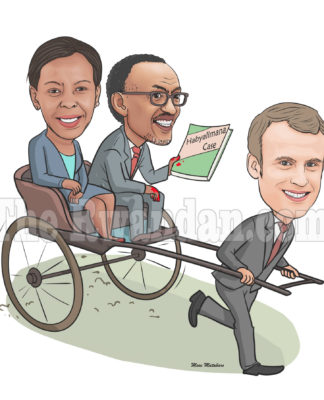
France’s unwillingness to act could be explained by the close relationship between Emmanuel Macron and Paul Kagame, which has strengthened in recent years. Additionally, Rwandan forces are currently securing French energy investments in Mozambique, raising questions about France’s strategic interests in Africa. This military cooperation with Kigali may explain France’s hesitation to support stronger sanctions against Rwanda, prioritizing economic and security interests over a firm stance against Rwanda’s role in the DRC war.
As Canada, the United Kingdom, and the United States have already sanctioned Rwanda, France’s inaction is coming under increasing scrutiny. Paris now faces a critical choice: protect its economic and military interests in Africa or join the international community in holding Kagame’s regime accountable for war crimes and destabilization in the DRC.