














By René Claudel Mugenzi
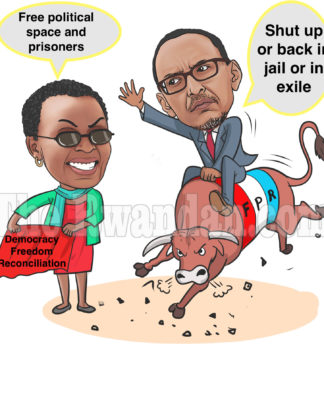
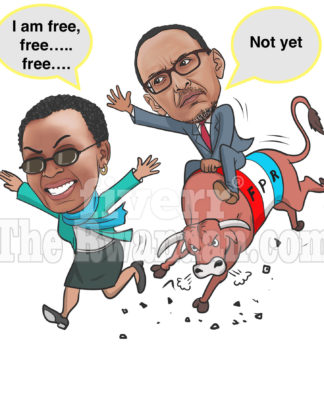
Millions of Congolese citizens, displaced and victims of violence and untold suffering due to the ongoing conflict in North Kivu, have seen their hopes for peace shattered once again. A much-anticipated peace agreement between the Democratic Republic of Congo (DRC) and Rwanda, scheduled to be signed in Luanda, Angola, was abruptly cancelled at the last minute on Sunday, 15 December 2024. Rwandan President Paul Kagame refused to attend the summit, leaving Congolese President Félix Tshisekedi and mediator Uhuru Kenyatta, the former President of Kenya, waiting in the Angolan capital.
This agreement was meant to mark a major step towards resolving the prolonged conflict in North Kivu, largely fuelled by clashes between the Congolese government and the M23 rebel group. After months of negotiations at military, intelligence, and ministerial levels, mediated by Angola, Rwanda was to commit to withdrawing over 4,000 soldiers accused of supporting the M23 rebels on Congolese soil, while the DRC was to neutralise and disarm the FDLR, an anti-Rwandan militia operating along its borders.
Rwanda’s absence highlights insincerity in peace efforts
However, Rwanda’s decision to boycott the summit underscored its lack of sincerity in the peace process. Kigali claimed that “no consensus was reached between Rwanda and the Democratic Republic of Congo on a commitment to direct talks with the M23 Congolese rebel group.” This justification rings hollow, given that the DRC has consistently refused to negotiate directly with the M23, a well-known position.
Congolese Minister of Communication and Media, Patrick Muyaya, who also serves as the government spokesperson, summarised this global sentiment in the following statement:
“The entire world has seen today that the enemy of peace in the Great Lakes region is Paul Kagame. Opting for an empty-chair policy under false pretences is an unequivocal admission of his inability to work towards peace.”
A consistent strategy of deception
Rwanda’s attitude is nothing new. It reflects a well-established strategy of deception and delay. A glaring example is the structure of the Luanda negotiations. While the main objective was to resolve the conflict involving the M23, no official representatives of this rebel group ever attended the discussions. Yet, Rwanda played a central role in all these meetings, as if implicitly representing the M23. This situation demonstrates that the international community, along with regional actors, tacitly accepts that the M23 is merely an extension of the Kigali regime.
This implicit recognition reinforces the notion that Rwanda is at the heart of the instability in North Kivu. If the M23 were truly independent, its absence from the negotiations would have been an insurmountable obstacle. The fact that these discussions progressed without their presence highlights that the M23 and Rwanda are regarded as one and the same entity. This makes Rwanda’s hypocrisy even more glaring when it denies any involvement with the M23 while demanding that the DRC engage in direct dialogue with this rebel group.
Rwanda’s true objectives in the DRC
Rwanda’s refusal to sign the Luanda agreement may also stem from its fear of two major consequences: legal and financial. First, acknowledging its military presence in the DRC could lead to prosecutions at the International Criminal Court (ICC) or the International Court of Justice (ICJ) for crimes committed in areas controlled by the M23. Second, admitting its role in the illegal exploitation of North Kivu’s mineral resources could jeopardise lucrative agreements, particularly those with the European Union for developing mineral refining infrastructure. These partnerships, based on Rwanda being perceived as a legitimate producer of minerals, could collapse if its illegal activities were confirmed.
These fears are closely tied to Rwanda’s true objectives in the DRC. North Kivu, a region rich in strategic mineral resources such as tantalum, niobium, and tin, represents a crucial economic stake for Kagame’s regime. By supporting the M23, Rwanda seeks to maintain military and economic influence over this region while destabilising the central authority of the DRC. This strategy allows Rwanda access to invaluable resources while weakening a key neighbour in the Great Lakes region.
US sanctions: A crucial precedent
The United States has imposed targeted sanctions on Rwanda, focusing on officials involved in supporting the M23 and its destabilising actions in the DRC. These measures include visa restrictions and asset freezes, aiming to hold Kigali accountable for its destructive role in the region. However, while necessary, these sanctions have not yet reached a level of severity sufficient to compel the Rwandan regime to adopt significantly different behaviour.
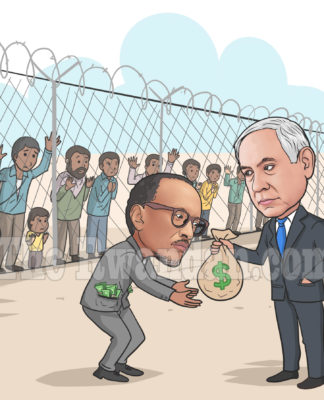
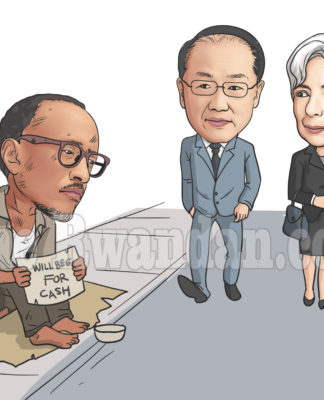
The case of Paul Rusesabagina, where US pressure directly led to his release, demonstrates that Kigali can respond to strong and consistent international actions. A similar strategy is essential in the North Kivu context. The US and its partners should not only reinforce these sanctions but also broaden their scope by imposing economic restrictions and targeting financial agreements linked to the illegal exploitation of North Kivu’s mineral resources. Simultaneously, suspending direct funding to Kagame’s regime should be considered to increase international pressure and push Kigali to reconsider its actions in the region.
Rwanda’s dangerous response to pressure
When faced with increased international pressure, Rwanda’s regime often resorts to dangerous and calculated tactics that exacerbate human suffering while deflecting responsibility onto other actors. In the past, Kigali has employed strategies to intensify humanitarian crises, such as escalating violence or manipulating narratives to position itself as a “protector” or an indispensable actor in stabilising the region.
In the context of the North Kivu conflict, Rwanda is likely to respond to increased international pressure by boosting its support for the M23 or orchestrating an escalation of violence to shift the blame onto the Congolese government. These actions aim to divert attention from the real causes of the conflict while justifying Rwanda’s presence in the DRC.
The DRC and its regional partners must therefore remain extremely vigilant against these manoeuvres. Peace efforts must anticipate and counter such tactics by strengthening mechanisms to monitor Rwandan activities in North Kivu and consolidating regional alliances to politically isolate Kigali.
A pathway to peace and justice
The DRC and its partners must recognise that negotiating with Rwanda is a futile exercise. Kagame and his regime manipulate the process to avoid accountability. To end this destructive cycle, the following measures must be taken:
- End fruitless negotiations: The DRC must immediately cease all dialogue involving Rwanda and explore alternative solutions with regional partners.
- Strengthen national legal actions: The DRC must utilise its judicial system to prosecute those responsible for crimes committed on its territory, including issuing international arrest warrants.
- Pursue international legal remedies: The Congolese government must take its cases to the ICC and the ICJ with solid evidence of Rwanda’s military presence in the DRC.
- Consolidate regional alliances: The DRC should deepen collaboration with organisations like SADC to develop solutions that exclude Rwanda’s influence.
- Increase international pressure: The US and other partners must impose tougher sanctions on Kagame’s regime and sever financial flows linked to the illegal exploitation of North Kivu’s resources.
For decades, Kagame’s regime has exploited regional instability at the expense of peace and human rights. The suffering of the Congolese people must end. It is time to implement a new strategy that prioritises justice, the sovereignty of the DRC, and sustainable solutions to this prolonged conflict.