


















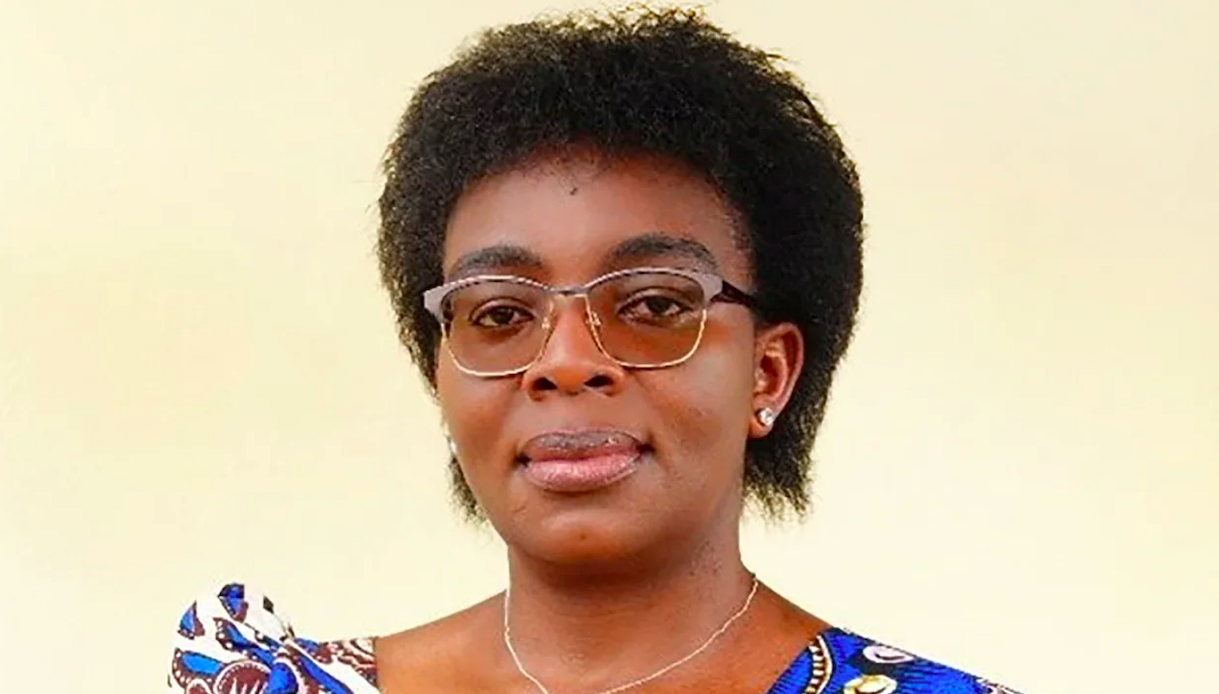
Rwanda’s Minister of National Unity and Civic Engagement, Dr. Jean-Damascène Bizimana, has once again revived government accusations against opposition figure Victoire Ingabire Umuhoza, claiming she remains unchanged and still aligned with the FDLR, a group Kigali has long labeled as a terrorist organization. His comments, delivered before Parliament on March 5, 2025, are the latest in a series of coordinated attacks aimed at discrediting one of Rwanda’s most well-known opposition figures.
Since her return to Rwanda in 2010, Ingabire has been a constant target of Kagame’s regime. Upon arrival from exile in the Netherlands, she declared her intention to contest the presidential elections but was immediately met with hostility from the government. Her visit to the Kigali Genocide Memorial, where she questioned why there was no recognition of Hutu victims of the 1994 genocide, was seized upon by authorities as an act of genocide denial, setting the stage for her politically motivated prosecution.
The Rwandan government has consistently framed Ingabire as an extremist tied to armed groups. The accusations rely on her past leadership of RDR (Rassemblement Démocratique pour le Retour des Réfugiés et la Démocratie au Rwanda), a political movement formed in 1998 by Rwandan exiles, many of whom had links to the defeated government forces that fled into Congo after the genocide. The government claims that RDR later merged into FDU-Inkingi, which Ingabire led after taking over from Ndereyehe Charles, a genocide suspect now in the Netherlands.
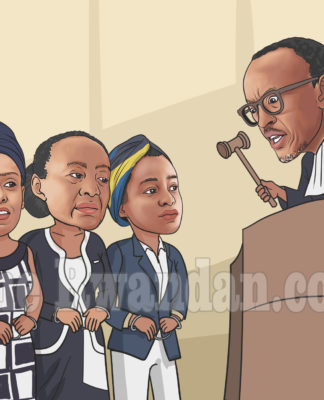
The case against Ingabire has always been riddled with dubious testimonies and vague allegations. During her 2010 trial, Kigali brought forward Lt. Col. Tharcisse Nditurende, a former officer of the FDLR, who alleged that Ingabire sought to create a military wing for her political party and that she financed FDLR operations. The Rwandan government used these claims to convict her of conspiracy against the state and genocide denial, sentencing her to 15 years in prison in 2013.
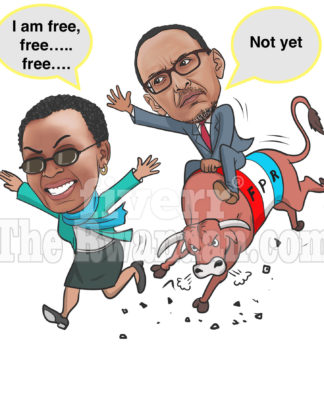
While Kagame later granted her a presidential pardon in 2018, it was clear that the regime had no intention of allowing her to engage in legitimate political activity. Since her release, Ingabire has been under constant surveillance and harassment, with the government branding her as an irredeemable extremist rather than a political leader.
The March 5 accusations against Ingabire were presented under the pretext of discussing genocide ideology in the Great Lakes region, a frequent rhetorical tool used by the Rwandan government to suppress opposition voices. Minister Bizimana insisted that there is no difference between Ingabire’s past affiliations and her current political activities, arguing that her transition from RDR to FDU-Inkingi to DALFA-Umurinzi was merely a rebranding of the same anti-government agenda.
Kigali’s paranoia is evident in its persistent efforts to link Ingabire to armed groups and ethnic extremism, despite no credible evidence that she has been involved in any violence. The government claims she has actively recruited members along ethnic lines, accusing her of discriminating against Tutsis in her political outreach. These allegations are based on uncorroborated testimonies from individuals reportedly forced to provide statements under government pressure.
Furthermore, the government continues to link her former party, FDU-Inkingi, to an attack in Kinigi in November 2019, where 14 civilians were killed by an armed group affiliated with P5, a coalition of Rwandan opposition movements. While authorities insist on Ingabire’s responsibility, they have failed to produce any substantive proof connecting her to these events.
The true reason behind these renewed attacks is Kagame’s increasing intolerance for dissent, particularly at a time when his government is facing growing international condemnation. With Western countries imposing sanctions on Rwanda over its military involvement in eastern DRC, Kigali is attempting to reassert its authoritarian control internally by silencing opposition figures like Ingabire.
In March 2024, government spokesperson Yolande Makolo reinforced this campaign against Ingabire, posting on X (formerly Twitter): “Victoire Ingabire is not an opposition politician, nor a democracy activist. She is a convicted criminal who plotted to overthrow the government through insurrection and has continued to incite division in Rwanda. Justice has rightfully reaffirmed the rule of law.” This statement underscores Kigali’s unwillingness to accept legitimate opposition and its preference for labeling all dissent as a national security threat.
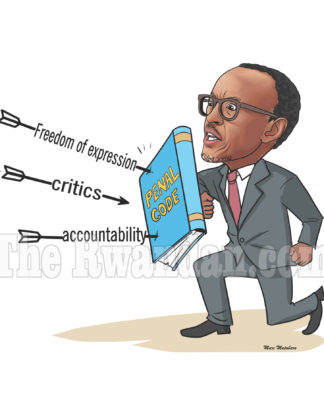
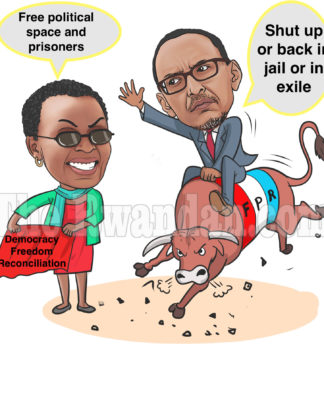
Ingabire’s case is not unique in Rwanda’s political landscape. Any opposition figure attempting to challenge Kagame’s grip on power is met with intimidation, imprisonment, or forced exile. The regime maintains an illusion of democracy, allowing symbolic opposition parties that are either government-aligned or too weak to pose a challenge.
By relentlessly targeting Ingabire, the Rwandan government has made it clear that it has no interest in political pluralism or genuine democratic reforms. The accusations against her serve as a warning to others who might dare to challenge the status quo—a reminder that no amount of reconciliation or political engagement will be enough for Kagame’s regime.
Kigali’s persecution of Ingabire is ultimately a reflection of its deep-seated fear of any alternative political narrative. As international scrutiny on Rwanda grows, the world must recognize that Kagame’s government remains one of the most repressive regimes in Africa, where opposition is equated with treason and where justice is weaponized against those who seek genuine political change.