












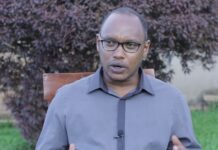


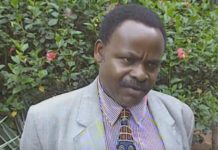

Rwandan political activist Mutarambirwa Théobald, a member of the opposition party P.S. Imberakuri, has shared a powerful testimony about his experience with political persecution, his arbitrary imprisonment, and his unwavering commitment to democracy and human rights in Rwanda. In a statement addressed to his fellow citizens on March 20, 2025, he recounts the challenges he has faced, his imprisonment, and his determination to continue fighting for equality, freedom, and justice for all Rwandans.
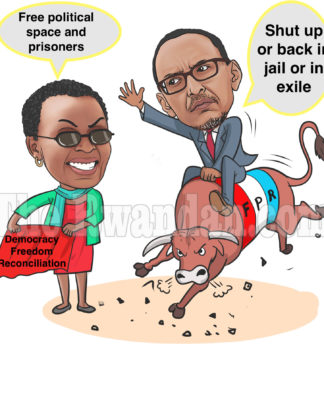
Mutarambirwa Théobald is among the many Rwandan opposition figures who have been targeted by the ruling Rwanda Patriotic Front (FPR-Inkotanyi), led by President Paul Kagame. He recalls how this repression intensified during the 2010 presidential elections, when the FPR refused to allow Me Bernard Ntaganda, the candidate of P.S. Imberakuri, to compete freely. Ntaganda was arrested and imprisoned, while many of his supporters were forced into exile.
Mutarambirwa, also forced to flee, initially sought refuge in Uganda before settling in the Democratic Republic of Congo (DRC) in 2011, hoping to find a more stable life. Like many Rwandan exiles, he and his fellow refugees registered with the United Nations High Commissioner for Refugees (UNHCR) and the National Refugee Commission (CNR) in the DRC. However, this status was short-lived. In 2019, under pressure from the Rwandan authorities, the Congolese army (FARDC) conducted raids on refugee camps, accusing the exiles of being linked to armed groups.
More than 2,200 Rwandan refugees, including Mutarambirwa, were arrested and forcibly repatriated to Rwanda on December 16, 2019. Upon arrival, he was separated from the others and immediately jailed, facing six serious charges:
• Membership in an illegal armed group
• Terrorism for political purposes
• Affiliation with a terrorist organization
• Conspiracy against the state
• Spreading false information to tarnish Rwanda’s image abroad
• Participation in terrorist activities
None of these allegations were supported by concrete evidence, yet he was tried before Rwanda’s High Council for International Crimes (HC/ICC) and sentenced to five years in prison. His appeals were denied, confirming a decision driven more by politics than justice.
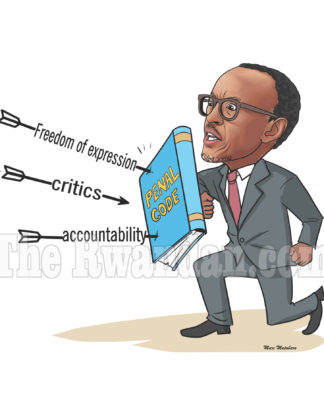
Mutarambirwa Théobald highlights how Rwanda’s judiciary is used as a tool to silence dissent, where the law is manipulated to suppress opposition voices. He reminds the public that his only crime was belonging to an opposition party that is legally recognized in Rwanda, the P.S. Imberakuri, officially registered since July 22, 2009.
The P.S. Imberakuri, under the leadership of Me Bernard Ntaganda, is based on three core values: Love (Urukundo), Justice (Ubutabera), and Work (Umurimo). However, in a country where opposition parties are systematically crushed, exercising political engagement without facing harassment, arrests, or persecution remains impossible.
Despite the suffering he has endured, Mutarambirwa Théobald remains resolute in his commitment to truth, democracy, and national reconciliation. He calls on all Rwandans to stand up for their rights and fight for a future where freedom of expression and democracy are guaranteed. He insists that change is only possible if people recognize the importance of justice and fundamental rights.
“Truth does not burn, even in fire,” he says, emphasizing that no oppression can permanently silence the people’s thirst for justice and freedom.
Mutarambirwa ends his testimony with a message of unity and courage:
“Seeking is the first step to achieving. Where there is a will, there is always a way. We must all enjoy equal rights in our country because that is a fundamental truth and an undeniable principle.”
He urges his fellow Rwandans not to succumb to fear but to continue advocating peacefully for their rights and dignity.
His testimony is a stark reminder of the tragic fate of many Rwandan opposition figures, caught in the relentless repression of Paul Kagame’s regime. His story of exile, persecution, and imprisonment sheds light on the immense challenges facing Rwanda’s opposition.
However, his courage and resilience also demonstrate an unwavering determination to see a Rwanda where democracy, freedom, and the rule of law are no longer empty promises.