


















By Nadia MUGUNGA
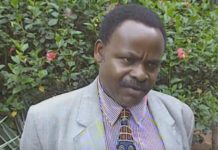
Lieutenant-General Kayumba Nyamwasa is a former Chief of Staff of the Rwandan Defence Forces and a founding member of the Rwanda National Congress (RNC), an opposition party advocating for political change in Rwanda. Once a close ally of Paul Kagame, Nyamwasa played a key role in the Rwandan Patriotic Front (RPF), the movement that ended the 1994 Rwandan Genocide. However, after falling out with Kagame, he fled to South Africa, where he survived multiple assassination attempts widely believed to have been orchestrated by the Rwandan government. Now living in exile, Nyamwasa remains one of Kagame’s most vocal critics.
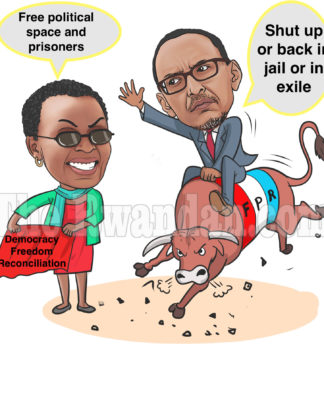
In a recent interview with a South African television channel, Lt.Gen. Kayumba Nyamwasa delivered a strong critique of the political and security situation in Rwanda and the Democratic Republic of Congo (DRC). He urged both Kigali and Kinshasa to engage in meaningful dialogue with their opposition forces. According to him, President Félix Tshisekedi must negotiate with all armed groups operating in eastern DRC and bring them to the table in Nairobi. Likewise, he called on Paul Kagame to engage in talks with the FDLR, genocide survivors living abroad, and the broader Rwandan opposition. He also suggested that Rwanda encourage the return of its exiled citizens to foster national reconciliation.
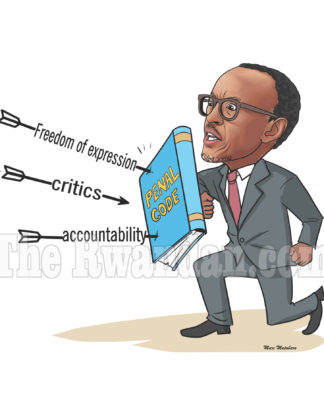
Nyamwasa strongly criticized Rwanda’s political climate, stating that Kagame’s claim of winning 99.99% of the vote in elections is absurd. He argued that Rwanda operates under a system of fear and repression, where the opposition has no real chance to participate in elections, making genuine political competition impossible.
The DRC conflict: A battle over minerals
Nyamwasa did not hold back in his assessment of the ongoing conflict in eastern DRC. He claimed that the crisis involving the M23 rebels is driven not by security concerns, but by Rwanda’s long-standing interest in Congolese minerals. According to him, Rwandan soldiers are being used to seize and control resource-rich territories, ensuring Rwanda benefits economically from the instability in the region. He stated that while Rwanda justifies its military interventions by citing threats posed by the FDLR, this has long been a pretext to justify incursions into the DRC. He noted that many former FDLR fighters have already been incorporated into Rwanda’s Reserve Force under the Ministry of Defence and are actively engaged in military operations in the eastern DRC for the Rwanda Defence Force (RDF).
According to Nyamwasa, the most logical approach would be for Kigali to officially reintegrate the remaining FDLR fighters into its military, resolving the security issue once and for all rather than using it as a tool for geopolitical maneuvering.
Why has Rwanda failed to eliminate the FDLR?
Nyamwasa posed a critical question: If the FDLR is such a major security threat to Rwanda, why hasn’t Kagame’s government been able to neutralize them after decades of military operations? He pointed out that Rwanda has conducted multiple joint military operations with the Congolese Army (FARDC) but has failed to achieve this objective. He also reminded observers that during the rule of Laurent-Désiré Kabila, General James Kabarebe, a Rwandan officer, served as Chief of Staff of the Congolese Army for two years. Given Rwanda’s deep involvement in the Congolese military structure at the time, Nyamwasa asked, why wasn’t the FDLR eliminated then? He suggested that the prolonged existence of the FDLR serves Rwanda’s strategic interests by allowing Kigali to maintain a presence in the DRC under the guise of security operations.
A General Kagame sees as a threat
Nyamwasa, once Rwanda’s Chief of Army Staff and head of intelligence, remains a figure of significant influence. His deep knowledge of the Rwandan military and intelligence apparatus, combined with his outspoken stance, has made him one of Kagame’s most formidable opponents. Many believe his strategic insight and political credibility explain why Kagame views him as a serious threat and has reportedly made multiple attempts to eliminate him.
For him, time is running out. Either regional leaders take bold steps toward peace, or the Great Lakes region risks plunging into deeper chaos.