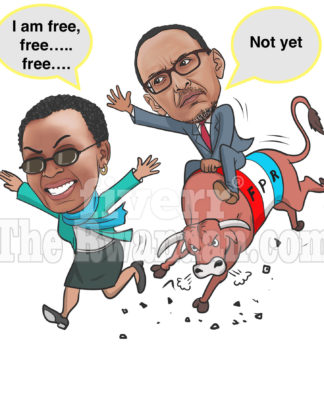












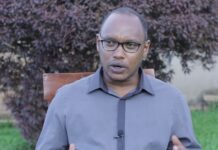
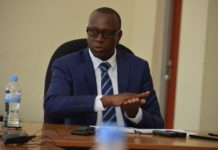
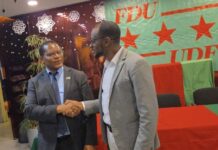

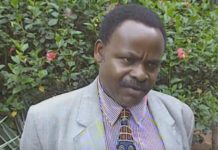
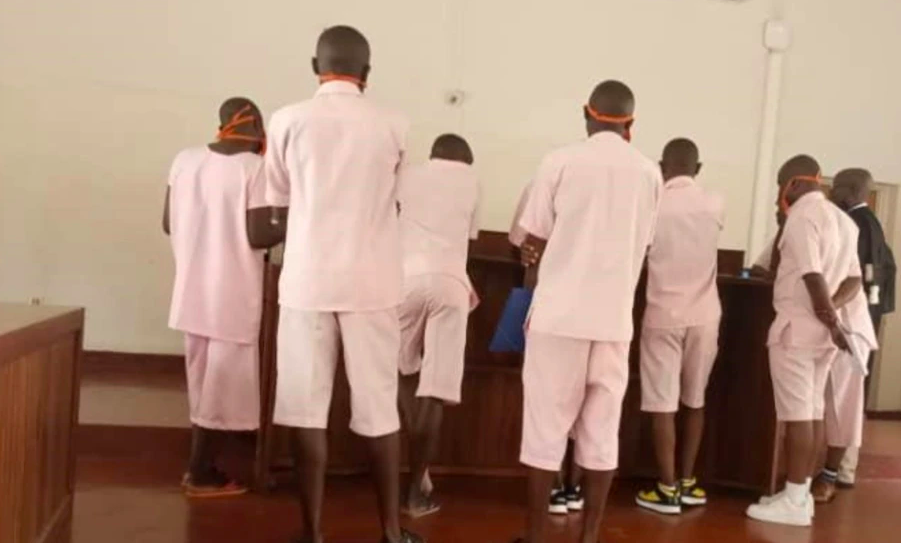
On February 5, 2025, the trial of Sylvain Sibomana, a Rwandan political activist, unfolded in Kigali. The prosecution accuses him of attempting to overthrow the government in collaboration with opposition leader Victoire Ingabire. During his hearing, Sibomana firmly denied all charges and refuted claims that he served as the coordinator of the opposition party DALFA-Umulinzi, founded by Victoire Ingabire Umuhoza.
The Rwandan prosecution has labeled Sibomana as the primary figure among the ten co-accused, charging him with five offenses against state security, while the others face only two. Throughout his defense, Sibomana repeatedly highlighted procedural irregularities in his indictment, questioning the legitimacy of the evidence presented against him. He argued that the alleged proof—documents, phone records, and cash seized during a night raid—was obtained unlawfully.
A central element of the accusations against Sibomana is his alleged involvement in training sessions purportedly aimed at destabilizing President Paul Kagame’s government. The prosecution claims that during these sessions, Sibomana used the alias “Grace” and worked towards a plan to overthrow the regime. However, Sibomana countered this argument by explaining that the training, based on the book Blueprint for Revolution by Serbian activist Srdja Popovic, focused on nonviolent conflict resolution. He insisted that he was introduced to these workshops by a person named Assumpta, whom he met through Facebook.
The prosecution maintains that these trainings were organized under the directives of Victoire Ingabire, with Boniface Nzabandora allegedly acting as the intermediary. Sibomana, however, distanced himself from Nzabandora, asserting that he barely knew him before the trial. The fact that Nzabandora later submitted recordings of the training sessions to security services—while remaining free—has raised suspicions about his role in the case.
Another contentious point was the use of pseudonyms by participants in the training sessions. Sibomana explained that this was a decision imposed by the workshop organizers, not an attempt to conceal illegal activities. He reiterated that the training was designed to educate citizens about their rights and encourage nonviolent civic engagement, not to incite insurrection.
The courtroom exchanges grew tense when the prosecution questioned Sibomana’s role in organizing the annual “Ingabire Day,” an event celebrating political figure Victoire Ingabire. Sibomana confirmed he had sent messages encouraging people to participate, emphasizing the theme of the event: “Respect for Every Rwandan.” He rejected claims that this initiative was subversive, stating that its purpose was to raise awareness of political freedoms.
Among the most debated aspects of the case was “Operation Tinyuka Udahungetwa Ugahungeta,” which the prosecution framed as an attempt to incite rebellion. Sibomana, however, described it as an effort to inform citizens about their rights and encourage fearless political engagement. He stressed that many injustices in Rwanda persist because people remain silent out of fear.
His lawyer, Gatera Gashabana, deconstructed the prosecution’s charges, arguing that they failed to demonstrate any concrete actions intended to destabilize the state. He pointed out that discussing issues such as forced evictions, unfair taxation, and police brutality during training sessions does not constitute a crime. According to Gashabana, these are legitimate concerns that civil society has the right to address.
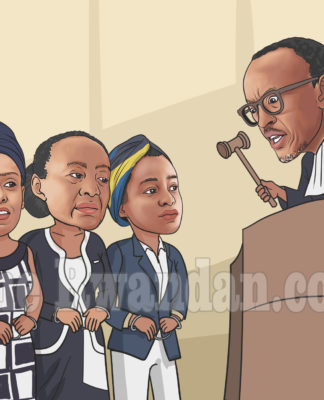
A key moment in the trial came when the presiding judge challenged the defense on Sibomana’s involvement in the training sessions. The prosecution argued that, as the alleged coordinator of DALFA-Umulinzi, Sibomana had organized the sessions with the intent to undermine the government. The defense countered that the party was founded in 2019 while Sibomana was still in prison, making it impossible for him to serve as its coordinator.
Further complicating the case is the controversial role of Boniface Nzabandora, who, despite admitting to organizing the training on behalf of DALFA-Umulinzi, is not facing charges. Instead, he became the prosecution’s key witness, having secretly recorded the sessions and submitted them to security forces. His actions have led to widespread speculation about possible government infiltration within opposition circles.
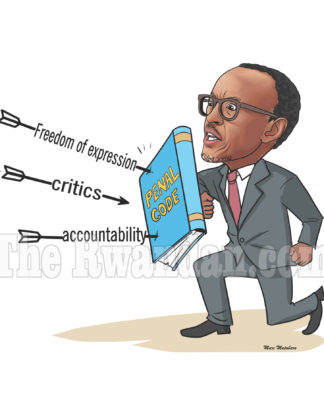
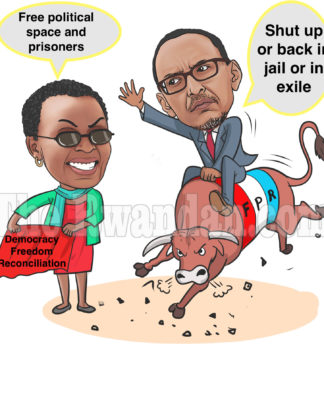
The trial, which is expected to continue with Nzabandora’s testimony on Thursday, has drawn attention to the systematic repression of opposition voices in Rwanda. While President Paul Kagame continues to deny accusations of authoritarianism, cases like that of Sylvain Sibomana reinforce concerns about the state’s crackdown on political dissent.