







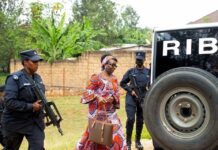


Moses Turahirwa, one of Rwanda’s most internationally recognized fashion designers, now finds himself at the center of a legal and political storm. His recent arrest on charges of drug use by the Rwanda Investigation Bureau (RIB) has triggered heated debate in the country and beyond, not only due to the gravity of the allegations but also because of the broader implications related to freedom of expression, the treatment of LGBTQ+ individuals, and the complex intersection of personal dissent and state power in Rwanda.
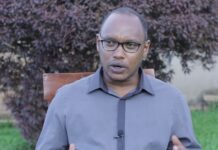
Turahirwa’s arrest was officially linked to forensic evidence allegedly confirming drug use. The RIB spokesman, Thierry Murangira, cited the findings of the Rwanda Forensic Institute, describing the concentration of substances in his system as “very high.” However, the specific nature of the alleged drugs has not been disclosed, a detail that fuels suspicion in a case already politically charged. This vagueness stands in stark contrast to the vivid detail and timing of another event: a controversial message posted from an Instagram account attributed to Turahirwa, in which he criticized the Rwandan regime, explicitly stating, “I will never forgive Kagame and all Inkotanyi.”
This message, which went viral on social media before the account was deleted or made inactive, accused the Rwandan Patriotic Army—referred to by their political name, Inkotanyi—of imprisoning his father without cause. It invoked memories from Turahirwa’s childhood, including a traumatic visit to his incarcerated father in the late 1990s, an event he says marked his life permanently. He closed the post with an emotional declaration of resentment toward the current president and the ruling political elite. That same week, he was arrested.
The response from the state and its media was swift and coordinated. Official statements focused solely on the drug allegations, while pro-government outlets echoed the RIB’s line and avoided engaging with the political dimension of the Instagram post. Meanwhile, the fashion house he founded, Moshions, announced the suspension of a planned show in Kampala, citing concerns for the safety and well-being of their creative director. No direct link to the arrest was made, but the timing was striking.
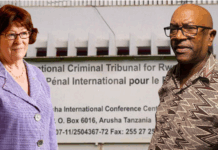
Perhaps more revealing than the arrest itself was the reaction from Turahirwa’s family, particularly his father, Pastor Anicet Nsabimana, a retired preacher with the ADEPR church. In an interview with the state-friendly outlet Inyarwanda, he denied having been beaten during his incarceration in 1999, disputed his son’s version of events, and praised the same government that released him from detention. His remarks were framed as a clear repudiation of Turahirwa’s claims, which adds a layer of familial disavowal to the personal and political drama. It also aligns his family with the regime, intentionally or not, isolating Turahirwa further.
This isolation is not new. Turahirwa is openly gay, an identity that remains socially controversial in Rwanda despite the absence of explicit legal prohibitions. His visibility and success—both as a creative entrepreneur and as an openly queer figure—have made him a symbol of both modernity and defiance in a country where political dissent and non-conforming identities are often suppressed or silenced. The fact that figures as high-profile as President Kagame and his family have publicly worn Moshions designs only heightens the contradictions of his current predicament: once celebrated, now criminalized.
Turahirwa’s legal troubles did not begin with this latest arrest. In April 2023, he was detained on separate charges, including altering or forging a travel document and possession of cannabis. He was granted provisional release in June of that year, pending trial. By December 2024, the Intermediate Court of Nyarugenge convicted him of using forged documents and drug consumption, sentencing him to three years in prison and a fine. He immediately appealed the ruling, and the High Council is expected to decide on his case soon. The latest arrest, therefore, arrives in the context of a broader legal struggle—and just weeks after his social media outburst.
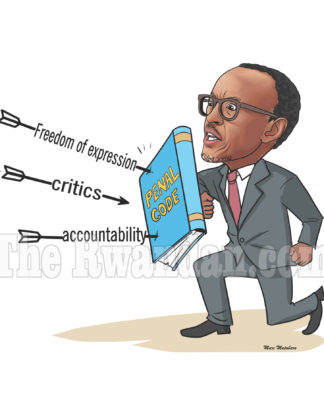
All these elements suggest a situation in which legal processes, personal trauma, and political speech are entangled. Whether the drug allegations are valid or not, it is difficult to ignore the broader context in which they emerge: a politically sensitive statement, an almost immediate arrest, a public shaming in government-aligned media, and a family narrative quickly aligned with state narratives. For observers, the risk is that the criminal justice system may be used not merely to prosecute a crime but to punish defiance.
In Rwanda’s tightly controlled political environment, dissent—especially when expressed publicly and emotionally—is rare and risky. The space for such expression narrows even further when it intersects with other marginalized identities, such as sexual orientation. That Moses Turahirwa embodies both defiance and difference makes his case a revealing lens through which to examine the state’s current posture toward its citizens: it rewards conformity, punishes divergence, and leaves little room for unresolved personal histories that challenge the national narrative.
Whether or not Turahirwa’s appeal is successful, his case is already emblematic. It illustrates how quickly a national icon can become a cautionary tale. It also raises uncomfortable questions about the limits of fame, the cost of honesty, and the price one pays for confronting power in Rwanda today.