
















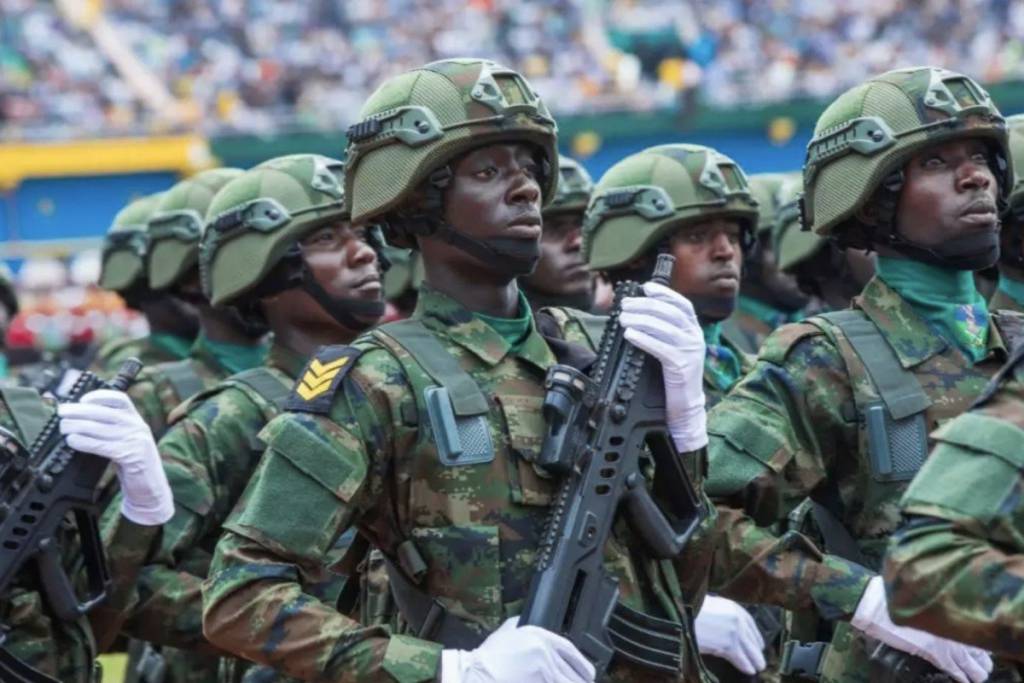
Three soldiers of the Rwanda Defence Force (RDF), deployed in northern Mozambique to fight the jihadist insurgency, were killed on May 3 in an ambush by armed groups in the dense forest of Katupa, in Macomia district, Cabo Delgado province. Six other soldiers were injured in the attack.
The information was confirmed by RDF spokesperson Brigadier General Ronald Rwivanga, who stated that the ambush occurred while the troops were on a field operation. He added that the wounded soldiers were in stable condition and receiving medical care, while the enemy had suffered “heavy losses.”
This attack comes as RDF forces intensify their operations in the still-volatile regions of northern Mozambique, particularly in areas formerly secured by the Southern African Development Community (SADC) and now under Rwandan control. Since late 2023, Rwanda has reinforced its military presence in Macomia following the gradual withdrawal of SADC troops. Fighting in the Katupa forest has been among the most intense since this redeployment.
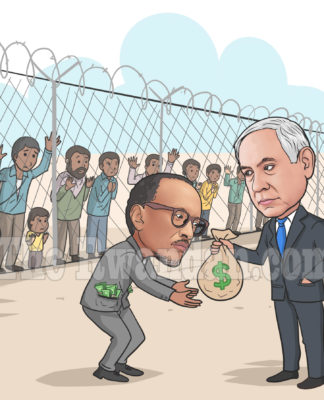
Despite mounting concerns over Rwanda’s role in the ongoing conflict in eastern Democratic Republic of Congo (DRC), the European Union has decided to maintain its financial support for RDF troops deployed in Mozambique. According to Africa Intelligence (April 28, 2025), the European External Action Service (EEAS) opposed the immediate suspension of aid, arguing that it could jeopardize the fragile stability of Cabo Delgado.
This funding, provided through the European Peace Facility (EPF), aims to support Rwanda’s military operations in the region, particularly in securing areas surrounding major gas projects led by French energy giant TotalEnergies. These facilities, worth several billion euros, had been suspended in 2021 due to security concerns.
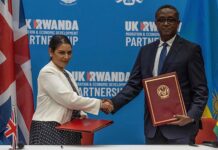
Rwanda’s engagement in Mozambique remains controversial. Officially, it is based on a bilateral security cooperation agreement between Kigali and Maputo. However, many analysts argue that the mission also serves to protect Western — especially French — economic interests while bolstering Rwanda’s image as a regional security power.
This view is reinforced by the contrast between the EU’s continued support for the RDF in Mozambique and the sanctions imposed by the same Union on several Rwandan generals for their support to the M23 movement in the DRC. Officers such as General Eugène Nkubito and General Pascal Muhizi, both former commanders in Mozambique, are currently sanctioned by Brussels for their military involvement in the Kivu provinces. Brigadier General Justus Majyambere, currently in charge of the RDF’s southern sector in Mozambique, is another controversial figure: he was the subject of an international arrest warrant issued by a Spanish judge for his involvement in the murder of Spanish missionaries in Rwanda during the 1990s.
The current command of RDF forces in Mozambique is led by Major General Emmy Ruvusha, with Colonel Emmanuel Nyirihirwe overseeing the northern sector and General Majyambere the southern one. Rwandan police forces are also active in the region, under the leadership of Commissioner CP William Kayitare, assisted by ACP Francis Muheto in the north and ACP Sam Rumanzi in the south.
Beyond the security rationale officially stated by Kigali and Maputo, Rwanda’s mission in northern Mozambique increasingly appears to serve strategic purposes — protecting European investments and enhancing Rwanda’s regional military influence. Yet the human and political costs of this deployment remain the subject of growing scrutiny.