




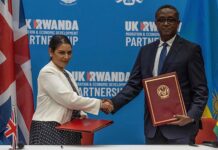



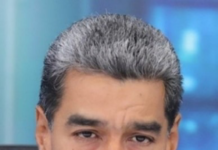












The Democratic Republic of Congo (DRC) and Rwanda are no longer clashing solely on the military front in the country’s embattled east; the rivalry is now expanding into the domain of international image-building through sports. As Rwanda strengthens its presence in European football with prestigious partnerships, Félix Tshisekedi’s DRC seeks to respond with its own soft power strategy.
According to a report by Africa Intelligence, the Congolese government is preparing to invest approximately €4.8 million in a partnership with the AS Monaco football club. The move is seen as Kinshasa’s attempt to position itself in the world of sports diplomacy, mirroring Rwanda’s high-profile “Visit Rwanda” campaigns.
The context is highly charged. As the conflict in eastern DRC intensifies—with over 7,000 deaths recorded since January 2025—Kinshasa accuses Rwanda of supporting the M23 rebel group, which is blamed for numerous atrocities. Rwanda rejects the allegations, but the hostility between the two nations continues to grow.
Rwanda, meanwhile, is pushing forward with an aggressive international branding campaign. After forging ties with Arsenal, Paris Saint-Germain, Bayern Munich, and most recently Benfica, Kigali announced a new sponsorship deal with Atlético de Madrid on April 30, 2025. The partnership, set to run until 2028, includes branding on training kits, digital platforms, and match-day gear for both men’s and women’s teams.
Jean-Guy Afrika, CEO of the Rwanda Development Board, described the deal as a confirmation of the country’s strategic transformation into a hub for tourism and investment. Atlético’s general director Óscar Mayo praised Rwanda’s global reach and resilience, calling it a valuable partner in the club’s international expansion.
But the campaign is not without backlash. Among the Congolese diaspora, voices are growing louder. A group of Arsenal fans known as Gunners for Peace has called for the termination of the club’s partnership with Visit Rwanda, which is reportedly worth £10 million a year. Their message: “No promotion for a country accused of war crimes.”
Some supporters have taken symbolic action. Trésor Kudabika, a Congolese Arsenal fan, covered the Visit Rwanda logo on his jersey with his national flag. The group has distributed armbands to hide the logo during games, including a recent match against Crystal Palace, and has produced parody videos urging fans to “Visit Tottenham” instead—a jab at Arsenal’s fierce rival.
Rwanda’s government defends its approach, claiming that sports sponsorships have generated nearly $650 million in tourism revenue in 2024 alone and have helped rebrand the country on the global stage. Kigali insists it has every right, like any other state, to use sports as a tool of diplomacy and economic development.
Kinshasa’s move to partner with AS Monaco is widely seen as a direct countermeasure to Rwanda’s strategy. However, in a country plagued by underfunded healthcare, security challenges, and a scaled-down UN peacekeeping mission, the decision to spend millions on European football raises questions about national priorities.
The DRC-Rwanda rivalry is no longer confined to the muddy battlefields of North Kivu but now plays out in the polished arenas of European stadiums. Football has become a battleground for influence, where national flags are no longer just waved by fans—but worn by players on the global