
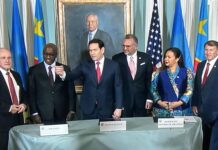

















Brussels/Ottawa – 20 June 2025: As the latest attempt to sign a peace agreement between Rwanda and the Democratic Republic of Congo approaches, three Rwandan opposition organisations in exile — ARC-Urunana, RDI-Rwanda Rwiza, and the Seth Sendashonga Institute — have issued a joint statement urging the inclusion of the political opposition and civil society in the ongoing negotiations.
The statement, signed by Maximilien Sikubwabo (ARC-Urunana, Ottawa), Hildebrand Kayibanda (RDI-Rwanda Rwiza, Brussels), and Jean Claude Kabagema (Seth Sendashonga Institute, Brussels), comes in the context of growing uncertainty surrounding the peace process. Previous efforts, including the most recent round in Luanda on 15 December 2024, ended without a signed agreement. The next meeting, scheduled for 27 June 2025 in Washington, remains in doubt.
According to the signatories, these repeated postponements are not accidental, but rather reflect a calculated strategy by the Rwandan government to avoid any binding commitments that might require internal reform or real political openness. “This behaviour undermines the credibility of the peace process,” they warn.
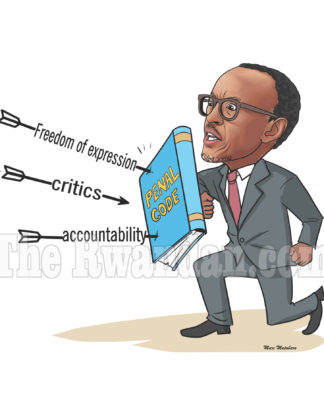
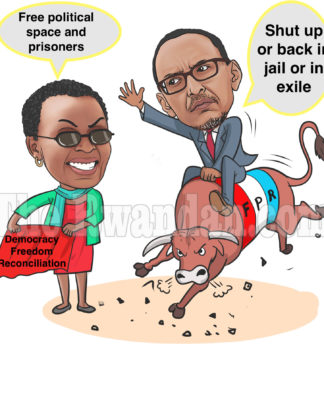
The exiled opposition leaders insist that sustainable peace in the region is impossible without democracy in Rwanda. They point to the regime’s political repression, the silencing of dissent, and the absence of pluralistic dialogue as major obstacles to trust — both within Rwanda and with neighbouring countries.
Their message is direct: any agreement negotiated without meaningful political inclusion risks being fragile, illegitimate, and lacking public support. They urge international mediators and concerned governments to:
1.Ensure the participation of Rwandan political opposition in peace talks.
2.Make democratic reform in Rwanda a precondition for progress.
3.Defend justice, fundamental freedoms, and political alternation as non-negotiable pillars of the process.
A top-down peace without democratic transformation, they argue, will not last. Lasting regional stability requires inclusive, legitimate governance based on respect for human rights.
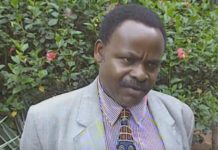
The backdrop to this message is the 27th anniversary of the assassination of Seth Sendashonga, Rwanda’s former Minister of the Interior, killed in Nairobi on 16 May 1998. The institute bearing his name recalls that President Paul Kagame has publicly boasted of being behind the killing. Sendashonga had strongly opposed the authoritarian tendencies of the ruling Rwandan Patriotic Front (RPF) and paid for it with his life.
The communiqué also addresses the ongoing war in eastern DRC, which continues to draw international criticism. The signatories argue that Rwanda’s long-standing involvement in the Congo is not about security, but rather about exploiting the region’s vast mineral wealth. “For nearly 30 years, Kagame and his inner circle have waged war in the DRC, bringing devastation to both Congolese and Rwandan families,” they write.
With Rwanda increasingly isolated on the international stage and facing mounting sanctions and economic hardship, Sikubwabo, Kayibanda, and Kabagema call on the world not to accept a false peace. For them, only a settlement built on truth, justice, freedom, and equality can lead to a genuine and lasting resolution to the crisis.