











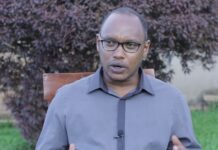
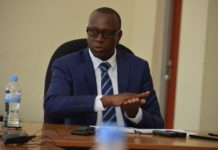
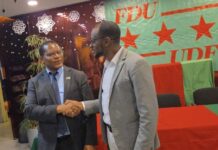


On Saturday, June 21, 2025, in recognition of World Refugee Day, an international conference was held at the Maison des Associations Internationales in Brussels, focusing on the longstanding and often-overlooked plight of Rwandan refugees. The event, streamed live on Radio Inkingi’s YouTube channel, brought together political experts, human rights activists, and members of the Rwandan diaspora to advocate for the rights, dignity, and political inclusion of Rwandan refugees.
The conference featured key speakers including Dr. Étienne Mutabazi, Dr. Vincent Bizimana, Norman Ishimwe Sinamenye, Gloria Uwishema, Placide Kayumba, and Gustave Mbonyumutwa. Each addressed critical issues ranging from the historical roots of forced displacement to the current failures of peace and reconciliation initiatives that exclude refugees from the national dialogue.
Legal foundations and misrepresentation of Refugees


Dr. Étienne Mutabazi, Secretary General of the Rwanda National Congress (RNC), emphasized the importance of grounding refugee protection in international law. He cited the 1951 Geneva Convention, the 1967 Protocol, and the 1969 OAU Refugee Convention as key legal frameworks that must guide the treatment of Rwandan refugees. Dr. Mutabazi warned against political narratives that wrongfully associate all Rwandan refugees with criminality or the 1994 genocide, calling such generalizations harmful and legally unfounded. “Out of nearly 1.7 million refugees, how can guilt or innocence be determined without fair legal process?” he asked.
Field data and humanitarian realities

Dr. Vincent Bizimana presented the findings of a confidential survey conducted among Rwandan refugees in the Democratic Republic of Congo (DRC) and other African countries. The study analyzed the prolonged displacement of Rwandans since the 1990s, and found that fear, insecurity, and lack of justice continue to drive exile today. The survey also assessed the negative impact of the cessation clause implemented in some host countries, stripping refugees of protections without guaranteeing safe return conditions. Dr. Bizimana concluded that durable solutions must go beyond repatriation, addressing the political and legal roots of displacement. Key recommendations included inclusive political reforms in Rwanda, improved refugee protections in host countries, and meaningful consultation with refugee communities.
The mission of All For Rwanda

Norman Ishimwe Sinamenye, co-founder of the civil society movement All For Rwanda, highlighted the organization’s origin following the 2022 massacres in Kishishe and Bambu in eastern DRC, where many Rwandan civilians, including refugees, were killed. The movement aims to re-center exiled Rwandans in national and international discourse through advocacy, awareness campaigns, and documentation of past and ongoing violence. Their campaign, Dutabare Imfunzi – Save the Refugees, calls for justice, truth, and political accountability, asserting that Rwanda cannot achieve true peace while millions of its citizens remain exiled, stigmatized, and voiceless.
Voices of advocacy and dignity
Human rights activist Gloria Uwishema called for a renewed advocacy approach that not only influences policy but restores the dignity of refugees. She emphasized three core principles: truth, inclusion, and accountability. According to Uwishema, the existence of Rwandan refugees is rooted in unresolved political violence and forced displacement, and their continued exclusion from peace negotiations and national decision-making processes undermines any genuine reconciliation. “There can be no true peace without the active participation of those most affected,” she stressed.
Victoire Ingabire: a symbol of peaceful resistance

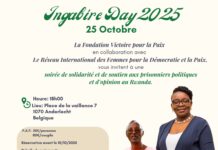
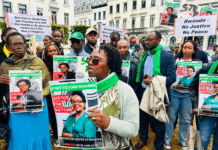
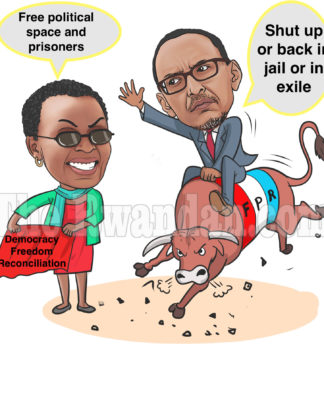
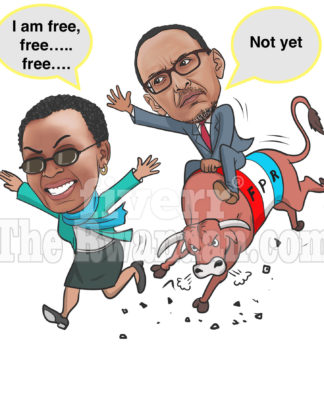
In a powerful intervention, Placide Kayumba, Chair of FDU-Inkingi Belgium, honored the legacy of opposition leader Victoire Ingabire Umuhoza. He opened his speech with the resounding call, “Free Victoire!”, urging the audience to stand in solidarity with her. Kayumba detailed Ingabire’s return from exile in 2010 to run for president, her subsequent arrest, and her years of imprisonment—five of them in solitary confinement. In 2018, she was granted a presidential pardon, but her civil and political rights remain restricted. The African Court on Human and Peoples’ Rights ruled in her favor, recognizing the violation of her rights and awarding her compensation, but the Rwandan government refused to comply and withdrew from the court’s jurisdiction. Kayumba commended her resilience and continued fight for justice, democratic governance, and national reconciliation.
A turning point for action
The conference concluded with a resounding message: Rwandan refugees must no longer be treated as passive victims or political liabilities. They are stakeholders in the country’s future, whose rights, stories, and voices are central to building a just and inclusive Rwanda. The speakers jointly called for a renewed international commitment to uphold refugee rights, ensure legal protections, and promote political solutions that address the root causes of exile. In doing so, they reaffirmed that peace without justice, and dialogue without inclusion, are not sustainable paths forward.
About the Author
Nadia MUGUNGA is an academic, human rights activist, and independent author with a focus on Rwanda. Committed to truth and justice, I believe in choosing voice over silence and use writing as a tool to advocate for dignity, accountability, and democratic values in the region.