






The children of Brigadier General Frank Rusagara Kanyambo, a founding member of the Rwandan Patriotic Front (RPF), have publicly demanded a full, independent investigation into the circumstances surrounding their father’s death in detention on 24 March 2025. In a statement released on 29 March, they expressed grief, outrage, and pressing concerns over what they describe as “medical neglect” and a “lack of transparency” by prison authorities.
Brigadier General Rusagara, a decorated officer and public servant, died while serving a 15-year sentence handed down in 2016 on charges of inciting insurrection and tarnishing the image of the state. His arrest and subsequent conviction were widely criticised by international human rights organisations, including Amnesty International and Human Rights Watch, which raised concerns about political repression and lack of due process in Rwanda’s military justice system.
According to the statement from his children—Veronica Shangari, Ernesto Rusagara, Isabella Barakagwira, Ezra Kanyambo, and Steve Rusagara—the family was not informed of Rusagara’s deteriorating health during his time in prison. They only learned of his passing the day after it occurred. “We were informed on 25 March 2025 that our father had died of cardiac arrest, allegedly due to metastatic prostate cancer that had spread to his liver and pancreas,” the family said. “However, no supporting medical documentation has been provided. We have more questions than answers.”
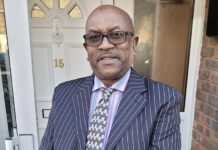
Their statement, accompanied by a press release and family photo, underscores their distress over the lack of communication and apparent denial of their father’s right to family contact during his final days. They ask: Why were we not informed about his illness? Why was he denied family contact in his final days? Why did the prison authorities wait until after his death to inform us?
The family is calling for two immediate actions: a full, independent investigation into the medical treatment Rusagara received while in detention and the overall conditions of his incarceration, and unrestricted access to all medical records, including those that might explain the alleged cancer diagnosis and its progression. Their statement emphasizes the need for truth and justice, calling their father’s death not just a personal tragedy but a matter of public accountability. “As a founding member of the RPF and a public servant who gave decades to the service of Rwanda, our father deserved dignity, due process, and care. Instead, he was left to die in isolation,” they said.
Born in 1953, General Rusagara played a key role in the Rwandan Patriotic Front’s armed struggle and post-genocide reconstruction efforts. He served in various senior roles, including as Defence Attaché in the United Kingdom and as Commandant of Rwanda’s Military Academy. Known for his intellect and strategic mind, he was also a scholar of military history and governance.
Following his arrest in 2014, Rusagara was tried before a military tribunal alongside Colonel Tom Byabagamba and Sergeant François Kabayiza. All three were accused of making critical remarks about the Rwandan government. Rusagara was convicted in 2016, and an appeal to the Military High Council in 2019 upheld the original sentence. His family and international observers long maintained that the charges were politically motivated.
Rusagara’s case has drawn sustained attention from international legal experts and human rights groups. In 2017, the UN Working Group on Arbitrary Detention found his detention to be “arbitrary” and called for his immediate release. In the years that followed, concerns about his deteriorating health were repeatedly raised but seemingly ignored.
The Rwandan government has not yet responded publicly to the family’s latest statement or to calls for an investigation. It remains unclear whether the Ministry of Justice or the Rwanda Correctional Service will release medical records or allow for an independent inquiry.
With the release of this public statement, pressure is likely to mount on the Rwandan government to address the allegations of medical neglect and to allow independent oversight of its detention practices, particularly in politically sensitive cases. For the Rusagara family, the questions remain urgent and deeply personal. “We loved our father. We honour his legacy. But we cannot grieve in peace without the truth,” they concluded.