







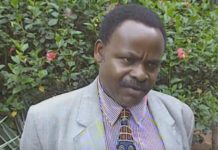

The United States is pressing the Democratic Republic of Congo (DRC) and Rwanda to finalize a peace agreement that would unlock multibillion-dollar investments in the region’s lucrative mining sector. Massad Boulos, senior Africa adviser to former President Donald Trump, made the announcement on Thursday, as reported by Reuters.
“When we sign the peace agreement… a minerals deal with the DRC will be signed that same day, and a similar—though smaller—deal will be signed with Rwanda,” Boulos told reporters. His comments reflect ongoing U.S. and Qatari efforts to broker peace between the two Central African neighbors, whose conflict in eastern Congo has drawn increasing international attention due to its devastating human cost and strategic mineral reserves.
The eastern provinces of North and South Kivu, home to major cities like Goma and Bukavu, remain at the heart of the crisis. Armed rebels from the M23 movement, widely believed to be backed by Rwanda, control significant territory. The Rwandan government is accused of deploying troops in support of M23, while Congolese forces are alleged to collaborate with the FDLR, a Rwandan rebel group hostile to Kigali. Both countries deny any such involvement.
On Friday, Congolese and Rwandan officials are expected to submit draft versions of a peace agreement to U.S. diplomats in Washington. If negotiations proceed as planned, the final signing could occur within two months.
Recent developments on the ground suggest a temporary de-escalation: clashes between M23, the Congolese army (FARDC), and local militias known as Wazalendo have reportedly decreased in several conflict zones.
According to Boulos, U.S. Secretary of State Marco Rubio is scheduled to host a trilateral meeting in Washington later this month with officials from both countries to finalize the agreement. He emphasized that prior to the formal signing ceremony, which will be held at the White House, both parties are expected to address each other’s core concerns.
“Rwanda must withdraw its troops from Congolese territory and cease support to the M23,” Boulos said. “Meanwhile, the DRC must resolve Rwanda’s concerns regarding the FDLR.”
In tandem with the peace talks, the U.S. is also pushing for economic agreements involving American and Western companies willing to invest billions in Congo’s mining sector. These deals would support mineral extraction, infrastructure, and local processing in both Congo and Rwanda.
“The DRC agreements are on a much larger scale, because it’s a bigger country with more mineral wealth,” Boulos explained. “But Rwanda also has significant resources and plays a key role in mineral processing and trade.”
U.S. and European companies, he added, have already expressed their readiness to invest as soon as the mineral agreements are signed.
Despite the diplomatic optimism, Congolese opposition leaders have voiced sharp criticism of the process, accusing the U.S. and Qatar of excluding Congolese civil society and key political actors. Former President Joseph Kabila, along with Moïse Katumbi, Martin Fayulu, and Delly Sesanga, issued a joint statement rejecting the idea that peace can be achieved through high-level negotiations alone.
While acknowledging the progress made in talks between Kinshasa, Kigali, and the M23, the four leaders argue that the draft agreement fails to address the root causes of insecurity in eastern Congo.
They cite constitutional violations, poor governance, and systemic human rights abuses as internal drivers of the crisis. External factors, they say, include repeated violations of Congolese sovereignty and the illegal plundering of the country’s mineral wealth.
As a solution, they endorse the initiative led by Catholic and Protestant bishops, who have been conducting a grassroots mediation effort involving all Congolese stakeholders. “This is the only truly Congolese path to peace,” their statement reads. They urged the African Union, the U.S., and Qatar to support this homegrown effort.
The opposition also demanded full transparency around the mineral agreements mentioned by the U.S., calling for their public disclosure to ensure that Congolese citizens can assess their implications.