









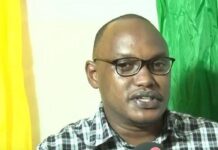

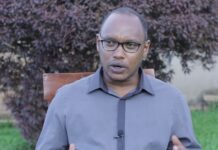
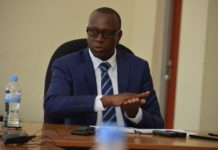

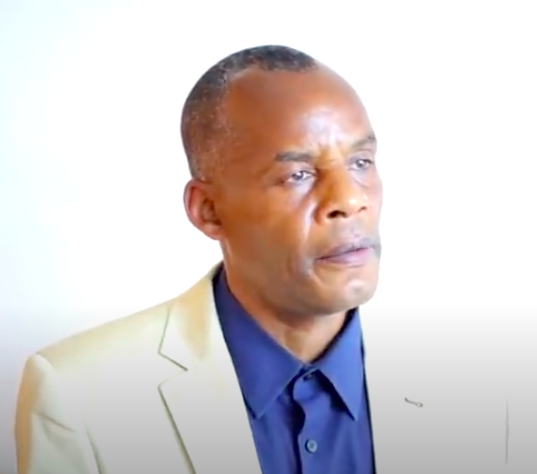
On Tuesday, October 8, 2024, the Specialized Chamber of the High Court of Rwanda sentenced independent politician Abdul Rashid Hakuzimana to seven years in prison, following his conviction on charges related to denying and minimizing the 1994 genocide against the Tutsi. The charges stemmed from statements he made on his YouTube channel, where he expressed views that the court found to be inflammatory and divisive. This verdict has raised questions regarding the limits of free speech in Rwanda and whether the government is using legal mechanisms to suppress dissent.
Hakuzimana faced charges for denying the genocide, minimizing its impact, inciting division, and spreading false information. The prosecution’s case was largely built around his YouTube broadcasts, where he made controversial claims. For example, he argued that the annual commemoration of the genocide should be abolished, and that survivors of the genocide should not receive special treatment. He further claimed that the children of Tutsi survivors and government officials enjoy privileges unavailable to ordinary Rwandans, particularly those from the Hutu ethnic group.
Hakuzimana contested these charges, arguing that the prosecution had not followed legal procedures in filing the case, as no official complaint had been presented. However, the judge dismissed this argument, stating that the case had been legally initiated using modern technological tools. After a 35-minute deliberation, the court concluded that his remarks on YouTube constituted the crimes he was accused of.
The court systematically examined each of the charges against Hakuzimana. It found that his comments, such as stating that both Hutu and Tutsi were killed in the genocide and that the commemoration process should be altered to include recognition of Hutu victims, amounted to genocide denial. The judge emphasized that Hakuzimana’s remarks distorted the truth about the genocide and promoted a false narrative. Additionally, his claims that survivors should not receive special housing and support were deemed an attempt to minimize the genocide’s impact on the Tutsi community.
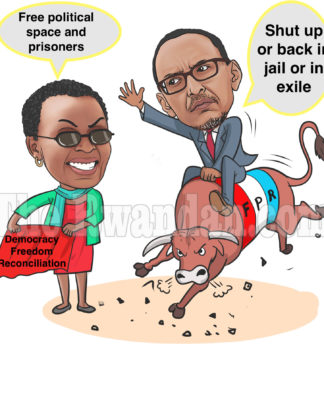
On the charge of inciting division, the court pointed to Hakuzimana’s statements about the educational privileges allegedly enjoyed by children of Tutsi elites and government officials, both under the monarchy and in present-day Rwanda. His criticism of prominent figures like Rucagu and Bamporiki for apologizing to the Tutsi community on behalf of the Hutu was also cited as evidence of divisive rhetoric. Furthermore, the court convicted Hakuzimana of spreading false information based on his assertion that political figures who have opposed the government, such as Victoire Ingabire Umuhoza, Bernard Ntaganda, and Deo Mushayidi, ended up in prison due to their dissent. Hakuzimana warned that his own political career would likely follow the same trajectory.
Despite his defense that he was being persecuted for expressing legitimate political views, the court found Hakuzimana guilty on all four charges. It ruled that his statements were part of a broader pattern aimed at fostering division within Rwandan society, in a context where the government has emphasized unity and reconciliation. The prosecution had initially requested a 14-year prison sentence and a fine of one million Rwandan francs. The court, however, sentenced Hakuzimana to seven years in prison and imposed a fine of one million Rwandan francs, while waiving court costs due to his status as a detained defendant.
This is not the first time Abdul Rashid Hakuzimana has faced imprisonment. In 2008, he was sentenced to eight years in prison for similar offenses related to media appearances. Hakuzimana is known for advocating reconciliation between President Paul Kagame and his predecessor, Pastor Bizimungu, and has criticized the lack of peaceful political transitions in Rwanda.
Hakuzimana’s case is part of a broader pattern in Rwanda where several individuals have been imprisoned for expressing dissenting views online. Notably, Aimable Karasira Uzaramba and Yvonne Idamange Iryamugwiza are also serving prison sentences for making similar statements on YouTube. All three are accused of genocide denial and minimizing the genocide against the Tutsi. These prosecutions have drawn criticism from international human rights organizations, including Human Rights Watch, which has accused the Rwandan government of using these laws to stifle free speech and political opposition.
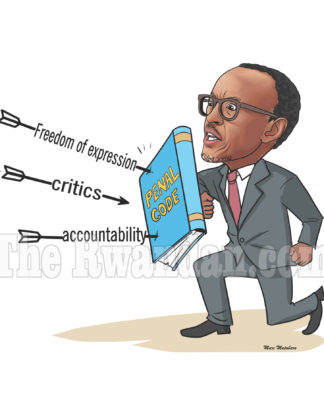
The case of Abdul Rashid Hakuzimana raises important questions about the balance between protecting national unity and ensuring freedom of expression in Rwanda. While the government maintains that these laws are necessary to prevent division and maintain social harmony, critics argue that they are being used to silence legitimate political discourse and dissent. With Hakuzimana’s sentencing, the international community, particularly human rights organizations, may increase scrutiny of Rwanda’s approach to freedom of speech and political dissent, questioning whether the government’s actions truly serve the interests of justice and reconciliation.