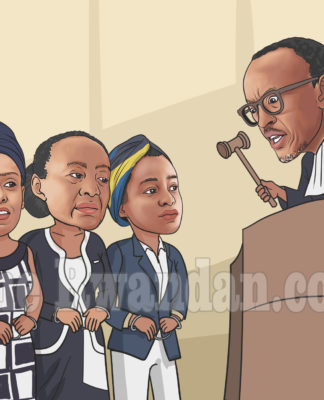





















On June 19, 2025, Rwandan opposition leader Victoire Ingabire Umuhoza appeared before the High Court of Kigali to provide testimony in a high-profile trial involving nine individuals accused of plotting to overthrow the government. Among the accused are journalist Théoneste Nsengimana and political activist Sylvain Sibomana, both of whom have been in detention since 2021. Prosecutors claim that Ingabire played a significant role in organizing training sessions that allegedly served as a platform for planning subversive activities—a charge she firmly denies.
Ingabire was summoned by the court at the request of the prosecution. Appearing with her lawyer, Me Gatera Gashabana, she addressed the court in calm but determined terms. Before she spoke, the presiding judge clarified that she was not being treated as a suspect, but rather as a person “providing information requested by the court” and not as someone defending themselves against an accusation.
In her statement, Victoire Ingabire acknowledged that she knows some of the defendants but denied ever collaborating with them in planning any training sessions or activities related to an attempt to overthrow the government. “I have never organized or supported any such trainings, and I was not even aware of their existence,” she declared. She added that neither she nor her political party, Dalfa-Umurinzi, were involved in any such undertakings.
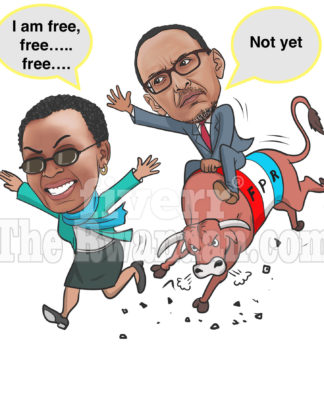
This court appearance comes amid a climate of growing concern about the treatment of political opponents in Rwanda, where dissidents frequently report being subjected to harassment or politically motivated charges. In an interview with Germany’s Deutsche Welle (DW), Ingabire expressed apprehension: “I hope this summons does not lead to me being imprisoned again.”
The prosecution’s case partly hinges on the allegation that the accused were inspired by the book Blueprint for Revolution: How to Use Rice Pudding, Lego Men, and Other Nonviolent Techniques to Galvanize Communities, Overthrow Dictators, or Simply Change the World by Serbian activist Srdja Popovic, founder of the Centre for Applied Nonviolent Action and Strategies (CANVAS). The book, often described as a humorous guide for peaceful activism, outlines nine principles for non-violent political change. These include: “think big but start small,” “turn oppression against itself,” “build unity among diverse groups,” and “choose nonviolence.”
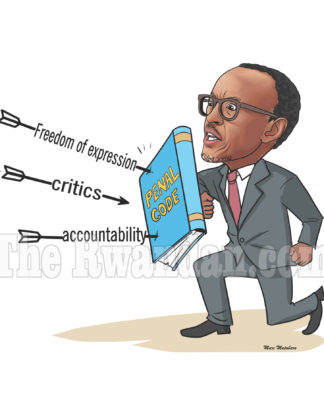
The alleged connection between reading the book and plotting to overthrow the government has drawn criticism from human rights observers and civil society groups, who see it as an attempt to criminalize peaceful dissent. Ingabire’s appearance in court has therefore sparked widespread attention on social media and among the independent press.
Among the voices denouncing the current repressive climate is that of exiled Rwandan journalist Étienne Gatanazi, now based in Bonn, Germany, where he works for Deutsche Welle. In a Facebook post, Gatanazi recounted his experience as an independent journalist in Rwanda, where he faced repeated intimidation. One incident stood out: he was summoned by police, and a senior officer bluntly asked him, “Gatanazi, do you have no one else to interview that you keep going to that hutu woman’s house?”—referring to Victoire Ingabire in a derogatory tone.
For Gatanazi, this moment was a painful reminder of how ethnicity and political repression still shape interactions in a country that claims to have achieved national reconciliation. “I didn’t have the strength to respond with the anger I felt,” he wrote, “but I wanted to say: your government is unjust. Stop lying to people about reconciliation.”
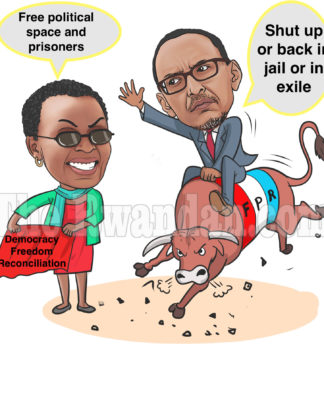
This case brings renewed scrutiny to the Rwandan government’s stance toward political opposition. Victoire Ingabire, who previously served eight years in prison before being pardoned in 2018, remains a symbol of peaceful resistance in Rwanda. She has repeatedly denounced the criminalization of dissent and the lack of political space in the country.
As the trial of the nine defendants continues, many observers remain concerned about the blurred lines between free expression and what Rwandan authorities often label as “threats to state security.” Ingabire’s court appearance has raised fresh questions about how far the government is willing to go to silence its critics, even when their actions are non-violent and legally protected.