
















On 18 May 2025, Human Rights Watch released a damning report accusing the M23 armed group and its alleged backer, Rwanda, of forcibly deporting more than 1,500 civilians from eastern Democratic Republic of Congo (DRC) into Rwanda, in blatant violation of the 1949 Geneva Conventions. The rights organisation described the transfers as war crimes and placed direct responsibility on Rwanda as an occupying power.
The report, based on field investigations conducted between February and May 2025, draws on testimonies from victims and witnesses interviewed in and around Goma, Sake, Karenga, and the Lake Kivu Christian Centre (CCLK) in Goma. According to Human Rights Watch (HRW), the M23 dismantled displacement camps around Goma and forcibly transferred civilians to Rwanda, in some cases with the involvement of the United Nations High Commissioner for Refugees (UNHCR).
HRW states that these deportations were carried out by M23, the de facto authority in the area, which operates under the control of Rwanda. The UNHCR acknowledged that some operations had been conducted “under pressure,” adding that for certain individuals, “returning to Rwanda was the only available option.”
These acts, HRW argues, violate Article 49 of the Fourth Geneva Convention, which prohibits the forced transfer or deportation of protected persons from an occupied territory. The organisation also highlights that any transfer made without the free and informed consent of those affected constitutes a war crime under international law.
Clémentine de Montjoye, senior Africa researcher at Human Rights Watch, stated that Rwanda’s military, logistical, and political support for M23 was instrumental in the group’s capture of strategic cities such as Goma and Bukavu earlier this year. She emphasised that Rwanda, as the power exercising effective control over M23, bears legal responsibility for the abuses committed by the group.
In one incident on 12 May, the M23 reportedly gathered nearly 2,000 people in Sake and transferred them to Goma, from where many were then deported to Rwanda. The operation was allegedly part of a broader campaign against suspected members of the Democratic Forces for the Liberation of Rwanda (FDLR), a Rwandan Hutu armed group with links to the 1994 genocide. However, many of the deported individuals were Congolese citizens with valid identification papers, which M23 fighters reportedly burned to undermine their legal status.
The Unity Stadium in Goma was used as a screening centre, where people identified as being of Rwandan origin were selected for deportation. HRW reports that due to the absence of a functional national ID system in the DRC, voter cards often serve as the sole form of identification. Witnesses said M23 rejected these cards as “fake,” thereby denying people their Congolese nationality.
The report also points to direct Rwandan military involvement in the conflict. HRW states that around 9,000 Rwandan soldiers were deployed in eastern Congo during the peak of M23’s offensive in early 2025. These troops, equipped with advanced weaponry such as armoured drones and GPS-guided mortars, allegedly led assaults on Goma and conducted patrols in Masisi and Rutshuru. Rwandan commanders were reportedly present at training centres for new recruits inside Congolese territory.
In May, Rwanda also facilitated a press tour in occupied areas of eastern DRC. Over ten journalists travelled from Kigali to Goma and Masisi in a trip organised by the Rwandan government’s communications office, according to several journalists and materials reviewed by HRW.
The report accuses Rwanda of conducting a proxy occupation through M23, a strategy that allows it to exert control while avoiding the legal obligations of an occupying power. According to international humanitarian law, including the 1907 Hague Regulations and the Fourth Geneva Convention, such actions meet the criteria for belligerent occupation.
HRW calls this a case of “proxy belligerent occupation”, where a state uses an armed group it controls to govern territory and bypass legal accountability. Under the effective control test in international law, Rwanda could be considered an occupying power if it maintains overarching authority over de facto authorities like M23.
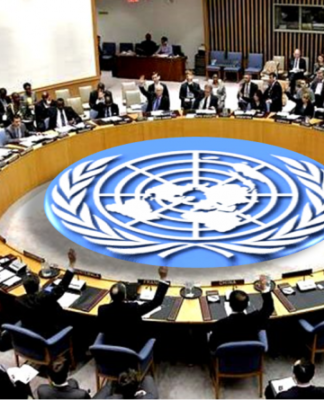
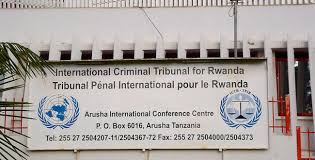
Human Rights Watch concludes its report by urging coordinated international pressure on Rwanda to halt deportations, protect civilians in occupied areas, and hold perpetrators accountable. The International Criminal Court (ICC) has recently announced it would renew investigations into crimes committed in North Kivu since January 2022, including forced transfers and deportations, which may qualify as war crimes and crimes against humanity.
For HRW, the gravity of the evidence warrants a strong response. Rwanda’s responsibility—long debated but rarely acknowledged on the diplomatic stage—now appears poised for more serious legal scrutiny at the international level.









 into Rwanda, in blatant violation of the 1949 Geneva Conventions.)