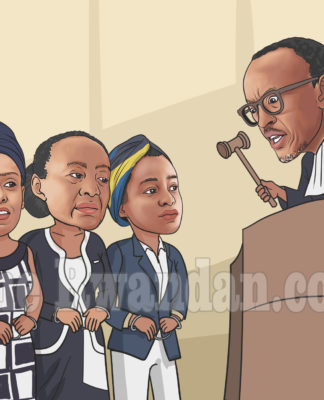























Kigali, 7 August 2025 – The High Court of Nyarugenge on Thursday upheld the decision to keep opposition figure Victoire Ingabire Umuhoza in 30-day provisional detention, rejecting her appeal and reaffirming the ruling previously issued by the Kicukiro Primary Court. She remains in custody at the Nyarugenge prison in Mageragere.
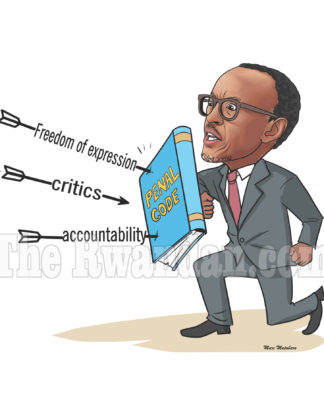
Ingabire is facing six criminal charges, all of which have strong political overtones. These include forming a criminal group, inciting unrest, threatening the existing government, disseminating false information or propaganda aimed at discrediting the Rwandan state abroad, spreading rumours, and conspiring to commit offences against the state.
A case rooted in political repression?
At the appeal hearing held on 4 August, Ingabire and her lawyer, Me Gatera Gashabana, presented eight grounds challenging the legality and necessity of her continued detention. They argued that two of the charges are time-barred, that the legal basis for her arrest was unconstitutional, that no strong evidence had been presented by the Prosecution, and that she posed no flight risk nor threat to the investigation.
The High Court rejected these claims one by one. It ruled that the presence of evidence such as audio recordings, YouTube links, witness testimonies, and message exchanges justified the charges. It also dismissed her complaint regarding legal representation, stating that although she initially requested to be represented by a Kenyan lawyer, Me Gatera had legally represented her throughout the process and that this satisfied the requirement for legal counsel.
On the matter of the Prosecution’s delayed submission — filed electronically at 9:06 p.m. the evening before the hearing — the Court found no procedural violation, arguing that there is no strict legal deadline for such filings in appeals.
The Court also dismissed her argument that Article 106 of the Criminal Code, used to justify her detention, conflicts with the Constitution. It ruled that the provision was applied correctly and that the constitutional challenge currently pending before the Supreme Court had no bearing on the present case.
Evidence under scrutiny
Among the materials accepted by the court were:
- Audio recordings allegedly featuring Ingabire discussing the planning of demonstrations;
- Testimony from former party associates, including Nzabandora Boniface, whom the defence had deemed unreliable;
- WhatsApp messages between Ingabire and activist Sylvain Sibomana, in which she was referred to as “Mukecuru”, and where instructions to distribute anti-government leaflets were allegedly given;
- A YouTube video aired on Umubavu TV, described by the Prosecution as promoting social division;
- Alleged links between FDU-Inkingi (a political party formerly associated with Ingabire) and rebel elements such as RUD-Urunana.
Although the defence argued that some of these recordings may have been obtained illegally, the Court ruled that the legality of such evidence would be addressed during the substantive trial — not during pre-trial detention proceedings.
Ongoing hunt for additional suspects
Sources close to the Prosecution told us that a broader manhunt is still underway. Investigators are reportedly seeking to identify additional suspects or potential witnesses willing to incriminate Ingabire before the trial on the merits begins. This raises serious concerns about the independence and fairness of the investigation, as it suggests that the case against her is still being actively built after the decision to keep her detained has already been made.
This approach contradicts basic legal safeguards, which require that the decision to detain someone be based on already available, compelling evidence, not on the hope that more might surface later.
A predictable verdict in a controlled environment
The High Court’s ruling mirrors previous decisions made in politically sensitive cases. It concludes that Ingabire’s detention is legally sound and justified by the seriousness of the charges. The court further stated that her presence at liberty could pose a risk to the integrity of the investigation and public order.
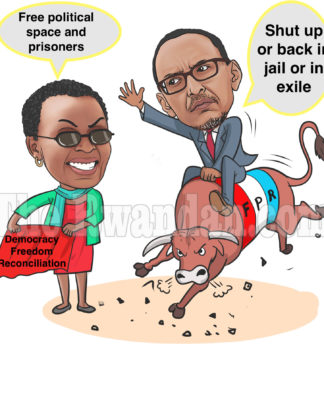
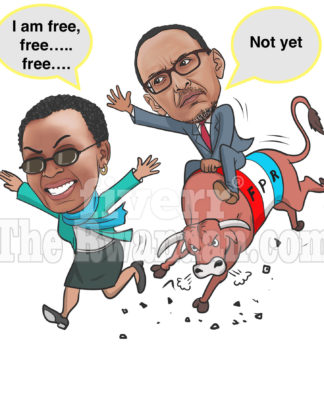
However, for many observers, this ruling is yet another indicator of the judiciary’s lack of autonomy in Rwanda, especially when it comes to high-profile political opponents. Ingabire, who had already served eight years in prison before receiving a presidential pardon in 2018, continues to be one of the few remaining voices critical of President Kagame’s government.
No date has been announced for the start of the full trial.