














By Nadia MUGUNGA
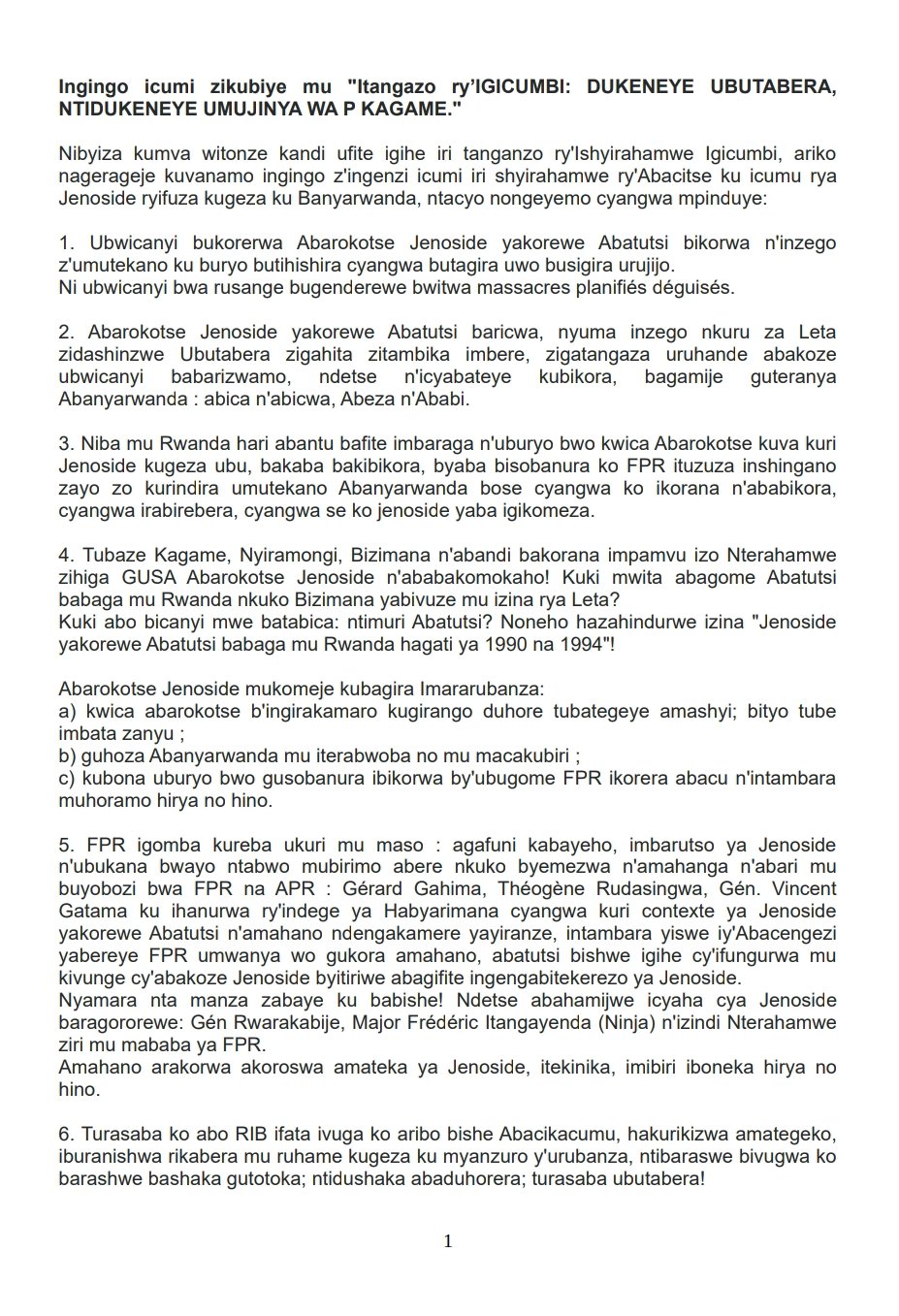
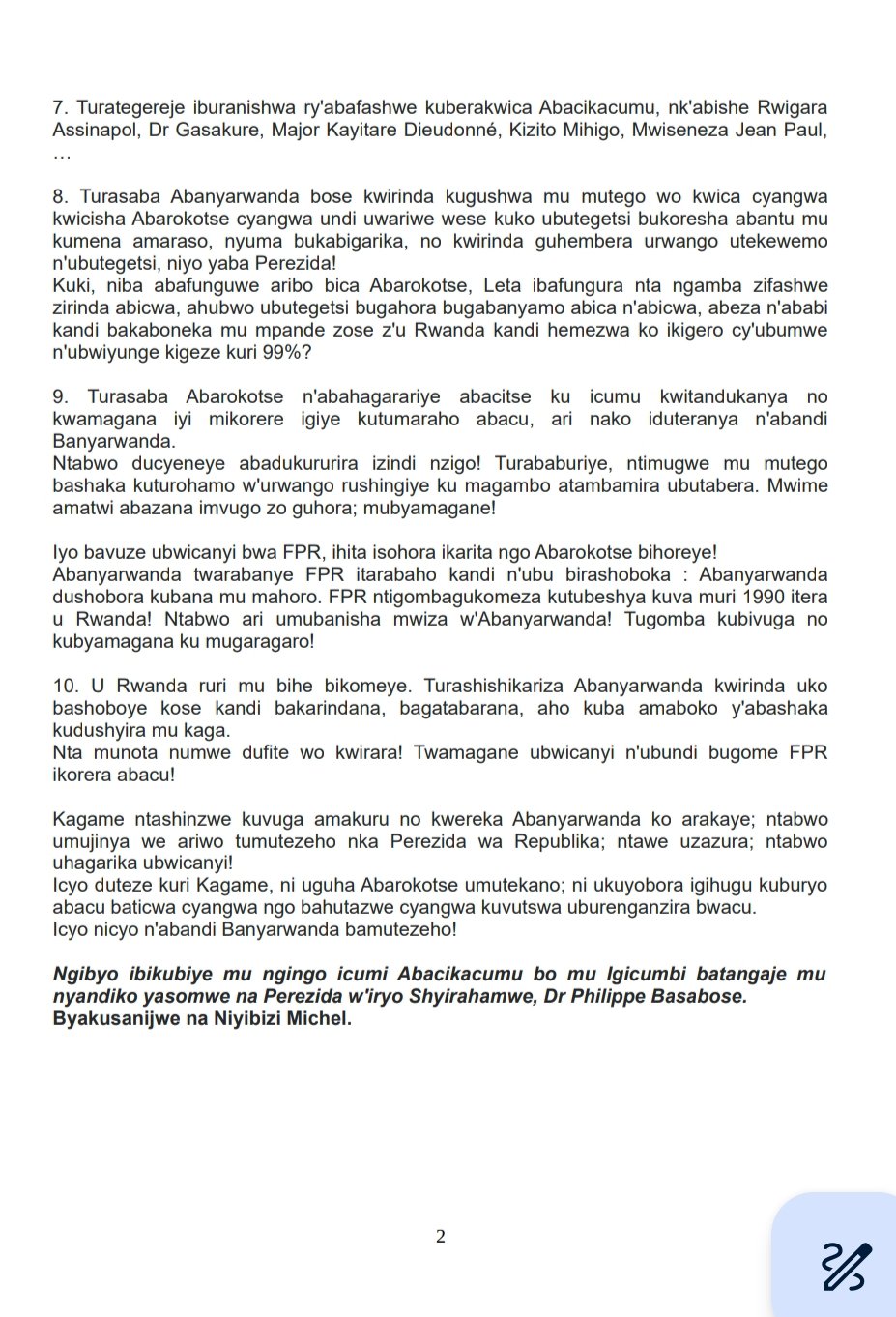
Survivors of the 1994 genocide against the Tutsi have issued a passionate call for justice and accountability through their newly formed association, IGICUMBI – The Voice of Genocide Survivors. The group, launched by members of the Rwandan diaspora on August 1, 2021, aims to advocate for survivors and challenge government intimidation and neglect.
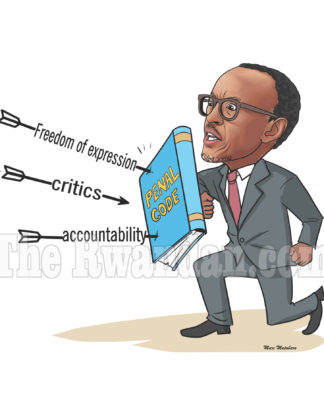
In a powerful ten-point declaration titled “We demand Justice, not Kagame’s wrath,” IGICUMBI criticized the government’s failure to protect survivors, unresolved assassinations, and policies that deepen divisions rather than foster reconciliation. Nearly three decades after the genocide, many survivors feel silenced, targeted, and overlooked.
From the ten-point declaration, I have summarized their demands into key themes, which are outlined below:
We are still being targeted
One of the most urgent concerns raised is the continued killing of genocide survivors. Igicumbi alleges that survivors have been systematically targeted, with many deaths labeled as accidents or left unexplained. They describe these killings as deliberate, calculated acts designed to intimidate and erase those who dare to speak out.
Justice without impunity
Igicumbi also condemned what they see as widespread impunity for perpetrators of genocide-related crimes. They criticized the government for releasing convicted criminals without ensuring they are held accountable for their actions, calling it a betrayal of survivors’ trust.
“How can survivors rebuild their lives when the people who tormented them walk free?” they asked.
Questioning leadership and transparency
The group did not hold back in criticizing the government’s role. They accused some leaders of using the genocide as a political tool, fostering division while ignoring the real needs of survivors. They also called on President Kagame and the ruling Rwandan Patriotic Front (RPF) to address unanswered questions about their actions during and after the genocide.
“Survivors deserve answers,” the group said. “Reconciliation begins with the truth.”
Unsolved high-profile killings
The declaration also called for justice in the cases of high-profile figures, such as businessman Assinapol Rwigara and musician Kizito Mihigo, whose deaths remain shrouded in mystery. Igicumbi demanded transparent investigations, stating that survivors cannot feel safe while high-profile killings go unresolved.
A plea for unity
While the declaration carries a tone of frustration, it also extends an olive branch. Survivors urged fellow Rwandans to reject hatred and revenge, calling for dialogue, unity, and mutual understanding.
“Rwanda’s strength lies in its people coming together—not in fear, but in hope,” they said.
A message to Kagame
In their closing remarks, Igicumbi addressed President Kagame directly, urging him to prioritize peace over political intimidation. They called for his leadership in creating an environment where survivors can live without fear and play an active role in shaping Rwanda’s future.
“Safety and justice are not privileges—they are rights,” the statement concluded. “We are asking for nothing more than what every Rwandan deserves.”
A fight for truth and justice
As Rwanda continues its journey of recovery and reconciliation, this declaration serves as a poignant reminder of the work that remains. For the survivors of the genocide, justice is not just about the past, it is about ensuring a future where fear and division no longer define their lives.
Declaration of Igicumbi: “We demand Justice, not President Kagame’s wrath” en Kinyarwanda: