























Jean de Dieu Ihorahabona, a Kigali resident known for his legal battle against the City of Kigali over what he described as unlawful forced evictions, has reportedly disappeared under troubling circumstances.
According to his family, Ihorahabona was last seen on Sunday, 1 February, after travelling to Rulindo district, north of Kigali, to visit his daughter at secondary school. On his way back, two uniformed police officers allegedly removed him from a vehicle he was travelling in and transferred him into an unmarked civilian car. The account is based on testimony from passengers who were reportedly present at the scene.
His elder brother, Kalisa, told BBC that he had arranged to meet Ihorahabona that evening but was unable to reach him by telephone. “Given the way he had been monitored before, the constant surveillance, I immediately feared something serious,” Kalisa said. “His phones are never switched off. I knew straight away he had been taken.”
BBC contacted both the Rwanda National Police and the Rwanda Investigation Bureau for comment. At the time of publication, neither institution had responded. In the past, the Rwandan government has consistently denied involvement in enforced disappearances, insisting it does not practise abductions under any circumstances.
Ihorahabona became widely known after challenging the City of Kigali over the relocation of residents from Kangondo and Kibiraro, two informal settlements in the affluent Nyarutarama area. The government maintains that the evictions were carried out legally and that residents were offered compensation or alternative housing. However, several residents, including Ihorahabona, rejected the terms, arguing that the compensation did not reflect the true value of their properties.
The dispute over Kangondo and Kibiraro has been one of Kigali’s most contentious urban redevelopment projects since 2017. Demolitions began in 2020, and relocations followed in 2022. Many residents described the process as coercive, claiming they were forced out despite objections. Authorities framed the project as part of a broader plan to modernise the capital and eliminate informal settlements.
Ihorahabona was among a small group who refused to relocate to Busanza, where new housing units were offered. He continued to speak publicly through media outlets, denouncing what he called “state injustice” and alleging irregularities in the allocation of land following the demolitions. His legal case, filed alongside other residents, reportedly reached the stage of appealing what they described as institutional bias. According to his brother, Ihorahabona was due to present additional information to the Office of the Ombudsman concerning allegations that certain plots had been appropriated by officials. These claims have not been independently verified.
Kalisa stated that both he and Ihorahabona’s lawyer have filed a formal complaint with the Rwanda Investigation Bureau regarding his disappearance. He said he has visited the agency several times seeking answers. One of the witnesses who reportedly saw Ihorahabona taken from the vehicle has also been questioned by police and RIB.
Over the past two years, Ihorahabona had publicly claimed he was under surveillance and had been subjected to intimidation intended to force him to abandon his lawsuit. His brother insists that he refused to back down. “No matter what you did to silence him,” Kalisa said, “he would not give up the truth as he saw it.”
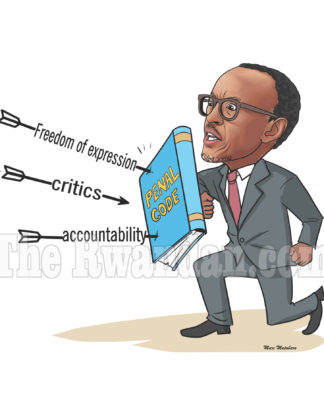
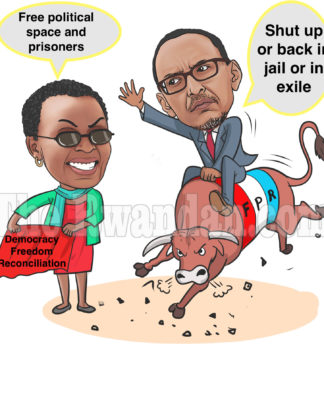
The case raises renewed concerns about the treatment of dissenting voices in Rwanda. While the government promotes an image of order, development and stability, critics argue that those who challenge official decisions, particularly on land and property disputes, face pressure that goes beyond ordinary legal contestation.
Without an official explanation, Ihorahabona’s reported disappearance adds to a pattern that human rights organisations have long flagged: the shrinking space for open criticism and the vulnerability of citizens who confront state authority. Until the authorities provide transparent information about his whereabouts, questions will persist about whether Rwanda’s institutions are prepared to tolerate lawful dissent, or whether legal resistance itself has become a risk.