













The Rwandan opposition platform P4, composed of political movements such as Amahoro PC, FDU-Inkingi, PS-Imberakuri, and the Rwanda National Congress, has applauded the sanctions imposed by the European Union on March 17, 2025, targeting high-ranking Rwandan military officials, key figures within the M23 rebel group, and Gasabo Gold Refinery Ltd, accused of trafficking conflict minerals from the Democratic Republic of Congo (DRC).
In a statement released on March 19, 2025, and signed by Dr. Emmanuel Hakizimana, coordinator of P4, the opposition strongly condemned Paul Kagame’s belligerent policies and his abrupt decision to sever diplomatic ties with Belgium following the EU sanctions.
EU Sanctions: A Clear International Rebuke to Kigali
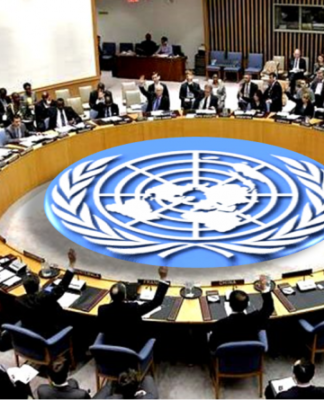
The EU’s decision to impose sanctions on five senior Rwandan military officers and four M23 leaders comes amid increasing international pressure on Kigali over its role in fueling the conflict in eastern DRC. These measures, which also target Gasabo Gold Refinery Ltd—a company allegedly involved in the illicit trade of Congolese natural resources—are part of a growing international response to Rwanda’s military and economic interference in the region.
The EU’s move follows similar sanctions imposed by Germany, the United Kingdom, the United States, and Canada, all of which have condemned Rwanda’s destabilizing actions. For P4, these sanctions send a clear signal that the world is no longer willing to tolerate Kigali’s aggression against the DRC, and they mark a decisive step in holding the Rwandan regime accountable.
Kigali’s Diplomatic Offensive Against Belgium
In response to the EU sanctions, Kigali abruptly severed diplomatic relations with Belgium, ordering Belgian diplomats to leave Rwanda within 48 hours. The opposition platform P4 views this move as disproportionate and indicative of Rwanda’s increasing international isolation.
The opposition also denounced Paul Kagame’s inflammatory remarks during his March 16, 2025 speech, where he accused Belgium of “dismembering Rwanda” during the colonial era and blamed it for the current crisis in the region. P4 refuted these claims as historically inaccurate and misleading, emphasizing that Rwanda was placed under Belgian mandate only in 1924, decades after the Berlin Conference of 1884-1885, which formalized Africa’s colonial boundaries. P4 argues that Kagame’s attempt to rewrite history serves as a distraction from the regime’s real political and military failures.
A Call for Democratic Transition in Rwanda
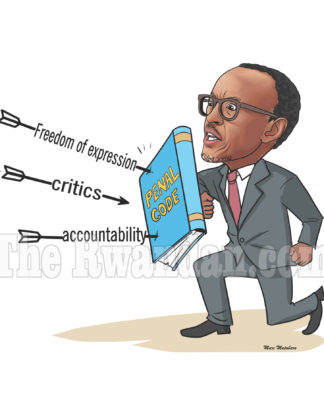
While welcoming the sanctions, P4 insists that punitive measures alone will not resolve the crisis in the Great Lakes region. The platform asserts that the root cause of Rwanda’s repeated military incursions into the DRC lies in the authoritarian nature of Kagame’s regime.
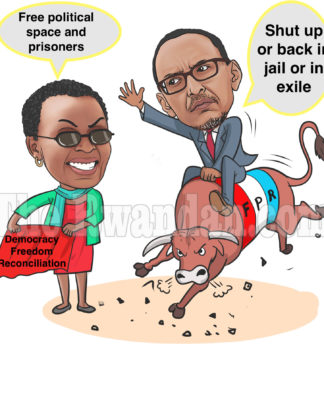
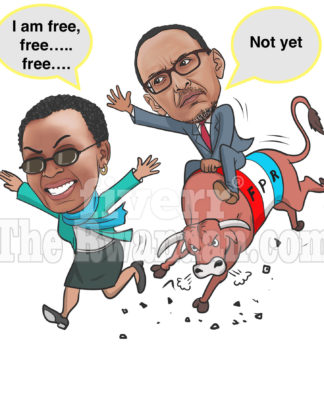
For the opposition, the only long-term solution to Rwanda’s destabilizing actions is a democratic transition in Kigali. As long as the country remains under an oppressive regime, P4 warns that aggression against the DRC, human rights violations, and the suppression of political dissent will persist.
The opposition urges the international community to take further steps by pressuring Kagame’s government into meaningful political dialogue with the Rwandan opposition. According to P4, only a genuine democratic transition will end Rwanda’s military adventurism and ensure long-term stability for both Rwanda and the DRC.
As international scrutiny of Kagame’s government intensifies, Kigali appears to be doubling down on its confrontational stance rather than seeking diplomatic solutions. The abrupt cutting of ties with Belgium and Kagame’s aggressive rhetoric signal a deepening rift between Rwanda and its traditional Western partners.
Meanwhile, the Rwandan opposition platform P4 is calling for sustained international pressure to ensure that Rwanda’s ruling regime is not only sanctioned but also pushed towards a democratic transition. For P4, the recent EU sanctions are a significant first step—but lasting peace in the Great Lakes region can only be achieved if the world commits to helping Rwanda break free from dictatorship and embrace democratic governance.